Summary
Analysis score
Average of the criteria rated below
Value for money: who should actually buy this
Design: big cooler, quiet pump and practical details
Comfort and day-to-day usability
Build quality, leaks and long-term reliability
Cooling performance, runtime and practical tips
What the Polar Active Ice 3.0 actually offers
Effectiveness for pain relief and swelling control
Pros
- Large 16‑quart insulated cooler provides many hours of continuous cold therapy per ice load
- Programmable timer with flexible on/off cycles improves safety and convenience, especially overnight
- Ergonomic knee/joint pad with wide elastic straps offers good coverage and stable positioning
Cons
- Higher upfront cost than basic ice packs or smaller cold therapy units
- Bulky cooler and need for freezer space for multiple frozen bottles or jugs

Specifications
View full product page →| Brand | Polar Products |
Cold therapy without the hassle of ice packs
The Polar Active Ice 3.0 is aimed at people who are facing serious joint issues: knee replacements, rotator cuff repairs, ligament injuries and similar problems where cold therapy is part of the recovery plan. Instead of juggling loose ice packs, towels and dripping bags, this system uses a 16-quart cooler, a pump and a therapy pad to circulate cold water around the joint for long periods. The idea is simple: less swelling and more consistent pain control with less effort day and night.
On paper, the product leans heavily on a few key promises: a large double-insulated reservoir that can run for many hours, a programmable timer so you can follow your doctor’s on/off cycles, and joint-specific pads with compression-style straps to keep everything in place. The manufacturer also highlights that it is designed and assembled in Ohio, with local support and a 6‑month warranty, which is important for a product that includes a pump and moving parts.
In the Amazon comments, buyers dealing with major surgeries repeatedly describe this machine as a central tool in their recovery routine. People talk about running it for several cycles in the evening, using frozen water bottles or gallon jugs instead of loose ice, and relying on the timer to cycle on and off while they rest. The recurring theme is relief from swelling and a drop in pain medication use when the system is set up correctly.
It’s not a cheap ice chest with a hose: you’re paying for continuous circulation, programmability and joint-specific pads. In my opinion, the big question is whether those features and the build quality justify the price and the bulk. Looking at the specs and the reviews, it clearly targets users who are about to undergo surgery or long rehabilitation and want something more reliable and structured than a bag of peas from the freezer.
Value for money: who should actually buy this
The price is clearly above basic ice packs and cheaper cold therapy devices, so the value question depends heavily on your situation. According to the reviews, the typical buyer is someone facing major surgery (knee replacement, complex shoulder repair) or managing a long-term orthopedic issue. In that context, several people explicitly state that the cost felt justified because the system reduced pain, controlled swelling and helped them use fewer pain medications. One reviewer even bought extra pads (back, foot, shoulder) after their initial experience, essentially turning the cooler into a multi-purpose family recovery tool.
What you’re paying for here is a combination of features: a large insulated reservoir that can run for many hours, a programmable timer to automate on/off cycles, joint-specific pads with compression straps, and local support from a US-based manufacturer. Cheaper units often cut corners on reservoir size (more frequent refills), timer capabilities (simple on/off only), or pad quality. If you value long, low-maintenance sessions and adherence to medical timing guidelines, those extra features have real practical value, not just marketing appeal.
On the downside, the initial outlay is still significant, and for someone dealing with a minor sprain or a short-term injury, it may be hard to justify. Traditional ice packs or a simpler circulating system could be enough if you only need occasional relief. There is also the space factor: the cooler is not tiny, and you need freezer space for multiple bottles or jugs. If you live in a small apartment with a packed freezer, this can be a constraint.
In my opinion, the Polar Active Ice 3.0 offers good value for money for people heading into serious orthopedic surgery or expecting weeks of regular cold therapy. For that group, the combination of less pain, fewer ice changes and easier nights is worth a premium. For light, one-off injuries, the system is probably overkill and you’d be better off with cheaper options. The high average rating (around 4.7/5) and detailed positive reviews suggest that, for its target audience, the product generally meets or exceeds expectations.

Design: big cooler, quiet pump and practical details
From a design standpoint, the Polar Active Ice 3.0 is built around a 16‑quart hard-sided cooler with integrated pump and controls. The package dimensions (about 16 x 15 x 14 inches, 9.05 pounds empty) show that this is not a tiny device, but the cooler format makes sense: it needs to hold a lot of ice and water. Several reviews highlight a suitcase-style telescoping handle and wheels on the cooler, which makes it easier to move around the house even when loaded with water and frozen bottles. For someone on crutches or recovering from knee surgery, this kind of mobility is not a minor detail.
The controls are kept fairly simple. Buyers mention flow-rate settings (for example, four levels, with many using level 2) and the separate programmable timer box with clear on/off intervals. This avoids a cluttered interface on the cooler itself and lets you keep the timer within easy reach while the cooler sits on the floor. The reported noise level is often described as quiet or “whisper quiet,” which suggests the pump design and insulation do a decent job at keeping sound under control, important if you plan to run it at night.
The therapy pad design is another key part. The knee/joint pad is sized to cover a good portion of the front and sides of the knee, and the elastic Velcro straps allow you to cinch it down for contact and mild compression. Some buyers chose rectangular pads or shoulder/arm pads instead, but those who comment on the knee pad say coverage and wrap are good, especially when used over thin clothing or with a cloth layer to avoid skin getting too cold. The tubing appears to be fairly thick and sturdy, with quick-connect fittings designed to prevent leaks and accidental disconnections.
In my opinion, the overall design is practical rather than sleek. It looks more like medical or rehab equipment than a living-room gadget, but that is probably the right priority here. The cooler size and wheeled design aim at long runtime and easy movement. The separate timer and adjustable flow-rate provide basic control without complexity. For users who value function and reliability during a tough recovery period, the design choices seem aligned with that goal, even if the unit takes up a bit of space.
Comfort and day-to-day usability
Comfort with this kind of product is less about softness and more about how tolerable and manageable the cold therapy is over hours. In the reviews, several people recovering from knee replacement or shoulder surgery explain that they could run multiple cycles in the evening or overnight without feeling like the cold was unbearable, as long as they followed basic precautions. A common tip is to place a washcloth, thin towel or pillowcase between the pad and the skin (or over thin clothing) to avoid overcooling sensitive areas while still getting effective therapy.
The compression pad with wide elastic straps seems to help keep everything in place without needing to readjust constantly. One double knee replacement patient notes that the pads circulated water gently and fully, without hot or cold spots, and that the straps made setup easy even when mobility was limited. Because the system circulates water rather than staying static like a gel pack, the temperature tends to remain more stable, which buyers describe as more comfortable over time and less of that initial “shock” of a freezing pack.
Noise and bulk also play into comfort. Multiple users describe the pump as very quiet, to the point of calling it whisper quiet, which is important if the unit is running at night in a bedroom. The wheeled cooler with telescoping handle is often mentioned as a relief, since it avoids lifting a heavy container full of water; you can roll it from room to room instead. For someone using crutches or dealing with pain, that can make the routine far less frustrating.
In my opinion, the combination of circulating water, adjustable flow, timer control and compression straps gives this system a solid comfort profile for long rehab periods. It’s still a medical-style device, not a spa accessory, so there will always be some level of inconvenience: hoses to manage, a cooler taking up floor space, and the need to insert a cloth barrier. But compared to juggling multiple ice packs, the reported experience points to a more controlled, less messy and more sustainable approach to cold therapy over many days or weeks.

Build quality, leaks and long-term reliability
Durability concerns for a system like this usually center on leaks, pump reliability and hose connections. The manufacturer backs the Polar Active Ice 3.0 with a 6‑month warranty and emphasizes that it is designed, engineered, tested and assembled in Ohio, with customer service at the same location. Some buyers also mention seeing a one-year warranty on their paperwork, which suggests that certain configurations or periods may have had extended coverage. In any case, there is a clear intention to reassure users that problems will be handled by a local support team.
Among the published reviews, comments about leaks are surprisingly rare and mostly positive. One user says they initially worried about hose connections but found them “stout” and completely drip-free over repeated use. The same person added silicone grease to the O‑rings for extra peace of mind, although they state this was their own choice and not required by the product. Others describe the tubing as sturdy and solid, with no leakage even under frequent movement and long sessions. Therapy pads are also reported to hold up well without bursting or seeping water, though a bit of condensation on the outside after long use is mentioned, which is normal when cold surfaces meet room air.
The cooler body and handle system also receive positive feedback. People point out that it feels robust, easy to wheel around and simple to empty and refill. The fact that some buyers purchase additional pads (back, foot, shoulder) to use with the same base unit suggests confidence in the core cooler and pump lasting beyond one recovery cycle. There are no repeated stories of pumps burning out quickly or controls failing, at least in the comments referenced here.
In my opinion, while no device with a pump and hoses is immune to failure, the combination of solid user feedback, local support in Ohio and a stated warranty makes the durability profile quite reassuring. It is still wise to handle the quick-connects carefully, avoid kinking the hoses and store the unit dry when not in use. But compared to cheaper imports with vague support, this system looks like a safer bet if you plan to rely on it heavily during a demanding rehab period or even keep it for future injuries in the household.
Cooling performance, runtime and practical tips
On the performance side, the Polar Active Ice 3.0 leans heavily on its 16‑quart insulated cooler and pump system. Buyers routinely report getting many hours of effective cold therapy from a single load of frozen bottles plus water. One user mentions that 11 or 12 frozen 16‑oz bottles kept the system cold for 4–5 on/off cycles in an evening, with no need to keep swapping ice during that period. Another describes using frozen one-gallon milk jugs, which reduced the number of ice changes needed throughout the day.
The pump appears to offer adjustable flow rates, with comments about using level 2 out of 4 for shoulder therapy and still getting strong cooling. The flow is described as gentle and even through the pads, so water circulates across the entire pad rather than pooling in one spot. That helps avoid uneven cooling and hot spots. The reported condensation on pads after several cycles indicates that the water stays cold enough for a long time to cause moisture build-up, which matches the goal of sustained cooling.
The programmable timer allows for continuous operation up to a high limit (some mention over 900 minutes) or cyclical operation with specific on/off intervals. Performance-wise, this means you can tune the system to your tolerance and your doctor’s recommendations: continuous for shorter sessions when awake, or on/off cycles overnight to avoid overexposure. Users repeatedly say this “set and forget” aspect is what makes the machine viable for long-term use, because they are not constantly getting up to change packs or restart the device.
In my opinion, the cooling performance is one of the strong points: the combination of large ice capacity, double insulation and adjustable flow gives it an edge over smaller, cheaper units that require frequent ice refills. The biggest performance trade-off is the physical size and need to plan ahead with frozen bottles or jugs, but for people serious about post-surgery recovery, that seems like a reasonable compromise for long, stable cold sessions with minimal interruptions.

What the Polar Active Ice 3.0 actually offers
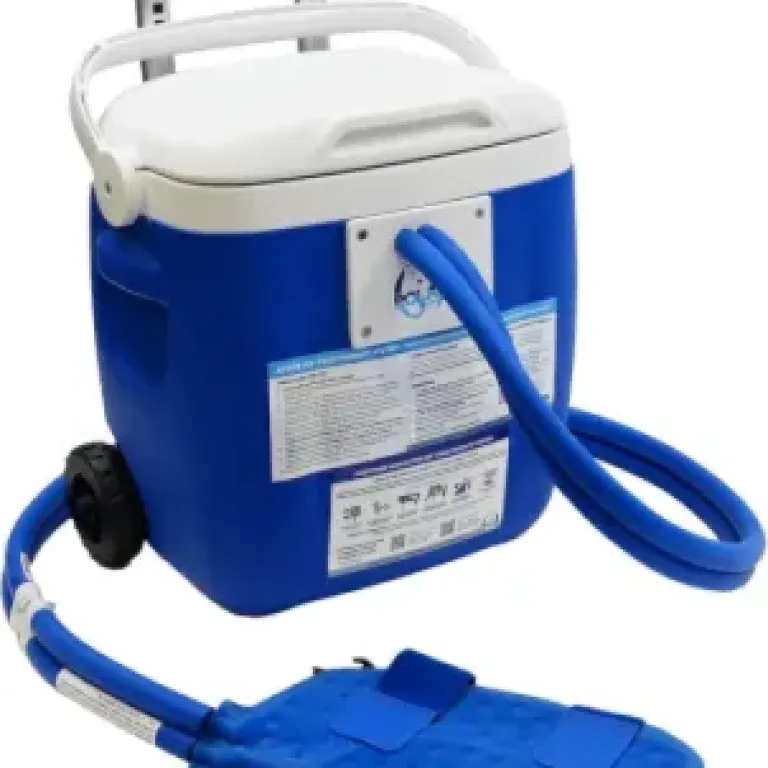
The Polar Active Ice 3.0 is essentially a circulating cold-water therapy system. The core unit is a 16‑quart cooler that houses the ice, water and a quiet pump. Tubing connects the cooler to a therapy pad, in this case a knee and joint compression pad, and the pump circulates cold water through the pad to keep a stable, low temperature on the targeted area. The kit includes the cooler, pump, tubing, power supply, programmable digital timer and at least one therapy pad depending on the configuration you buy.
The manufacturer insists on the double-insulated reservoir and the relatively large 16‑quart capacity. Several buyers explain that this size lets them load it with around a dozen frozen water bottles or larger frozen containers, plus water, which keeps the therapy cold for many hours. That means fewer refill interruptions during the day and the possibility of running through the night, especially useful in the first days after surgery when moving around is difficult.
A central feature is the patent-pending programmable timer. Instead of leaving the unit either permanently on or manually switching it, you can program cycles like 30 minutes on, 30 minutes off, or various combinations of 10, 20 or 30 minutes. Some reviewers mention even using continuous mode for up to 900 minutes when appropriate. In my opinion, this timer is one of the biggest selling points, because it lines up with common medical advice to alternate cold application and rest, and it addresses safety concerns about falling asleep with continuous cold.
The knee/joint pad is described as ergonomically shaped at 12.5" x 10.5" with attached 2" wide elastic straps in three lengths (18.5", 15.5" and 6.5"). The idea is to wrap around the knee or other joints with some compression, while allowing adjustment for different leg sizes. Overall, the concept is straightforward: plug it in, load with ice and water, strap on the pad, set your timer, and let the machine handle the circulation and cycling so you can focus on rest and rehab.
Effectiveness for pain relief and swelling control
Effectiveness is where this product gets the most enthusiastic comments. People recovering from rotator cuff repairs, bicep tenodesis, labrum tears and total knee replacements frequently say that the Polar Active Ice 3.0 had a clear impact on their pain levels and swelling. One verified buyer after complex shoulder surgery reports that starting on day two post-op, the machine reduced pain enough that they could cut back on medication. Another user after total knee replacement says it controlled swelling so well that pain was lower than expected and they had no major swelling issues during rehab.
The large 16‑quart reservoir directly supports this effectiveness. Several reviewers describe filling the cooler with 11–12 frozen water bottles or a couple of frozen gallon jugs plus water, which then keeps the water cold for many hours and multiple duty cycles. That means the knee or shoulder can receive consistent cold therapy across a whole evening or night without frequent refills. Consistency is key: instead of a pack that warms up in 20–30 minutes, the circulating system maintains a more stable, low temperature around the joint.
The programmable timer also contributes. Users often mention setting 30 minutes on and 30 minutes off, or similar patterns, and simply leaving the pad in place while the machine cycles. This matches common medical recommendations to avoid continuous cold on bare skin, while still offering frequent, automatic sessions. For people who are drowsy from anesthesia or pain meds, not having to watch the clock and swap packs every half hour is a clear practical advantage that indirectly improves adherence to the therapy plan.
In my opinion, the effectiveness claims from buyers are consistent and fairly specific: less swelling, less pain, easier nights, and reduced reliance on pain pills in the early recovery phase. Of course, it’s not a miracle cure and it doesn’t replace proper rehab or medication where needed, but as a cold therapy tool, it appears to deliver what it promises when used correctly. The main condition is being willing to manage the ice/ bottle routine and keep the system clean and properly set up.
Pros
- Large 16‑quart insulated cooler provides many hours of continuous cold therapy per ice load
- Programmable timer with flexible on/off cycles improves safety and convenience, especially overnight
- Ergonomic knee/joint pad with wide elastic straps offers good coverage and stable positioning
Cons
- Higher upfront cost than basic ice packs or smaller cold therapy units
- Bulky cooler and need for freezer space for multiple frozen bottles or jugs
Conclusion
Analysis score
The Polar Active Ice 3.0 positions itself as a serious tool for people going through demanding joint surgeries or long rehab, and the specs plus user feedback largely support that positioning. The combination of a big 16‑quart insulated cooler, quiet pump, ergonomic knee/joint pad and a genuinely useful programmable timer gives it a clear edge over basic ice packs and many smaller circulation units. Buyers recovering from knee replacements and complex shoulder repairs consistently report less swelling, better pain control and fewer interruptions during the day and night.
It’s not a small or cheap gadget. You need space for the cooler and for frozen bottles or jugs, and you have to be willing to manage some setup, hoses and refills. For someone with a minor injury, that’s probably more complexity than necessary. But for users staring at weeks of rehab and multiple daily icing sessions, the ability to “set and forget” timed cycles and run for many hours on one ice load is a real practical benefit. The local US support and warranty add a bit more peace of mind for a device with a pump and moving parts.
In my opinion, this system makes the most sense for patients preparing for knee replacement, ligament reconstruction or shoulder surgery, and for households that want a reliable cold therapy base unit with the option to add different pads. If budget is tight or your needs are short-term and light, consider simpler solutions. If you know you’re in for a long recovery and want structured, low-effort cold therapy, this unit looks like a solid investment.
