
Summary
Editor's rating
Is it worth the money compared to cheaper bullet machines or a real ice maker?
Looks like a mini appliance, sounds like a small fridge working hard
Stainless on the outside, more questionable stuff hidden inside
Short-term solid, long-term stories are mixed
Ice quality is strong, but you pay with noise and maintenance
What this machine actually does (and doesn’t) do
Pros
- Produces clear, hard, slow-melting ice that’s noticeably better than typical cloudy bullet ice
- First usable ice in about 15–20 minutes and can build up a decent stash over a few hours
- Simple one-button operation and compact countertop footprint compared to built-in systems
Cons
- Requires regular cleaning and good water (distilled/RO) to avoid slime, residue, and cloudy ice
- Long-term durability is questionable, with some users reporting issues after 1–3 years
- Ice bin is not refrigerated, so ice slowly melts and must be transferred to a freezer for storage

Specifications
View full product page →| Brand | Luma Comfort |
Clear ice at home without a built-in fridge? This is one way to do it
I’ve been using countertop ice makers for a while because my fridge ice maker died years ago and I never bothered to fix it. I picked up the NewAir / Luma IM200SS clear ice maker mainly because I wanted clear cubes for cocktails, not the cloudy bullet ice most cheap machines spit out. I’ve run it on and off over a few weeks, including a couple of weekends with friends where we burned through a lot of ice.
In day-to-day use, the main thing to know is this: it actually does make clear, hard ice, and it does it fairly fast. You start seeing usable cubes in about 15–20 minutes, and if you let it run, it piles up a decent amount. But it’s not a freezer; it’s basically a small ice factory with a cold bin. So you can’t just fill it, walk away for days, and expect a full bin of solid cubes waiting.
Compared to the typical bullet-style countertop units, this one runs a bit louder and needs more cleaning attention, but the ice quality is clearly better. The cubes are more like sheets that break into rectangles, and in drinks they melt slower and don’t water things down as fast. For whiskey or iced coffee, you can actually notice the difference versus the soft, cloudy stuff.
It’s not perfect though. Some owners report long-term issues like brown scum and parts that seem to wear faster than they should. I haven’t had it that long, but reading those reviews and seeing how fast gunk can build up if you don’t clean it, I’d say this is a good machine if you’re ready to maintain it. If you want a totally hands-off, set-and-forget solution, this might annoy you over time.
Is it worth the money compared to cheaper bullet machines or a real ice maker?
In terms of value, this machine sits in an awkward but workable middle ground. It usually costs more than the super cheap bullet-style countertop ice makers, but far less than a proper under-counter clear ice machine or fixing/replacing a fridge with a built-in clear ice option. For the price, you’re paying mainly for clear, slow-melting ice and a relatively compact, plug-in solution you can move around.
Compared to the cheaper bullet units: those make cloudy, hollow bullets that melt faster and sometimes taste off if you don’t clean them. They’re usually easier to live with, though, because they’re a bit more forgiving and you don’t care as much about perfect clarity. If you just want ice for water bottles and coolers, a bullet machine is cheaper and probably enough. If you care how your cocktails look and behave, the IM200SS gives you a step up in quality without going into commercial gear prices.
Compared to serious clear ice makers or bar equipment, this is obviously a budget option. You don’t get automatic flushing, big storage bins, or heavy-duty stainless internals. You also don’t get the same durability. But you also aren’t paying four figures or running a water line. For someone who entertains sometimes, likes decent drinks, and is okay with a bit of maintenance, the price-to-benefit ratio is pretty solid. You get noticeably better ice than a bullet machine at a fraction of the cost of built-in systems.
Where the value drops is if you hate cleaning or expect it to last many years with daily use. Once you factor in possible early replacement and the time you spend flushing with bleach, descaling, and wiping out brown residue, the deal becomes less attractive. So I’d say: good value if you go in with clear expectations—this is a hobbyist/home bar tool, not a lifetime appliance. If that matches your use case, the money makes sense. If not, either go cheaper and accept cloudy ice, or save up for something more robust.
Looks like a mini appliance, sounds like a small fridge working hard
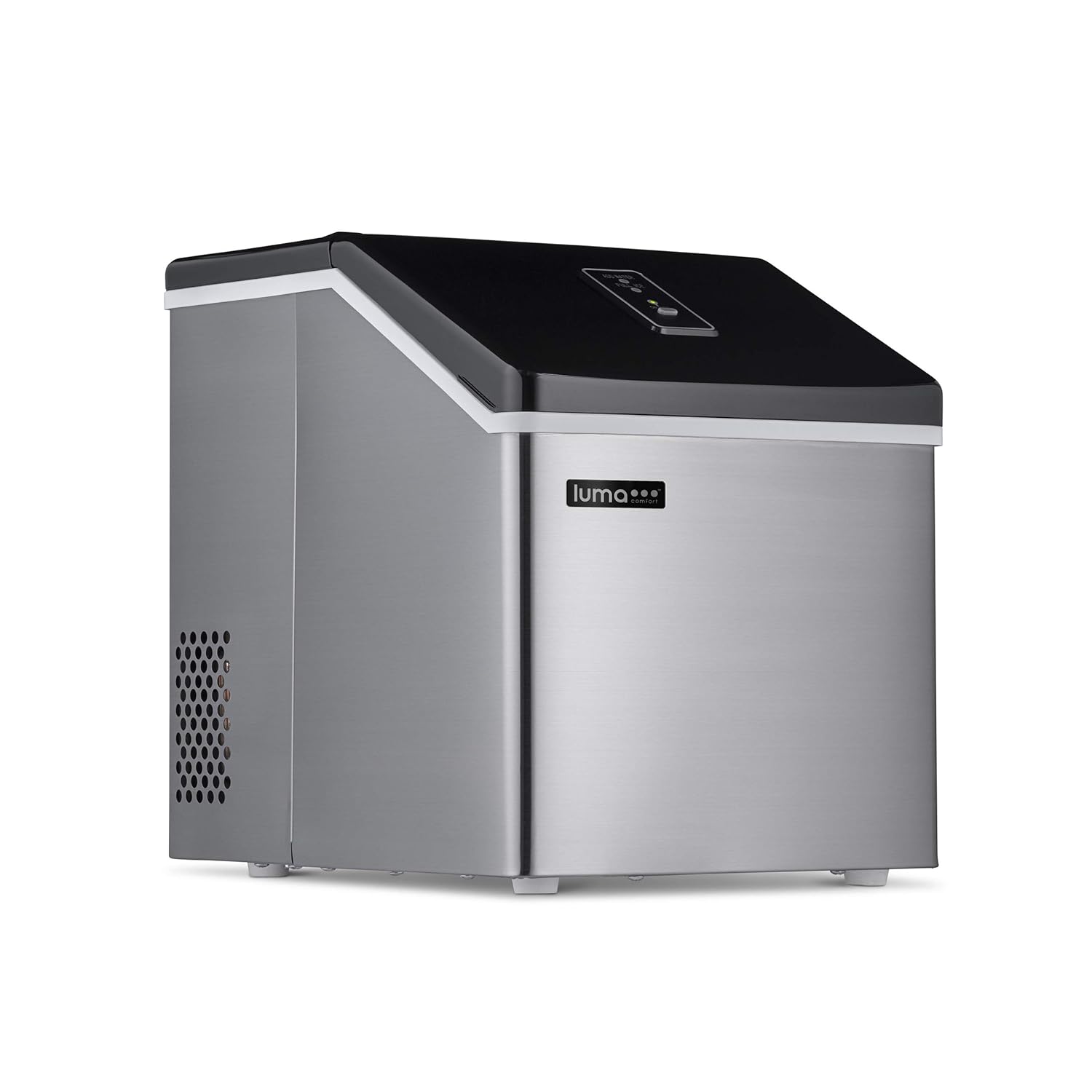
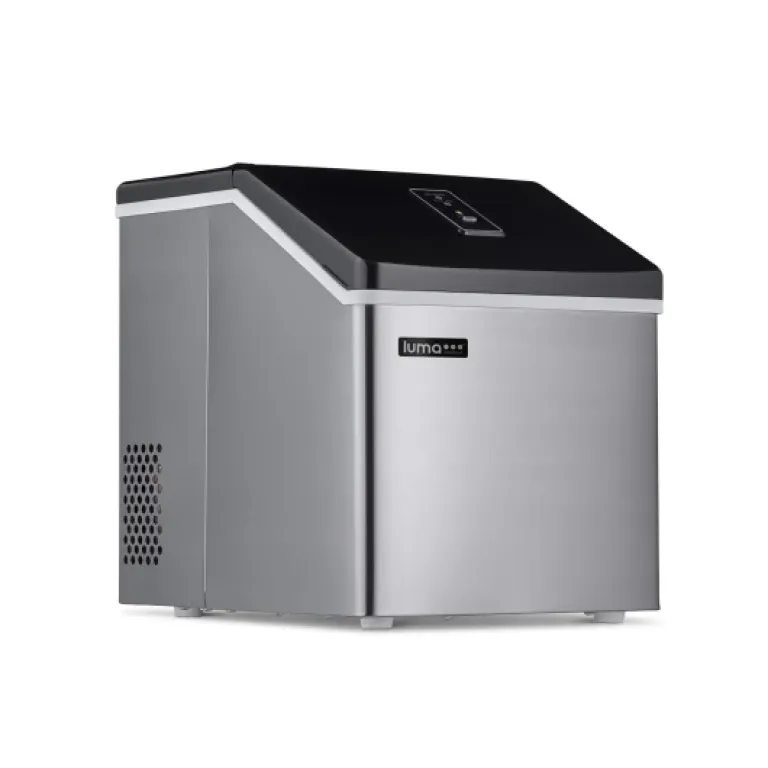
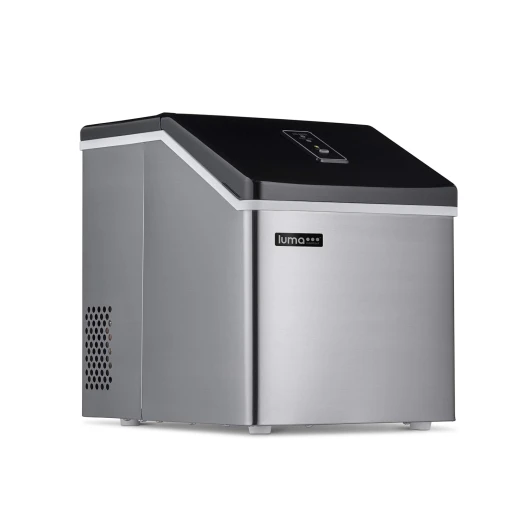
Design-wise, the IM200SS is pretty compact for what it does: about 14.8" deep, 11.3" wide, and 14.1" high, around 25 pounds. It’s basically a small stainless steel box with a plastic top lid. On my counter it fits under the upper cabinets, but I have to pull it forward to open the lid and pour water in, which matches what other users report. So if your cabinets are low or you hate moving appliances, keep that in mind.
The stainless steel body looks decent enough for a kitchen. It doesn’t scream “cheap plastic gadget”, though the lid and interior are still plastic. The front has basic indicator lights and a single button—very simple, no touchscreen nonsense. From a usability angle, I like that: one button, clear lights for “add water” and “ice full” and that’s it. There is a hidden option for making thicker ice if you hold the power button for several seconds, but there’s no visual feedback that it’s actually in that mode, which is a bit dumb. You kind of have to trust it or time your press like one of the Amazon reviewers suggested.
Noise-wise, it’s around the level of a mini-fridge plus some extra when the compressor kicks on and the ice drops. You hear the fan, the occasional clunk of ice falling, and the water trickling over the plate. In a kitchen or living room it’s fine. I wouldn’t put it in a bedroom or a quiet office if you’re picky about background noise. When it’s cycling constantly, you definitely know it’s running, but it’s not ridiculous.
The included scoop is a bit of a joke: tiny and flimsy plastic. More than one review mentioned it, and I agree. It’s okay for gently moving ice, but if you use it to break up the sheets, it feels like it’s going to snap. I just grabbed a metal bar scoop and that feels a lot better. Overall, the design is simple and practical, but there are a few corners cut that show it’s built to a price, not as a premium bar appliance.
Stainless on the outside, more questionable stuff hidden inside
On the outside, you get stainless steel panels, which are nice enough and easy to wipe down. The top lid and all the internal parts you actually touch—the ice bin, reservoir, water channels—are plastic. The manufacturer says the plastic is BPA-free, which is good from a safety point of view. You’re not getting heavy chemical smells or weird plastic taste from day one, at least I didn’t notice any of that when I started using it.
Where things get more interesting is the hidden metal parts inside the water path. Several long-term users talk about a brown scum or residue building up under the ice bin over time, which they suspect is rust. I can’t confirm exactly what metal they used there, but if it were all high-quality stainless wherever water touches, you wouldn’t expect brown rust-like buildup. In my own use, I started seeing some light discoloration and slime potential in the reservoir area after a couple of weeks without a proper clean, which lines up with the reviews saying this thing needs regular flushing.
To keep the ice clear and avoid that slime, people are recommending either distilled water or reverse osmosis water. Tap water with minerals or softened water tends to leave more deposits. One user even mentioned mineral buildup around a sensing screw under the ice bucket causing issues with water flow. That tells you there are exposed metal bits in the water path that can collect scale or rust if you’re not careful. So yes, it works, but you really do want to stay on top of cleaning and maybe avoid hard water if possible.
So from a materials perspective: the parts you see and touch are fine for the price. The internal water-contact components feel like the weak link. They work, but over years, you may end up dealing with residue, off tastes, and more cleaning than you’d like. If you expect this to last 5–10 years like a built-in fridge ice maker, that’s probably optimistic based on the user who tossed theirs after a few years of fighting slime and brown gunk.
Short-term solid, long-term stories are mixed
Out of the box and in the first months, the IM200SS feels solid enough. The housing doesn’t flex, the lid works fine, and the internal bin slides in and out without drama. In my own testing period, I didn’t have any breakdowns or obvious failures—no leaks, no sensor issues, nothing like that. For a 130-watt countertop unit, it behaves like a normal small appliance at first.
Where the red flags pop up is in the longer-term user reviews. There’s at least one detailed review from someone who used it for several years and had a series of problems: brown scum buildup, ice coming out too thick to drop, water overfilling the bottom area, and a water controller that stopped working correctly, then mysteriously started working again. They managed to keep it going with workarounds—limiting the water fill, adding magnets to raise the ice bucket, cleaning around a screw, etc.—but eventually gave up when cleaning became a constant battle and they started worrying about taste and safety.
Another user who ran theirs basically nonstop for 15 months reports fewer drama issues but clearly had to do regular bleach flushes and maintenance to keep things running well. They even added a washer and plumber’s putty around a screw to control the water level. That’s not something the average buyer will ever do. So durability here seems to depend heavily on how handy and persistent you are. If you’re willing to open it up a bit, clean aggressively, maybe even mod it, you can probably stretch its life. If you want plug-and-forget durability, you might be disappointed after a couple of years.
So my take: as a 2–3 year appliance that you accept might eventually get retired, it’s okay. I wouldn’t count on it as a 10-year workhorse, especially if you’re running it constantly. The combination of water, heat, and marginal internal materials means things will eventually gum up or corrode. If that sounds acceptable for the price, fine. If you hate replacing appliances and doing DIY fixes, I’d look at more heavy-duty (and more expensive) under-counter or built-in ice makers.
Ice quality is strong, but you pay with noise and maintenance
Performance is where this machine actually holds its own. When you feed it decent water and keep it clean, the ice it produces is clear, hard, and slow-melting. In cocktails, whiskey, or iced coffee, you can tell the difference versus the cloudy “bullet ice” from cheaper machines. Drinks stay colder longer without turning into watered-down messes so quickly, and carbonated drinks don’t foam up as much because the surface is smoother and there’s less trapped gas.
Speed-wise, it does roughly what the listing says. You get the first sheet of ice in about 15–20 minutes, and after that it’s a steady rhythm: freeze, drop, repeat. A full bin takes a few hours, and if you keep scooping ice into your freezer as it goes, you can build up a decent stash over an afternoon. Compared to my old bullet-style machine, this is a bit slower per cycle but the ice is denser and lasts longer in the glass, so for me it’s a fair trade.
The downside is that performance drops if you slack on cleaning or use mineral-heavy water. Users have reported the unit starting to make ice that’s too thick to release, water overfilling the bottom area, or the sensor failing to stop the fill correctly. In several cases, cleaning out mineral buildup or adjusting water levels temporarily fixed it. That tells me the machine is a bit sensitive and doesn’t have a lot of tolerance for gunk. Also, as dust gathers on the condenser coils, cooling efficiency suffers and the ice gets thinner, so you eventually have to blow those out too.
In daily life, performance is good if you treat it like a small piece of bar equipment rather than a dumb appliance. If you: 1) use clean water, 2) drain and refill regularly, 3) give it a proper cleaning cycle once a month or so, you’ll probably be happy with the output. If you don’t, the ice quality and reliability will go downhill and you’ll end up swearing at it. The raw capability is there; the maintenance overhead is the catch.

What this machine actually does (and doesn’t) do
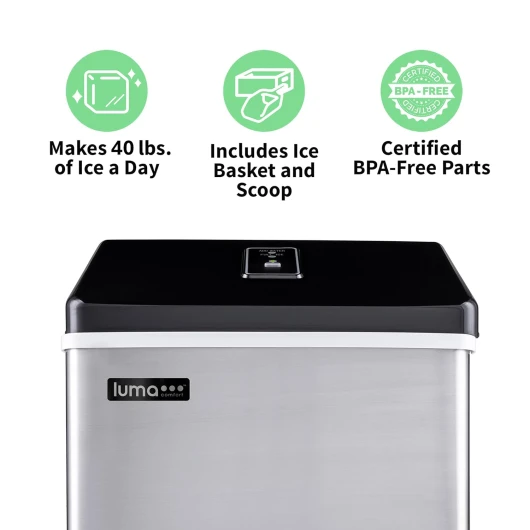
On paper, the IM200SS is pretty straightforward: it’s a countertop clear ice maker that claims up to 40 lbs of ice per day and first cubes in about 15 minutes. There’s a small internal bin, some insulation, and a simple control panel with indicator lights. You pour water into the reservoir, hit one button, and water cascades over a cold plate to freeze in layers. That’s how it gets the clear look instead of cloudy bullets.
In practice, it doesn’t dump out perfect little individual cubes. It freezes a thin sheet of ice on the cold plate, then drops that sheet into the bin where it breaks into pieces. So a “cycle” is basically one sheet every ~15–20 minutes, and you end up with a pile of rectangular chunks. They’re easy to break apart by hand or with a scoop, but if you expect fridge-style perfectly separated cubes, that’s not what this is.
The 40 lbs per day spec is the usual marketing number: that’s if you run it nonstop and keep emptying the bin so it can keep producing. For normal home use—filling a bag or a big container for the freezer—you’re more likely to run it a few hours at a time. I’ve been able to fill a large freezer bag after an afternoon of running it, which is fine for a couple of people or a small party, but not enough for a big event unless you start the day before.
One important point: the bin is not refrigerated. It’s insulated, so the ice lasts a while, but it slowly melts. The melt water goes back into the reservoir and gets reused. That’s convenient, but it also means if you never dump the water and never clean the unit, all the minerals and junk build up in that loop. That’s exactly what some of the long-term negative reviews are talking about—slime, brown residue, and ice quality going downhill. So the “just add water and ignore it” fantasy isn’t realistic. You have to treat it like a small appliance that needs routine cleaning.
Pros
- Produces clear, hard, slow-melting ice that’s noticeably better than typical cloudy bullet ice
- First usable ice in about 15–20 minutes and can build up a decent stash over a few hours
- Simple one-button operation and compact countertop footprint compared to built-in systems
Cons
- Requires regular cleaning and good water (distilled/RO) to avoid slime, residue, and cloudy ice
- Long-term durability is questionable, with some users reporting issues after 1–3 years
- Ice bin is not refrigerated, so ice slowly melts and must be transferred to a freezer for storage
Conclusion
Editor's rating
Overall, the NewAir / Luma IM200SS clear ice maker does what it says on the box: it makes clear, hard ice fairly quickly, and for home cocktails or daily iced drinks, the difference versus basic bullet ice is noticeable. First cubes show up in about 15–20 minutes, you can fill a freezer bag over an afternoon, and the cubes melt slowly enough that your whiskey or iced coffee doesn’t turn into flavored water right away. The controls are simple, the unit is reasonably compact, and for casual entertaining it easily keeps up with a couple or small family—especially if you move finished ice to the freezer.
The trade-offs are on the maintenance and longevity side. The bin isn’t refrigerated, so ice slowly melts and the water is constantly recycled, which means minerals and gunk build up unless you’re disciplined about cleaning. Several long-term users report brown residue, slime, and some mechanical quirks after a year or two. You can keep things going with regular bleach flushes, distilled or RO water, and occasional deep cleaning, but if you’re expecting a zero-maintenance machine that lasts forever, this isn’t it.
I’d recommend this for people who care about drink quality, like to play home bartender, and are okay with doing monthly cleaning and maybe replacing the unit after a few years if it starts acting up. It’s also a decent backup if your fridge ice maker died and you don’t want to redo plumbing. If you just want cheap ice for coolers and don’t care if it’s cloudy, a simpler bullet-style machine is enough. If you want heavy-duty reliability and truly low maintenance, you’re in under-counter or built-in territory, and that’s a very different budget.