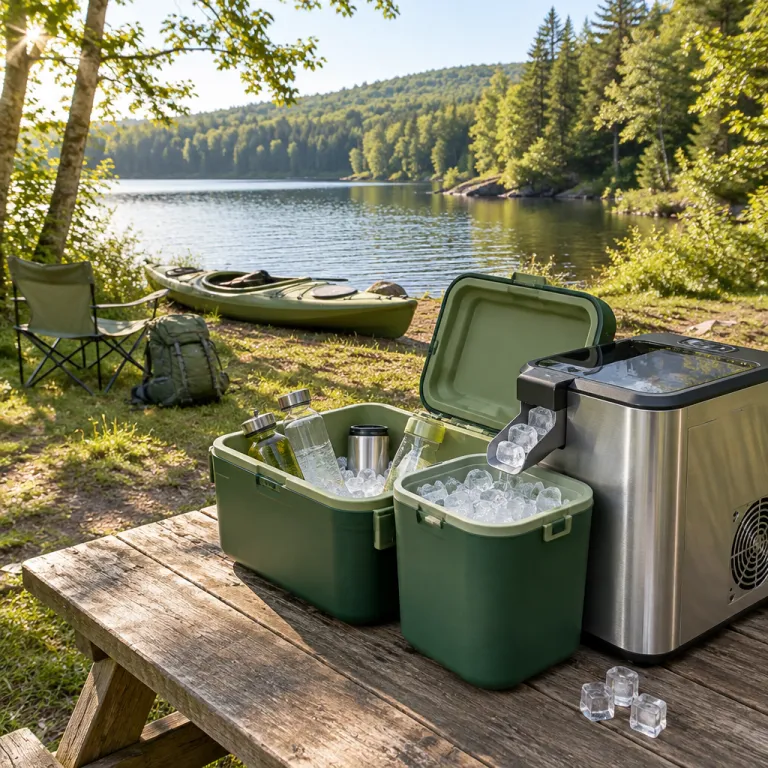
Why portable ice makers need a qool cooler style companion
A portable ice maker only reaches its potential when paired with a high performance qool cooler style storage system that actually preserves the cubes you produce. When you combine a reliable ice machine with a qool box that stabilizes temperature over long outdoor trips, you stop wasting energy and water on constantly remaking melted ice. This pairing matters for every camper who wants cool drinks and safe food without running a generator all night.
Think of your ice maker as the engine and the insulated box or cooler as the fuel tank that keeps the cold energy stored for days. High performance coolers designed with advanced foam and vacuum insulation can hold the interior temperature steady, so every batch of ice you add lasts dramatically longer. When the cooler keeps the ice frozen instead of letting it slush, your portable machine runs fewer cycles and enjoys a longer service life.
For buyers comparing models, the main SEO keyword qool cooler represents more than a brand reference in this article; here it is used as a shorthand for a design philosophy focused on precise temperature control and efficient cooling. A qool technology inspired cooler keeps food, drinks, and ice at a precise temperature range using temperature elements that buffer heat swings. This approach is especially valuable for outdoor enthusiasts who camp for several days in remote locations without grid power.
Understanding phase change materials and vacuum insulation in coolers
Most portable ice maker buyers focus on production rate in kilograms per day, but they rarely evaluate how phase change material and vacuum insulation in the cooler will protect that output. A modern qool cooler style system uses temperature elements based on what is called phase change technology, which absorbs or releases heat at a defined temperature range to stabilize the interior temperature. When these elements are matched correctly to your target temperature profile, the cooler keeps ice and food drinks in a narrow band instead of swinging wildly.
Inside a high tech qool box, the walls often combine thick foam insulation with a vacuum insulation panel that works like a thermos bottle laid flat. Independent lab tests on vacuum insulated panels report thermal conductivity values around 0.004 W/(m·K), compared with roughly 0.02 to 0.03 W/(m·K) for typical polyurethane foam, which translates into dramatically slower heat transfer (see, for example, manufacturer data sheets and building insulation studies published between 2015 and 2020). For a rooftop tent camper or van owner, that means the cooler keeps food safe even when the sun beats down on the vehicle roof all afternoon.
Some coolers designed around qool technology use interchangeable temperature elements that you can pre freeze at different set points depending on what you want to keep food at. One set might hold a precise temperature just above freezing for fresh produce, while another change material pack keeps ice rock solid for cocktails. When you pair such a box with a compact nugget ice maker like the one described in this review of a space saving nugget ice machine, you gain both production flexibility and storage stability.
Sizing your qool style cooler and ice maker for real trips
Choosing the right capacity in liters for both your portable ice machine and your qool cooler style box depends on how many people you serve and for how many days. A solo camper with tiny cooking gear and modest food drinks needs might manage with a 15 to 20 liters cooler, while a family using a rooftop tent and full outdoor kitchen often requires 40 liters or more. The longer your trip and the hotter the outdoor climate, the more interior volume and insulation performance you should prioritize.
Start by estimating how much ice you actually use per person per day, then match that to the production rate of your machine and the storage volume of your coolers. Many compact countertop ice makers list production capacities between 10 and 15 kilograms per 24 hours in manufacturer specifications, but real world output is often closer to 60 to 80 percent of that rating depending on ambient temperature, based on user tests reported in appliance reviews and off grid forums. Once you know the daily requirement, you can decide whether a smaller box with superior vacuum insulation and phase change elements will outperform a larger but less efficient chest.
Remember that a qool cooler style system is not only about liters but also about how the cooler keeps a stable temperature range over multiple days. If you plan three days of off grid camping, you want a cooler performance that matches or exceeds that duration without constant refreezing. Matching capacity, insulation, and temperature elements to your itinerary ensures that every batch of ice you add is used for cooling, not wasted on compensating for poor design.
Integrating a qool cooler style box into your outdoor kitchen layout
When you design an outdoor kitchen around a portable ice maker, the placement of your qool cooler style box is as important as the appliance itself. Keep the cooler away from direct sun and hot vehicle panels, because every extra degree of exterior temperature forces the insulation and vacuum insulation to work harder. A shaded area under an awning or beside other gear reduces heat load and helps the interior temperature stay closer to the precise temperature set by your temperature elements.
For rooftop tent users, consider whether the qool box will ride inside the vehicle cabin or in an exterior cargo box. Inside placement usually offers a more stable temperature range, while exterior mounting exposes the cooler to harsher outdoor elements and stronger solar gain. In either case, coolers designed with qool technology and phase change material will handle these swings better than basic foam boxes, especially over several hot days.
Think about workflow as well, because every time you open the box you add warm air and reduce cooling efficiency. Store frequently accessed food drinks near the top and less used frozen items deeper, so you can keep food organized and minimize open lid time. When your layout respects how the cooler keeps its cold charge, your portable ice maker runs fewer cycles and your days in camp feel more relaxed.
Balancing power use, noise, and cooling performance
Portable ice makers draw significant power during each freezing cycle, so the better your qool cooler style storage, the less often the compressor needs to run. When the cooler keeps ice solid for longer thanks to strong insulation and vacuum insulation, you can schedule fewer production bursts during off peak times or when your solar panels deliver maximum output. This strategy reduces generator noise in camp and extends battery life for outdoor enthusiasts who rely on compact power stations.
Noise also matters at night, especially in a tiny camper or rooftop tent where every sound is amplified. By using a qool box with temperature elements and phase change material, you can produce ice during the day and then shut the machine off while the cooler maintains a stable interior temperature. The result is quiet sleeping conditions while your food drinks and frozen items remain safely within the target temperature range.
For buyers comparing high tech options, prioritize systems where the cooler keeps a precise temperature over many days rather than chasing the highest raw ice output. A balanced setup with a moderate capacity machine and an efficient qool cooler style box often outperforms a large ice maker paired with a weak box. In practice, that balance means less power draw, fewer refills, and more enjoyable time in the outdoors.
When a qool cooler style system justifies a premium budget
Spending more on a qool cooler style box and advanced temperature elements can seem excessive until you calculate the long term benefits for frequent trips. If you camp many days each season, the ability of the cooler system to maintain a precise temperature range reduces food waste, fuel use, and the need to buy bagged ice. Over time, those savings offset the higher upfront price of coolers designed with vacuum insulation and phase change technology.
Serious outdoor enthusiasts who carry high value food drinks, medical supplies, or specialty frozen ingredients gain even more from qool technology. A qool box with interchangeable change material packs can hold different interior temperature zones, allowing you to keep food at safe refrigerator levels while preserving ice for cocktails or smoothie making. When paired with a quality ice maker and other high end kitchen appliances for home and camp, this setup approaches professional kitchen reliability in a compact footprint.
For occasional users who only take a tiny weekend trip once a year, a simpler box may suffice, but even they benefit from understanding how temperature elements and vacuum insulation work. Knowing why a qool cooler style system performs better helps you read specifications critically and compare manufacturer claims with independent test data from consumer organizations. In every case, aligning your budget with your actual outdoor patterns ensures that the gear you add to your kit delivers measurable value.
Key statistics for portable ice makers and advanced coolers
- Many portable ice makers produce between 10 and 15 kilograms of ice per day according to manufacturer data, which is usually enough for a family of four on a typical camping trip when paired with an efficient cooler that preserves most of that output; these figures match ranges reported in product specification sheets from major appliance brands.
- High performance coolers with vacuum insulation panels can reduce heat transfer by up to 60 percent compared with standard foam only designs, significantly extending the time that ice remains frozen in outdoor conditions, as indicated by comparative tests published in building physics and cold chain packaging literature.
- Food safety guidelines recommend keeping perishable food below 4 degrees Celsius, so a cooler that maintains this interior temperature for at least two full days without power is far safer than one that allows frequent warming cycles; this threshold aligns with recommendations from public health agencies such as the World Health Organization and national food safety authorities.
- Studies of off grid camping setups show that refrigeration and ice making can consume more than 30 percent of total electrical energy, which means improving cooler efficiency directly increases available power for lighting and device charging; similar shares are reported in research on recreational vehicle energy use and tiny home solar systems.
- Some phase change materials used in advanced temperature elements can hold a nearly constant temperature within a one degree Celsius band during melting, providing much more stable cooling than melting ice alone, according to technical datasheets from PCM manufacturers and thermal storage research papers.
FAQ about qool style coolers and portable ice makers
How does a qool cooler style box help my portable ice maker?
A qool cooler style box slows heat gain so the ice your machine produces melts much more slowly, which means fewer production cycles and lower power use. By combining strong insulation with temperature elements based on phase change material, the cooler keeps a stable interior temperature. This stability lets your ice maker operate on your schedule instead of constantly chasing melt losses.
What size cooler in liters should I pair with my ice maker?
Most buyers should match a 20 to 30 liters cooler with compact ice makers for two people, while groups of four or more often benefit from 40 liters or larger. The right size depends on how many days you stay off grid and how much food drinks you store alongside ice. Always consider both volume and insulation quality, because a smaller qool box with vacuum insulation can outperform a larger basic chest.
Are phase change temperature elements better than regular ice packs?
Phase change temperature elements are engineered to melt at a precise temperature, so they hold that level more consistently than standard ice packs that simply warm gradually. When used in a qool cooler style system, these elements can keep food at safe refrigerator temperatures while separate ice remains frozen for drinks. This separation improves both food safety and beverage quality during multi day trips.
Can I rely on a qool style cooler without external power?
Yes, a well designed qool cooler style box with strong insulation and pre frozen temperature elements can maintain safe temperatures for several days without electricity. The exact duration depends on ambient outdoor temperature, how often you open the lid, and how much frozen mass you add. For longer trips, many outdoor enthusiasts combine such a box with a portable ice maker and solar power to refresh the cold reserve as needed.
Is a premium high tech cooler worth it for occasional camping?
For occasional weekend trips, a premium high tech qool cooler style box is not strictly necessary, but it still offers benefits like reduced food waste and less time buying bagged ice. If you value quiet campsites, the ability of the cooler system to extend ice life also lets you run the ice maker less often. Buyers who plan to expand their outdoor activity later may find that investing once in a better box avoids multiple upgrades.