
Summary
Editor's rating
Is it good value for money compared to bigger brands?
Simple, boxy, and focused on function over style
Build quality and long-term feel
Ice output: solid, but don’t expect full 50 kg in real life
What you actually get out of the box
Everyday use: does it actually make your life easier?
Pros
- Strong ice output for the price, easily enough for home bars and light commercial use
- Simple controls with useful features like self-cleaning, timer, and adjustable ice thickness
- Dual water supply (line or bottled) gives flexible installation options
Cons
- Noticeable noise level, not ideal right next to quiet living spaces
- Build quality and accessories feel more budget than true commercial-grade
- Real-world production is lower than the advertised 50 kg/24h, especially if conditions aren’t ideal

Specifications
View full product page →| Brand | ROVSUN |
A budget-friendly ice workhorse, if you can live with the quirks
I’ve been running this ROVSUN commercial ice maker under my counter for a few weeks now, mainly for a home bar setup and the occasional small gathering. I’m not running a full restaurant, but I do host groups of 10–15 people and I was tired of buying bags of ice all the time. I picked this one because of the claimed 50 kg/24h output and the 22 kg storage, plus the price was lower than the big brands like Hoshizaki or Scotsman.
Right away, you can tell it’s not a premium brand. The packaging, the manual, and the general finish feel “good enough” rather than high-end. But that’s kind of what I expected for the money. I wasn’t looking for something fancy, just something that makes ice reliably without me babysitting it all day. My main concerns were: does it actually hit decent production, is the ice consistent, and is the noise level manageable in a home environment.
After setting it up with the included inlet pipe and filter, I ran it pretty hard for the first weekend: continuous use for a party, plus daily use for drinks and iced coffee. In practice, it doesn’t really give you 50 kg in a day in normal home conditions, but it still produces way more ice than a standard countertop ice maker. The bin filled up enough that I stopped worrying about running out, which is already a win for me.
Overall, my first impression is that it’s a practical but slightly rough-around-the-edges machine. It gets the job done, but you need to accept some noise, some basic-looking controls, and a bit of trial and error with settings. If you want something polished and silent, this isn’t it. If you just want a steady pile of ice and you’re okay with a “no-frills” vibe, it starts to make sense.
Is it good value for money compared to bigger brands?
Price-wise, this ROVSUN sits in the lower end of the commercial ice maker segment. You can easily pay double or triple for a similar capacity from well-known brands. So the real question is: are you okay trading some polish and long-term brand reputation for a lower upfront cost? In my case, for home use and occasional events, the answer is yes. The machine gives me more ice than I realistically need, and even if it doesn’t last 10 years, the cost per year still looks reasonable.
Compared to the small countertop ice makers I used before, this is a big step up. Those cheaper units usually top out at around 12–15 kg/day and constantly run at their limit during parties. This one doesn’t sweat that kind of use. So if you’re currently buying bags of ice or juggling multiple tiny machines, this is a more practical solution, even if the initial price is higher. You also save the hassle of going to the store for ice, which is nice.
Against premium commercial brands, it’s a different story. Those units often have better insulation, quieter operation, more solid components, and better after-sales support. If you’re running a busy bar or restaurant where ice is critical to your business, I’d still say spend more and get a known brand. But for a home bar, small office, Airbnb, or a low-traffic café, this ROVSUN hits a sweet spot: it delivers serious output without the premium price tag.
So in terms of value, I’d call it good but not unbeatable. You’re getting strong performance and decent features (self-cleaning, timer, dual water supply) at a fair price, with the trade-off being more noise, more basic materials, and some uncertainty about long-term durability. If you go in with realistic expectations and you’re not expecting a high-end appliance experience, you’ll probably feel you got your money’s worth.

Simple, boxy, and focused on function over style
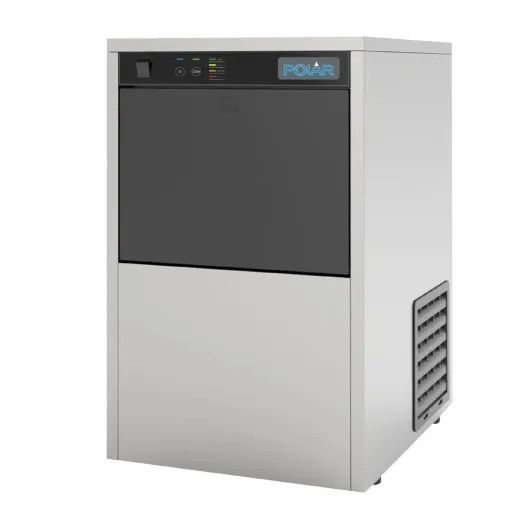
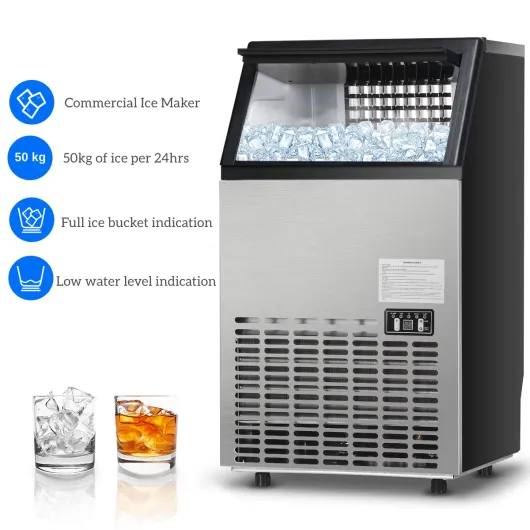
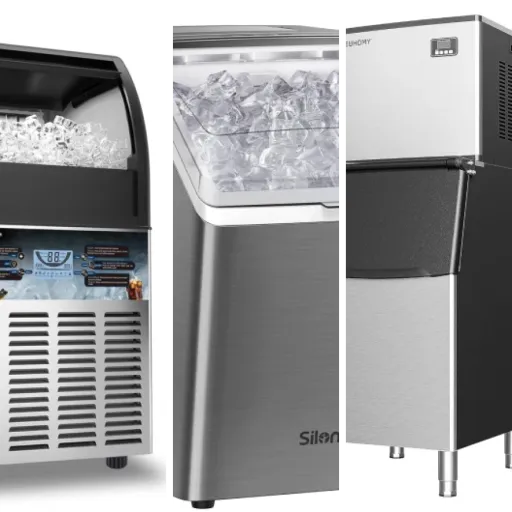
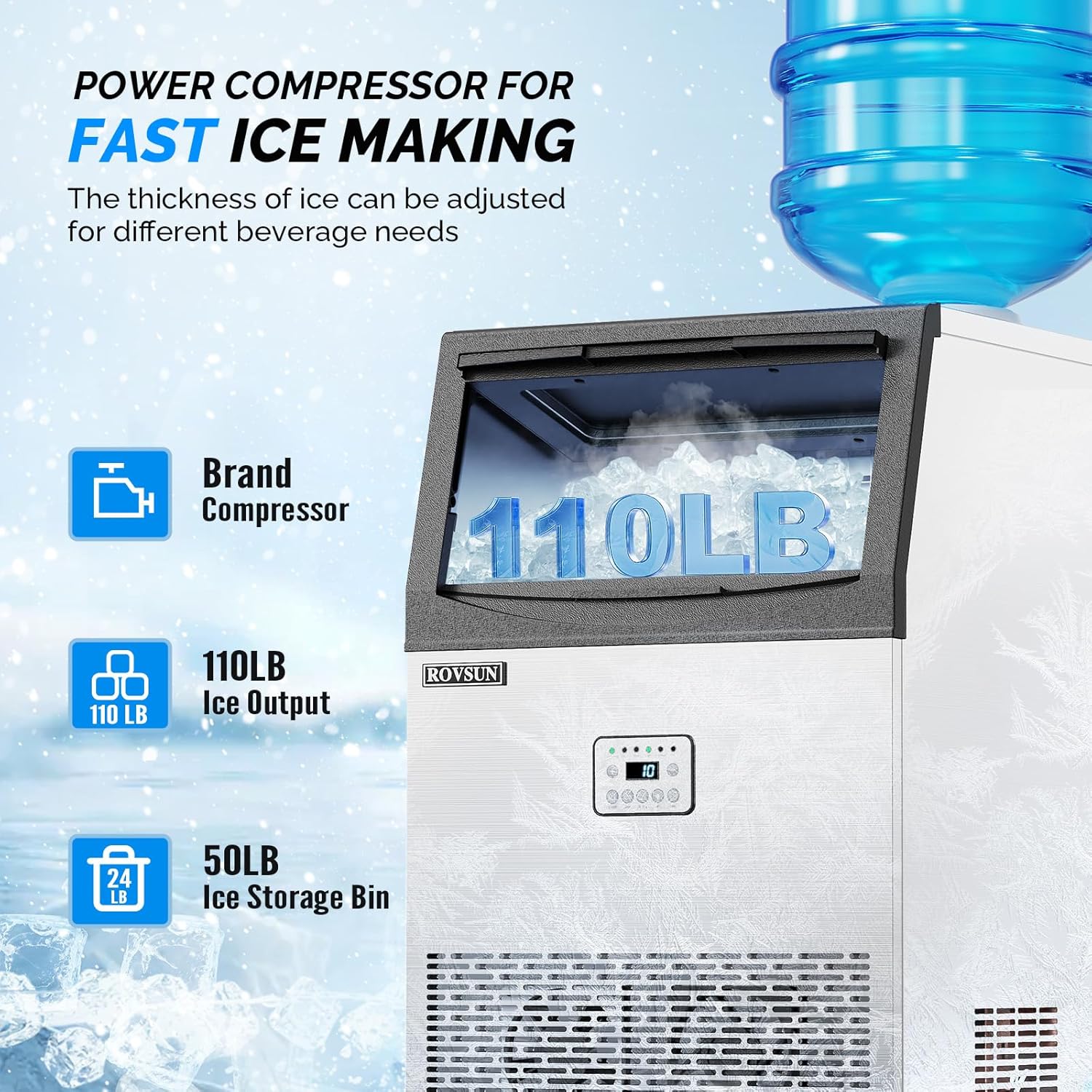
Design-wise, this ice maker is basically a stainless steel box with a front door and a small control panel. There’s nothing stylish about it, but it looks clean enough in a utility way. The stainless front doesn’t feel thick like on premium appliances, but it doesn’t bend or flex easily either. The sides are more basic metal panels. It doesn’t scream “cheap,” but you can tell it’s built to hit a price point, not to impress anyone visually.
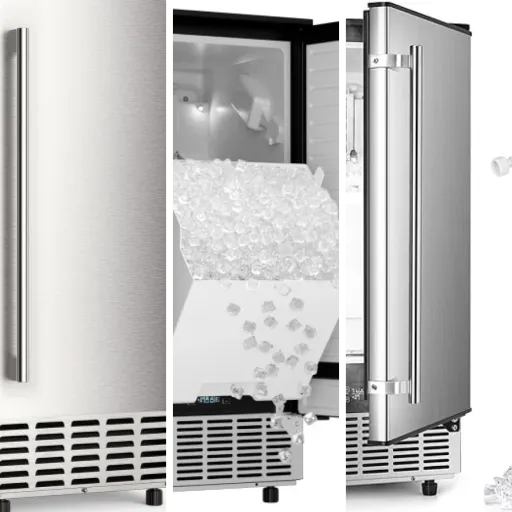
The front ice bin door opens downward and stays in position without feeling wobbly, which I appreciate. The handle is integrated into the top edge of the door, so there’s nothing sticking out to catch on. Inside, the ice bin is plastic but fairly solid, with enough room to scoop comfortably. The ice-making area is behind the bin, and you can see the grid that drops the cubes. It’s not sealed off like some machines, so you do get a bit of moisture and cold air escaping when you open the door, but that’s normal for this type of unit.
The control panel layout is straightforward: a small digital display in the middle, buttons around it, and indicator lights to the side. It looks like something from an older microwave, but it works. You can adjust ice thickness, set a 24-hour timer, and start the self-cleaning mode without digging into a menu tree. The icons could be clearer, but once you’ve used it twice, you remember what’s what. I do miss a clearer visual for the current thickness setting; the numbers are there, but they don’t mean much until you experiment.
One thing to note is ventilation. The unit pulls air from the front and sides and exhausts warm air, so you can’t cram it into a tight cabinet with no airflow. I left about 5–7 cm on each side and at the back, and it’s okay. If you’re planning to fully build it in, this is not the right model. Overall, the design is functional and a bit industrial, which is fine in a bar, café, or a more utility-style home kitchen. If you want something that blends perfectly with designer cabinets, you’ll probably find it too plain.
Build quality and long-term feel
I obviously haven’t had this machine for years, so I can’t pretend to know exactly how it will age, but there are a few things you can feel right away. The overall build is decent but not heavy-duty restaurant grade. The body panels don’t flex too much, the door hinges feel okay, and the internal bin doesn’t feel flimsy. At around 25 kg, it’s not super heavy, which usually means lighter materials, but also makes it easier to move and install.
The compressor and pump sound like they’re working normally. No weird rattles or grinding noises so far. After running it hard for full days on weekends and lighter use during the week, I haven’t noticed any change in noise or performance. The only thing I did notice is that the area around the vents gets quite warm, which is normal, but you really need to keep those vents clear. If you block them, I can easily see this shortening the life of the compressor.
The included hoses and filter feel a bit cheap. They work, but I wouldn’t be shocked if the hoses need replacing after a while, especially if you move the machine or disconnect it often. If you plan to use this in a small business, I’d probably budget for better quality hoses and maybe a more serious external water filter, especially if your water is hard. Lime scale is the enemy of any ice maker, and this one is no exception.
Overall, it feels good enough for home and light commercial use, but I wouldn’t choose it as the main unit in a busy restaurant that’s running 12–16 hours a day. For a café, a bar that isn’t packed every night, or a home bar where you want something stronger than a countertop unit, it seems acceptable. Time will tell on durability, but nothing in my short test screams “this will fall apart in a month.” Just don’t expect the same lifespan as a machine that costs three times as much from a top brand.

Ice output: solid, but don’t expect full 50 kg in real life
Performance is the main reason to buy this thing, so I paid close attention to how much ice it actually produces and how fast. The spec says 50 kg per 24 hours, 50 cubes every 11–20 minutes. In real use, with room temperature around 22–24°C and cold tap water, I was seeing batches roughly every 13–16 minutes on the medium thickness setting. The bin filled from empty to pretty full in about 3–4 hours of continuous running.
I didn’t weigh a full 24-hour production because I’m not running a lab here, but based on how fast the bin fills and how often it cycles, I’d say you get decent output, just not the full 50 kg unless conditions are ideal and you’re constantly emptying the bin. For a home bar and small events, it’s more than enough. I ran a party with about 12 people, lots of cocktails, and we never came close to running out, even with people refilling ice buckets. That’s a big step up from the small countertop machines that constantly struggle to keep up.
The ice cubes themselves are clear-ish and fairly hard. You can adjust the thickness, and that does change the size and how solid they are. Thicker setting gives you denser cubes that melt slower in drinks but take a bit longer to produce. On the thinnest setting, they come faster but melt quicker. For cocktails and soft drinks, the medium setting felt like the best compromise. The shape is the classic square/rectangular cube you see in many commercial machines, nothing fancy, but it works well in shakers and glasses.
Noise-wise, it’s not quiet. You hear the compressor hum and the water running, plus the occasional clunk when a batch of ice drops. In an open kitchen, you will notice it, especially in the evening when everything else is quiet. In a bar or café, it blends into the background. If you’re very sensitive to noise, this could bother you. Personally, I got used to it after a couple of days, but I wouldn’t put it right next to a living room TV area. Overall, the performance is pretty solid for the price: it keeps up with light commercial use and absolutely crushes anything “domestic” in terms of output.
What you actually get out of the box
Out of the box, the ROVSUN CIM-500T comes with the ice maker itself, an ice scoop, a small water filter, an adapter, an inlet pipe, and an outlet pipe. So in theory, you have everything you need to get started except a drain and a water source. The manual is basic but usable. The English is a bit rough in places, but you can understand the diagrams and the steps. I had to read a couple of pages twice to be sure, but nothing impossible.
The machine is fairly compact for a “commercial” unit: about 42 cm deep, 48 cm wide, and 82 cm high. It’s not tiny, but it slid under my counter once I adjusted the feet. It’s freestanding, so you can also leave it exposed if you want, but keep in mind you’ll need access to the back for water in and drain out. The front is stainless steel with a black plastic door for the ice bin. The control panel is on the front too, with a small digital display and a few buttons.
When you first plug it in, the interface looks a bit old-school, but everything is labeled: power, clean, timer, up/down for adjustments. There are indicator lights for “ice full” and “water shortage.” No fancy touchscreen, no app, just simple buttons. Personally, I prefer that in this price range; fewer things to break. The included ice scoop is cheap plastic but usable. The filter is small and clearly not a high-end filtration system, but it’s still better than nothing if your tap water is a bit hard.
In practice, the presentation matches the price bracket. It feels like a budget commercial unit, not a premium built-in appliance. If you’re expecting polished branding and a thick, detailed manual, you’ll be disappointed. If you just want something that’s reasonably complete and ready to hook up, it’s fine. I do recommend planning your installation spot ahead of time: measure your space, make sure you have a drain nearby or a way to run the outlet hose, and think about ventilation, because this thing does kick out some warm air from the sides and back.

Everyday use: does it actually make your life easier?
In day-to-day use, what matters to me is whether I can just forget about ice and trust the machine to do its job. After a couple of weeks, I’d say it mostly does that, with a few caveats. Once you dial in your preferred ice thickness and set up the water supply, you basically switch it on before you need it and let it run. The “ice full” sensor stops production when the bin is full, and it starts again when you scoop some out. That part works fine; I never had it overflow or keep running when full.
The self-cleaning function is handy. You press the clean button, it runs a cycle flushing water through the system, and the blue light disinfection is supposed to help keep things hygienic. I still wipe down the bin and drain it regularly, because I don’t fully trust any machine to stay clean on its own, but it does reduce the hassle. For a home user like me, I’d say running the cleaning cycle once a week is enough. In a café or bar, I’d probably do it more often.
The dual water supply option is a nice touch. You can hook it up to a fixed water line (what I did) or use bottled water if you don’t have plumbing nearby. I tested the bottled water setup briefly: it works, but you have to keep an eye on the level, and for heavy use it becomes annoying. For occasional use in a spot with no tap, it’s fine. For daily use, a fixed line is clearly better. The water shortage indicator kicks in when the tank is low, and the machine stops, so at least it doesn’t run dry and overheat.
Where it’s less effective is in user feedback and fine control. The panel tells you when the bin is full or when water is low, but there’s no detailed status beyond that. Also, the timer function is basic: you can set it to turn on or off after a certain time, but it’s not super intuitive. Once you figure it out, it’s okay, but don’t expect smart-home-level control. Still, for the price, it does what it’s supposed to do: it frees you from buying and storing bags of ice and keeps a decent stock ready with minimal fuss.
Pros
- Strong ice output for the price, easily enough for home bars and light commercial use
- Simple controls with useful features like self-cleaning, timer, and adjustable ice thickness
- Dual water supply (line or bottled) gives flexible installation options
Cons
- Noticeable noise level, not ideal right next to quiet living spaces
- Build quality and accessories feel more budget than true commercial-grade
- Real-world production is lower than the advertised 50 kg/24h, especially if conditions aren’t ideal
Conclusion
Editor's rating
The ROVSUN CIM-500T is a straightforward, no-frills commercial-style ice maker that suits home bars, small cafés, and offices that need a steady flow of ice without spending a fortune. It doesn’t fully live up to the 50 kg/24h spec in real-world conditions, but the output is still more than enough for light commercial use and easily covers parties and daily household needs. The ice quality is consistent, the thickness adjustment actually makes a difference, and the self-cleaning mode helps keep maintenance under control.
On the downside, you’re clearly not buying a premium machine. The design is basic, the materials are decent but not heavy-duty, and the noise level is noticeable in a quiet home. The hoses and small filter are serviceable but feel cheap, and long-term durability is a bit of a question mark compared to the big brands. That said, for the price, it offers solid performance and practical features like the dual water supply and 24-hour timer.
If you’re a home user who hosts often, runs a home bar, or just hates dealing with ice bags, this is a good fit as long as you have the space and can tolerate some noise. For a small café or bar that isn’t slammed all day, it’s also a realistic option. If you’re running a high-volume restaurant or you want a near-silent, fully integrated unit with top-tier build quality, you should look at more expensive, established brands instead.