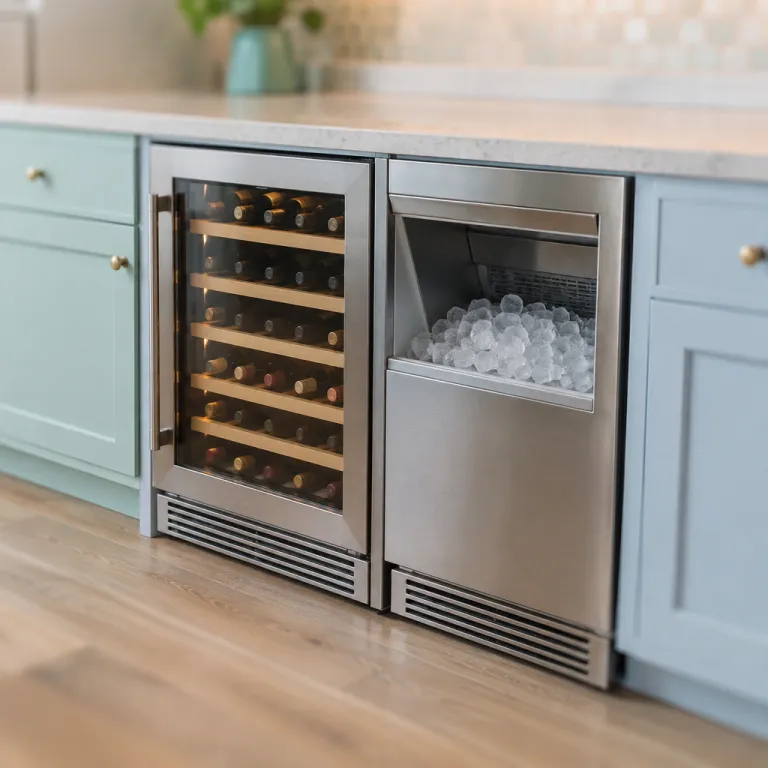
How an under counter wine cooler complements undercounter ice makers
Pairing an under counter wine cooler with an undercounter ice maker creates a compact beverage station that feels genuinely professional and showroom worthy. This side‑by‑side layout keeps wine at precise serving temperature while your ice appliance delivers clear cubes for cocktails and soft drinks, so every drink leaves the bar ready to serve. In a small kitchen or bar, this integrated combination of appliances saves space yet still looks high end and carefully planned, especially when you treat both units as part of one coordinated design rather than stand‑alone tools.
Buyers who already own built in refrigerators often ask whether a separate undercounter wine unit is necessary, and the answer is usually yes if you care about stability and precision. A dedicated built in wine fridge uses different compressor controls, insulation and vibration damping than standard refrigerators, which helps keep bottles at a steady temperature and humidity level that protects corks and labels. Manufacturer data from brands such as Sub‑Zero and Miele typically shows tighter temperature bands for wine cellars than for general refrigeration, and when your ice machine is running hard during parties, the wine compartment remains calm and stable so both appliances perform at their best.
The design of the surrounding cabinetry matters as much as the machines themselves. A panel ready under counter wine cooler can share the same false panel style as your undercounter ice maker, so the two appliances visually disappear into the kitchen furniture and read as one continuous run. This unified panel treatment works especially well in open plan spaces where you want the bar area to feel like refined furniture rather than a row of shiny tools, and it gives you the option to highlight the glass door as a feature or keep it hidden behind a matching front.
Capacity, bottle layout and glass door choices for serious hosts
Before comparing any under counter wine cooler, measure the space beside your undercounter ice maker with care. Depth, ventilation gaps and door swing clearance all affect how easily you can access bottles while someone else is scooping ice or using nearby bar tools. A tight fit that ignores these details can make daily use frustrating, even if the product specifications look perfect on paper, so treat accurate dimensions as a non‑negotiable design step.
Capacity is more than a single number because different bottle shapes change how many units you can realistically keep inside. Many manufacturers quote a high bottle count based on slim Bordeaux wine bottles, but mixed collections with sparkling wine, Burgundy shapes or large format glass quickly reduce that figure by 10 to 20 percent according to typical layout diagrams. Look for adjustable shelves, sliding racks and flexible accessories that let you adapt the interior layout to your real drinking habits rather than a theoretical maximum, and check whether the product literature shows separate counts for standard, Champagne and magnum bottles.
Door construction deserves special attention, especially when your cooler sits near warm appliances or bright windows. Double or triple pane glass with low emissivity coatings helps keep internal temperatures stable while still showing labels attractively in a home showroom style bar, and many premium models specify UV‑filtered glass for extra protection. If you prefer a more discreet look, a solid panel ready door can match your cabinetry and echo the design of a nearby undercounter ice maker, while still keeping wine cellars level performance in a compact footprint that blends into the rest of your built in appliances.
For readers comparing beverage stations with ice, wine and refrigeration in one line, a detailed resource such as the guide to the benefits of built in ice makers can clarify how these appliances share power, ventilation and service access. Understanding those shared constraints helps you choose the right type of under counter wine cooler that will not fight for airflow with your ice machine or neighboring refrigerators. When both units breathe properly, they run quieter, last longer and keep drinks ready without temperature swings that could compromise either chilled bottles or fresh ice.
Temperature zones, vibration control and pairing with ice production
Temperature zoning is where a serious under counter wine cooler separates itself from basic beverage refrigerators. Single zone models keep all bottles at one set point, which suits either long term cellars storage or everyday serving, but not both at once. Dual zone or even triple zone options let you hold reds slightly warmer while whites and sparkling wine stay colder, so every style is ready when your guests arrive and you can keep a mix of bottles prepared for different courses.
When you place a wine cooler next to an undercounter ice maker, vibration control becomes more than a marketing phrase. Ice production cycles can create subtle mechanical movement, and a well engineered wine product will isolate its racks from that activity using dampers, rubber mounts and carefully balanced compressors. This protection helps keep sediment settled in older bottles and supports graceful aging, even in a busy kitchen where appliances cycle frequently, and spec sheets for high end wine cellars often highlight reduced vibration as a core design feature.
Humidity management is another quiet but critical specification that many buyers overlook. A good under counter wine cooler aims to keep relative humidity high enough to prevent corks from drying, while still avoiding condensation on the glass door or panel surfaces that could damage a false panel. If you are planning a full undercounter wine and ice station, study the technical sheets for both appliances and use a specialist resource such as this undercounter ice maker buying guide to align drainage, ventilation and ambient temperature requirements so each product can keep its internal climate stable.
Panel ready integration, false fronts and kitchen design harmony
Many ice maker buyers care as much about aesthetics as performance, which is where panel ready under counter wine coolers shine. A panel ready door accepts a custom cabinet front, sometimes called a false panel, that matches your surrounding drawers and doors and hides the working appliances behind a furniture style façade. When you repeat this false panel treatment on both the wine cooler and the undercounter ice maker, the whole run of cabinetry reads as furniture rather than a row of appliances, yet you still keep bottles and ice within easy reach.
Handle style, toe kick height and ventilation grille design all influence how refined the final installation appears. Some undercounter wine models vent through a slim front panel, while others require a more open grille that visually signals their presence as working tools and affects how the design line flows. Matching these details with your ice maker and any nearby refrigerators creates a cohesive design language that feels intentional instead of pieced together over time, and it gives you the option to emphasize symmetry between glass doors and solid fronts.
Lighting inside the wine compartment also plays a role in perceived quality. Soft, dimmable LEDs that wash gently over bottles can turn a simple under counter wine cooler into a miniature showroom, especially when paired with clear ice from a premium undercounter machine and other high end bar accessories. If you prefer a quieter look, choose a model where the glass door tint and internal lighting keep labels visible only when you open the door, preserving a calm façade of panel ready cabinetry and letting the design recede when the station is not in use.
For homeowners planning a full suite of coordinated appliances, resources such as this overview of high end kitchen appliances that elevate home ice making can help frame the broader design strategy. Thinking about the entire wall of appliances at once prevents awkward gaps, mismatched finishes and poor access to key storage zones. The result is a bar or prep area where wine, ice and food storage feel like one coherent system, and every product choice supports both function and visual harmony.
Installation, ventilation and practical access in busy kitchens
Correct installation is essential if you want both your under counter wine cooler and undercounter ice maker to reach their rated lifespan. Built in appliances need precise ventilation paths so warm air can escape, and blocking these with a careless false panel or tight trim kit can cause overheating and void warranties. Always follow the manufacturer’s minimum clearances, which are often in the range of a few centimeters at the rear and base, and avoid pushing the product fully flush unless the design explicitly allows it with front venting.
Access planning goes beyond simply opening the door without hitting a wall. Think about how you will stand when you scoop ice, reach for bottles or use bar tools on a nearby counter, because cramped movement quickly becomes tiring during long evenings of entertaining. Left hinge versus right hinge, handle projection and even the swing of adjacent cabinet doors all influence how naturally you can keep drinks flowing, so sketch the layout and check that every appliance door clears surrounding panels and furniture.
Drainage and power supply are two more practical details that tie wine coolers and ice makers together. Many undercounter ice appliances require a gravity drain or pump, while most under counter wine units only need a standard electrical circuit, yet both must share limited space behind the cabinets and within the toe kick. Planning these routes early with your installer avoids false starts, extra holes in panels and awkward compromises that could have been solved with a slightly different layout or by choosing a different type of undercounter product.
Choosing the right type of under counter wine cooler for your habits
Selecting the best under counter wine cooler starts with an honest look at how you drink and entertain. If you mainly serve chilled whites and sparkling wine with plenty of ice, a dual zone undercounter model beside a powerful ice maker will suit most gatherings and keep your favorite bottles ready at all times. Those who collect age worthy reds may prefer a single zone unit set for cellars conditions, while using separate beverage refrigerators for everyday drinks and mixers that do not need such careful storage.
Noise level often separates premium appliances from budget options, especially in open plan homes. A high quality compressor, good insulation and thoughtful fan design keep sound levels low, so your undercounter wine and ice station hums quietly in the background instead of dominating conversation, and spec sheets frequently list decibel ratings in the mid‑30s to low‑40s for better models. When comparing specifications, look for those decibel figures and ask to hear working showroom displays, because your ears will quickly tell you which product feels refined enough for daily life.
Finally, consider long term service and parts availability before committing. Under counter wine coolers and undercounter ice makers are specialized tools, and access to filters, shelves, door gaskets and other accessories will determine how easily you can keep them performing like new. Choosing brands with established service networks, clear documentation and readily available replacement parts protects your investment and ensures that every bottle and every scoop of ice is ready when you need it, without unexpected downtime.
Key figures and performance benchmarks for under counter wine coolers
- Most under counter wine coolers operate best in ambient temperatures between 10 °C and 32 °C, which matches the typical range of conditioned residential kitchens according to common manufacturer specifications for built in wine appliances and compact wine cellars.
- Dual zone undercounter models often allow independent temperature settings from about 5 °C to 20 °C, covering both serving and cellars style storage in one appliance, as shown in technical sheets for brands such as Sub‑Zero and Miele that publish detailed control ranges.
- Quality compressors in premium wine appliances usually cycle less frequently than those in basic beverage refrigerators, which reduces vibration and supports more stable aging conditions, a design goal highlighted in many wine cellars product brochures and engineering notes.
- Many 60 centimeter wide under counter wine units hold between 30 and 50 standard 750 milliliter bottles, but real capacity drops by 10 to 20 percent when you mix in larger formats, based on typical layouts published by major manufacturers that illustrate different bottle types.
- Energy efficient models with LED lighting and improved insulation can use significantly less electricity than older designs, which matters when the cooler runs continuously beside an always on undercounter ice maker, as noted in Energy Star style guidance for refrigeration appliances and related product categories.
FAQ about under counter wine coolers and undercounter ice makers
Can I place an under counter wine cooler directly next to an undercounter ice maker ?
Yes, you can place them side by side if both appliances have front ventilation and you respect the manufacturer’s clearance requirements. Ensure there is enough space for warm air to exit and for doors to open fully without collision so you maintain easy access to bottles and ice. Proper planning prevents heat buildup and keeps both units running efficiently, especially in tight undercounter installations.
Is a dual zone under counter wine cooler necessary for most homes ?
A dual zone model is very helpful if you regularly serve both red and white wine at correct temperatures. One zone can hold reds around 14 to 16 °C, while the other keeps whites and sparkling bottles closer to 6 to 8 °C, which aligns with serving guidelines published by many wine education resources and wine cellars manufacturers. If you mainly drink a single style, a well set single zone unit may be sufficient and can be a more economical option.
Do under counter wine coolers need a dedicated electrical circuit ?
Many compact units can share a circuit, but larger or more powerful models often require a dedicated line for safety and performance. Check the amperage rating on the product label and compare it with your local electrical code and any other appliances on the same run. When pairing with an undercounter ice maker, electricians frequently recommend separate circuits to avoid nuisance breaker trips and to keep both products operating at their rated capacity.
How much maintenance does an under counter wine cooler require ?
Routine care usually involves cleaning door gaskets, wiping interior shelves and occasionally vacuuming the front grille to keep ventilation clear. Some models include charcoal filters or other accessories that need periodic replacement to maintain air quality and protect corks from odors. Compared with ice makers, wine coolers generally require less frequent service but still benefit from annual professional checks to confirm temperature accuracy and inspect seals.
What is the main difference between a beverage center and a wine specific undercounter cooler ?
A beverage center is designed for mixed drinks such as cans, bottles and sometimes snacks, so it often runs colder and may not control humidity as carefully. A wine specific under counter cooler focuses on stable temperatures, gentle storage conditions and reduced vibration that protect corks and labels over time. For serious wine enthusiasts, the dedicated wine type of appliance offers better long term results, especially when paired with a separate undercounter ice maker for other beverages and a refrigerator for general food storage.