
Summary
Editor's rating
Value for money: strong relief, but you’re paying with some risk
Design: practical, a bit bulky, but thought-through
Comfort and day-to-day use when you’re actually hurting
Durability and build quality: sturdy feel, short warranty
Performance and reliability: strong cooling, question mark on long-term
What you actually get out of the box
Effectiveness: very cold, very consistent (when it works)
Pros
- Delivers very cold, consistent therapy that really helps with post-surgery pain and swelling
- Quiet pump and insulated tubing make it comfortable to use for hours, even at night
- Universal wrap and back pad are versatile and easy to strap around different body parts
Cons
- Short 6‑month warranty and at least one reported pump failure just after that period
- Unit is heavy when filled; many users need help to carry and refill it
- 90‑minute max timer with loud beep and bright display can be annoying for overnight use

Specifications
View full product page →| Brand | M PAIN MANAGEMENT TECHNOLOGIES |
Cold therapy without juggling ice packs?
I’ve used a few different cold therapy setups over the years for knee and shoulder issues, from basic gel packs to older-style ice coolers with gravity flow. The Arctic Ice Gen 2 is one of those plug-in circulating cold water machines that promises hours of steady cold without you constantly getting up to swap ice. I tried it mainly for knee pain and some lower back flare-ups, plus I paid close attention to what other buyers reported, especially around pump failures and leaks.
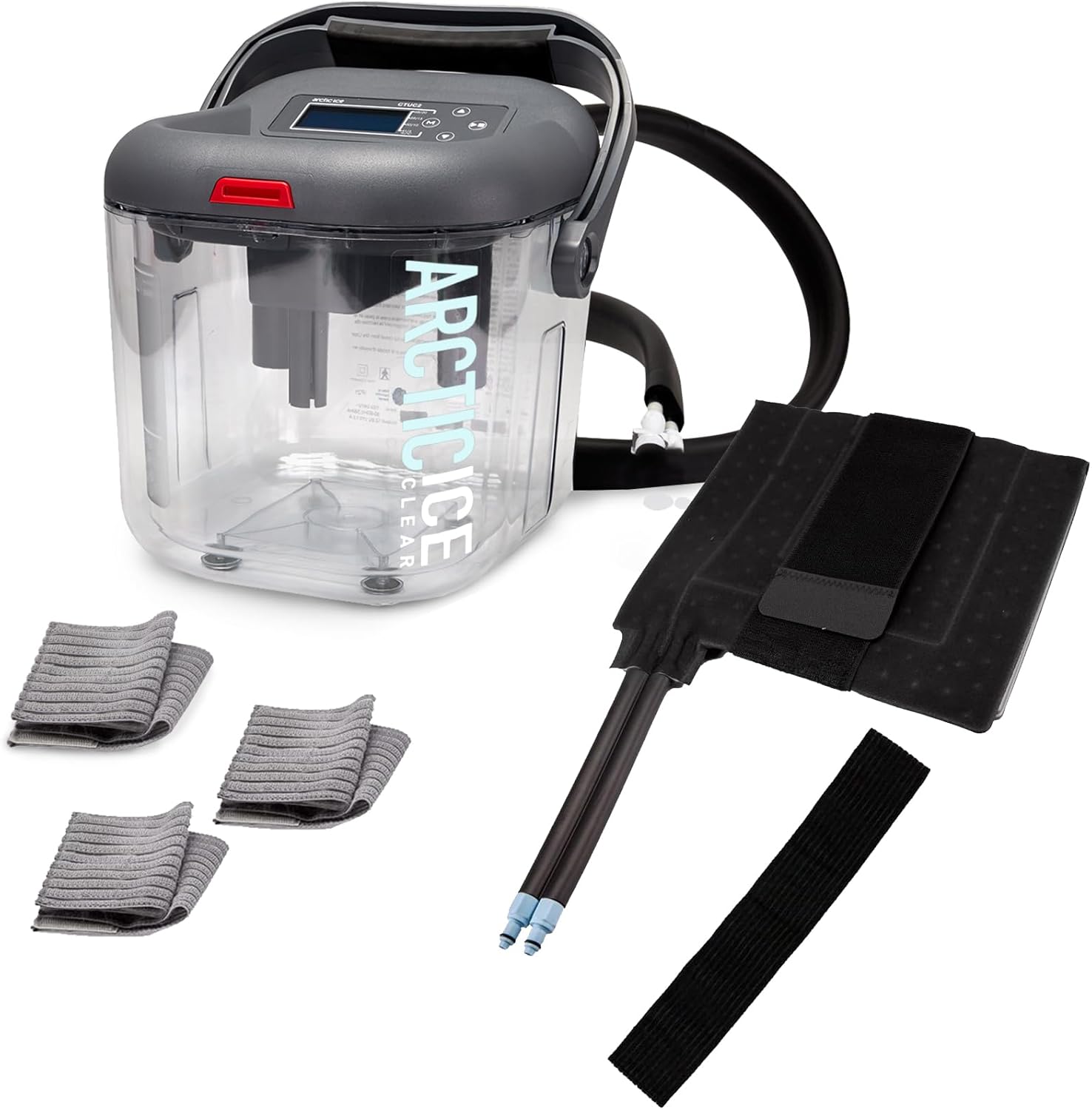
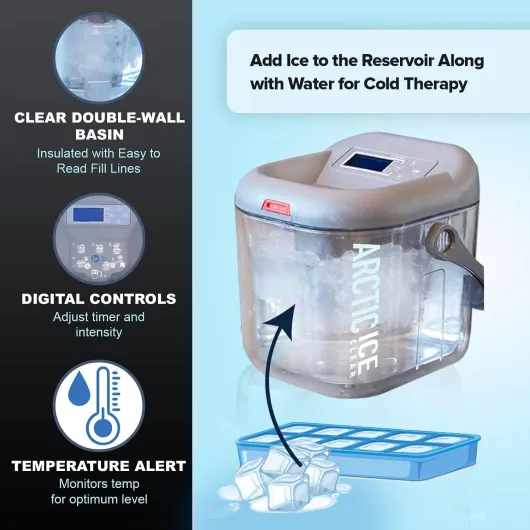
In simple terms, this thing is basically a 12-quart bucket with a quiet pump, insulated tubing, and a universal pad you strap around your joint or back. You add water and ice, set the flow and timer, and it circulates cold water through the pad. So if you’re coming out of surgery, or you’ve got a bad knee or shoulder that needs long sessions of cold, this type of machine is a big step up from constantly refreezing gel packs.
What stood out right away is that it gets very cold and stays that way for a long time if you manage the ice properly. Several people mentioned tips like using frozen water bottles or ice blocks, and that lines up with what I’ve found with similar devices: cubes melt fast, blocks last. The flip side is the unit is pretty bulky once it’s full, and you probably won’t be carrying it around yourself right after surgery unless you’re in good shape.
It’s not perfect. There are complaints about the pump dying after the warranty window, the 90‑minute timer can be annoying if you want overnight use, and customer support doesn’t sound great. But in daily use for actual pain relief, it seems to get the job done very well when it works. So this is more of a “great when it’s running, questionable long‑term reliability and support” type product, not some miracle device.
Value for money: strong relief, but you’re paying with some risk
In terms of value, you have to look at what you’re actually getting: hours of steady cold therapy without constantly swapping ice packs, plus a universal pad and back pad that can cover most major joints and the lower back. For someone going through knee replacement, hip surgery, or major shoulder work, the comfort and swelling control alone can justify a decent chunk of money. Several buyers said they were genuinely glad they had it during that tough first month, and that lines up with how these machines help in real life.
On the other hand, the Amazon rating around 3.8/5 tells the story: most people are happy, but there’s a noticeable chunk of users who aren’t thrilled, mainly due to pump failures and the short 6‑month warranty. If this thing had a solid 1–2 year warranty and better support, I’d call it pretty solid value even at a higher price, because you’d know it’ll probably last through multiple recoveries. As it stands, you’re getting strong performance but taking a bit of a gamble on longevity.
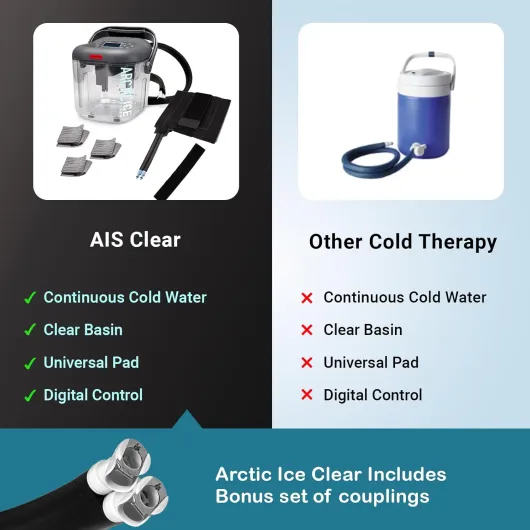
Compared to cheaper, no-name ice therapy buckets, this one has better tubing, quieter operation, and a more refined pad system. Compared to high-end medical units rented from clinics, it’s more affordable in the long run if you use it a lot. So it kind of sits in the middle: not bargain-bin, not high-end hospital gear, but a home-use device that can seriously help if you’re in bad shape and need proper cold therapy.
So, value-wise, I’d say: if you know you’ve got a surgery coming and you’re okay paying for strong pain relief during that specific period, it makes sense. If you’re expecting a bulletproof machine that will last you 5–10 years of heavy use, I’d be more cautious. It gets the job done very well when it’s running, but the warranty and mixed durability reports keep it from being a no-brainer at this price.
Design: practical, a bit bulky, but thought-through
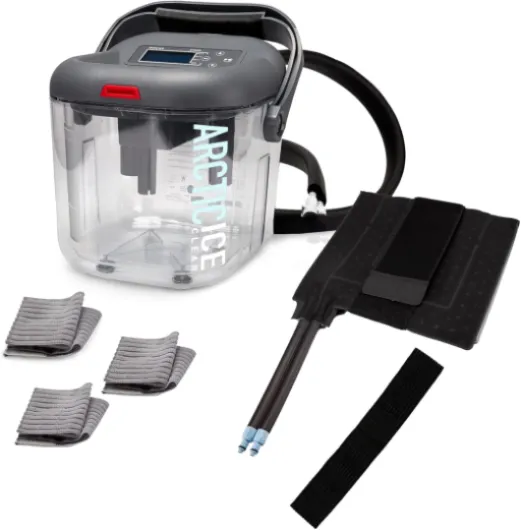
The design is very utilitarian: a plastic cooler-style base with an integrated handle, clear water level markings, and foam-insulated tubing that feels thicker than the usual cheap hoses you see on budget units. It’s not pretty, but I’d rather have something that’s tough and easy to wipe down than something that looks sleek but cracks. The footprint (around 14.5 x 12.7 x 12.2 inches, ~10 pounds empty) is fine next to a recliner or bed, but once you fill it with water and ice, it becomes noticeably heavier. Several users mentioned needing a partner to carry and refill it, especially right after surgery.
The control interface is simple: timer, flow speed, and a bright display light. And that light really is bright at night. More than one person mentioned throwing a towel over it so they could sleep. Personally, I’d rather have a bright display I can see clearly than a dim one, but a dimmer option would have been nice. Same with the end-of-cycle beep: it’s functional and makes sure you know when the 90 minutes are up, but if you’re trying to sleep through the night with continuous cold, you’ll probably find yourself half-annoyed, half-grateful every time it goes off.
The snap-and-click hose connectors are a good detail. People who had leaks with other brands said this one stayed dry as long as the connectors were firmly clicked. One reviewer even pointed out that if you’re not getting cold, the first thing to check is whether the hose is fully seated and not kinked. That’s kind of the story of this device: the design is simple, but you do need to pay attention to basic things like hose alignment and water level if you want it to work well.
One thing to flag: there’s some conflicting feedback about whether the machine has to sit level with the pad. One user said it pumped fine from the floor to couch/bed height, another said it didn’t pump well from the floor up to a leg on a recliner. That tells me the pump is strong enough in most setups, but hose routing and height differences can matter. In short, design is decent and practical, but you might need to play around with placement to get ideal flow, especially if you’re elevating a leg.
Comfort and day-to-day use when you’re actually hurting
Comfort-wise, this is where the machine shines, assuming you’re okay with strong cold. Several users recovering from knee replacement and hip surgery said it made a big difference in their pain and swelling, especially overnight when they’d normally be waking up to swap ice packs. One person said they ran it almost non-stop the first couple of weeks and then several times a day after that, and it just kept going. If you’ve ever dealt with post-op swelling, having steady cold without constant trips to the freezer is a real relief.
The universal wrap and back pad are basically padded sleeves with channels inside for the cold water. They’re not luxury fabric, but they’re soft enough and flexible. The included stretchy strap lets you tighten it down around knees, elbows, hips, or your back. In practice, you’ll likely want a thin layer (like a towel or clothing) between your skin and the pad, because multiple people said it gets very cold, to the point where they had to lower the flow or add a barrier after a while. That’s not a bad thing; it just means you have enough cooling power to adjust down rather than wishing it were colder.
Noise level is low. One buyer literally said they found it quiet and could sleep with it on. The pump has more of a soft hum than a loud mechanical noise. So if you’re planning to run it next to your bed, it shouldn’t drive you crazy, at least compared to something like a loud humidifier. The only real comfort interruption is that 90‑minute timer beep. If you want non-stop overnight icing, you’ll either be waking up to restart it or just accepting that it’ll stop and you’ll cool down less until you restart it later.
The main comfort downside isn’t the pad or noise, it’s the logistics: when it’s full of water and ice, the unit is heavy. Multiple users said they needed someone else to handle refilling and carrying it. If you live alone or won’t have help after surgery, that’s something to think about. You might be able to manage it by keeping it close and using smaller water volumes, but realistically, this is much more comfortable to use if you have a partner or caregiver who can deal with the bucket while you just sit there and enjoy the cold.
Durability and build quality: sturdy feel, short warranty
Physically, the machine feels decent: the plastic on the base is thick enough, the handle is integrated, and the foam-insulated tubing doesn’t feel flimsy. The connectors click firmly, and several people specifically said they didn’t have any leaks or broken fittings even with heavy use right after surgery. One reviewer called it a "workhorse" and said it ran almost constantly for weeks and was still going strong a month in. So out of the box and in the first couple of months, durability seems fine.
The problem is what happens after that. The most worrying review is from the person whose pump died about seven months after purchase, after around 10 weeks of use and then storage. That’s not catastrophic use; that’s exactly how most people will use a machine like this: intense for a while, then stored, then pulled out again. The 6‑month warranty means you’re basically only covered for that first rehab period, not for the next time you need surgery or have another injury. For a device in this price range, that feels tight.
There are no widespread reports of cracking plastic or hoses falling apart, which is good. Most of the negative durability talk is about the pump and the feeling that support is limited. The company’s restricted support hours and small discount offer for a replacement don’t inspire a lot of confidence. If they stood behind the pump for at least a year, I’d be much more comfortable recommending it as a long-term household tool.
So in my view, the durability is "good enough" for a single major recovery and maybe more, but not something I’d fully trust as a multi-year investment unless you’re okay with the risk. The hardware itself doesn’t feel cheap, but the short warranty and at least one clear pump failure story keep it from scoring higher. If you buy it, I’d assume it’s mainly for the upcoming surgery or injury, not a lifetime device.
Performance and reliability: strong cooling, question mark on long-term
Performance during the first recovery period seems solid across most reviews. People ran this thing for hours a day over several weeks after surgeries, and it handled that fine. The pump is described as "whisper quiet" and I’d agree it’s on the quieter side for this kind of device. It also has enough power to move water even when the pad is at bed or couch height, at least for most users. You can tweak the flow speed, but in practice, most folks just leave it on high for stronger cooling.
Where performance gets shaky is long-term reliability. One verified buyer said they used it for about 10 weeks for shoulder surgery recovery, put it away, then pulled it back out seven months later and the pump was dead. With only a 6‑month warranty, they were out of luck. The company apparently offered just a 10% discount on a new unit, which honestly feels pretty weak when the failure happened just outside their short warranty window. That kind of experience drags down the overall score, even if many other units are still running fine.
Another performance detail is how long the cold lasts per fill. One user mentioned getting about two full 90‑minute cycles (so ~3 hours) before needing to change the water and ice when using regular ice. Others, using frozen bottles or blocks, reported staying cold through the whole night or all day. So the raw performance is there, but your real-world results will depend a lot on how you prep and rotate your ice. If you’re lazy about it and toss in a few handfuls of cubes, you’ll be refilling more often and the water will warm up faster.
In short, performance is very good when it’s new and set up properly: cold, quiet, and capable of long sessions. The big asterisk is durability of the pump beyond the first surgery cycle and the short warranty. If you plan to use it heavily for one surgery and don’t really care what happens a year later, that might be fine. If you’re hoping to keep it as a long-term tool for multiple injuries or family members, you’re taking a bit of a gamble.
What you actually get out of the box
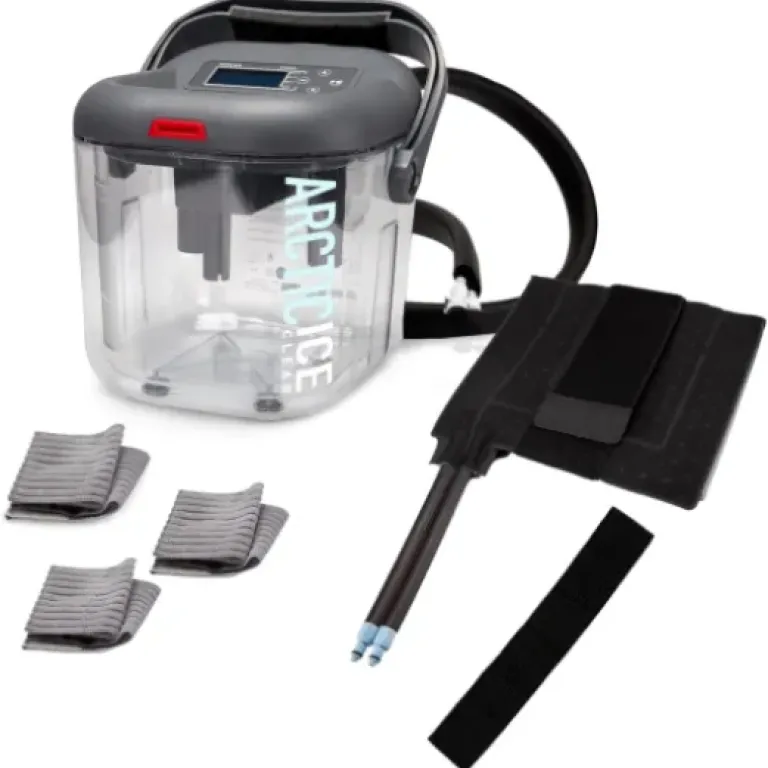
Out of the box, the Arctic Ice Gen 2 setup is pretty straightforward: you’ve got the main 12‑quart base unit, the insulated tubing with those snap‑and‑click connectors, and a universal cold therapy pad plus the back pad in this version. No fancy accessories, but you get the essentials to start icing knees, elbows, shoulders, hips, or your back. It’s clearly targeted at adults dealing with surgery recovery or chronic joint pain, not casual sports use.
In practice, setup is simple: fill to the marked water line, dump in ice (or frozen bottles/blocks), close the lid, connect the hoses until they click, wrap the pad around the area, and power it on. Most users said they didn’t even really need the manual once they watched a quick YouTube video. So if you’re half-groggy after surgery, you or a helper can probably figure it out in a couple of minutes. That’s a plus.
The machine has a timer that goes up to 90 minutes and different flow speeds. People who like very cold therapy are just setting it to fast flow and max time, then restarting when it beeps. That beep is loud enough to notice, which is good in the daytime and mildly annoying at night. One reviewer said they just hit the button again and went back to sleep; another thought it was too loud. So if you’re sensitive to noise at night, keep that in mind.
Overall, the product positioning is pretty clear: this is for someone who wants hours of consistent cold after knee or hip replacement, shoulder repair, or a serious sprain. It’s not cheap, and the short 6‑month warranty is a bit stingy for the price. But you are getting a complete cold therapy system that, when used properly, can run most of the day with minimal fuss, as long as you keep up with the ice and don’t expect fancy smart features or an app or anything like that.
Effectiveness: very cold, very consistent (when it works)
On pure effectiveness for pain and swelling, this machine is strong. Multiple people recovering from knee replacement said it provided "much needed pain relief" and helped them through the rough first weeks. Another used it for both a broken arm and a knee replacement and said they’d buy it again purely because it gets very cold. When you have enough ice in there, the pad can stay cold for many hours, especially if you use frozen bottles or blocks instead of just loose cubes.
The trick is how you manage the ice. A few users shared helpful hacks: one froze regular and kid-size water bottles and rotated sets, so the water stayed cold all night and even into the next day. Another used 64 oz rectangular containers, filled them a third, and made big ice blocks that lasted longer. This lines up with my own experience: big chunks melt slower and keep the water at a steady low temperature for longer sessions. The fact that people are still using it regularly weeks after surgery says the cooling effect isn’t just a short novelty; it actually supports longer-term rehab.
As for flow and circulation, most of the complaints about "it’s not cold enough" or "it’s not pumping" seem to come down to setup issues: hoses not fully clicked, kinks in the tubing, or pad twisted. One reviewer even mentioned checking the clear side of the pad to see if water/bubbles were flowing and then re-positioning it. So if you’re willing to troubleshoot a little, you can usually get strong, consistent flow. The pump is capable; it just doesn’t magically fix bad hose routing.
The only real effectiveness downside is the 90-minute auto shutoff. For safety, it makes sense, but if your doctor actually wants you to have longer continuous cold, you’ll have to restart it manually. Some users just hit the button whenever they woke up and weren’t too bothered. Still, a longer timer or an optional continuous mode would make it more practical for overnight use. But in terms of raw cold and relief, it does what it’s supposed to do and then some, as long as the unit itself doesn’t fail.
Pros
- Delivers very cold, consistent therapy that really helps with post-surgery pain and swelling
- Quiet pump and insulated tubing make it comfortable to use for hours, even at night
- Universal wrap and back pad are versatile and easy to strap around different body parts
Cons
- Short 6‑month warranty and at least one reported pump failure just after that period
- Unit is heavy when filled; many users need help to carry and refill it
- 90‑minute max timer with loud beep and bright display can be annoying for overnight use
Conclusion
Editor's rating
Overall, the Arctic Ice Gen 2 cold therapy machine is pretty solid at the one thing that really matters here: keeping your knee, shoulder, hip, or back consistently cold for long stretches. Users coming out of surgery saw real relief in terms of pain and swelling, and the machine can run for hours if you manage the ice properly. The universal wrap and back pad are flexible enough for most body parts, the pump is quiet, and the insulated tubing plus click connectors make daily use fairly painless. It’s not fancy, but in day-to-day rehab, it works.
Where it falls short is long-term confidence. The 6‑month warranty is short for a device at this price, and at least one pump failure just after that window is a red flag. Customer support also doesn’t sound very generous. Add in the 90‑minute max timer and a bright display plus loud beep that can bug you at night, and it’s clear this isn’t a perfect product. It’s more of a "useful tool with some compromises" than a flawless solution.
I’d say this is a good fit if you have a scheduled surgery (knee replacement, hip, shoulder) and you really want strong cold therapy at home for the first few weeks or months. If that’s your situation, the comfort and convenience are likely worth the cost, especially if you’ll have someone around to handle refilling and carrying the unit. If you’re looking for a long-term, multi-year investment with rock-solid warranty and support, or you live alone and can’t lift a heavy water-filled unit, you might want to look at alternatives or rentals instead.