Outdoor ice maker buying guide for real backyard entertaining
Outdoor ice makers live harder lives than any indoor units you have owned. An effective outdoor ice maker buying guide must start with where the ice maker sits, how it handles weather, and how much ice production you truly need for your outdoor kitchen. When you match production capacity, placement, and protection, you get reliable outdoor ice instead of constant service calls.
Think first about how you entertain and how much ice you actually produce on a busy weekend. Pool parties, family dinners, and game nights all push ice makers differently, so the best models for a quiet patio bar may struggle on a large pool deck with high drink turnover. List the types ice you prefer, such as clear ice, nugget ice, or crescent ice, then match those preferences to specific outdoor units and indoor outdoor designs that can keep up.
Outdoor rated ice makers are tested to handle rain, heat, and fluctuating weather that would quickly damage an indoor ice machine. A proper outdoor kitchen layout keeps the maker shaded, ventilated, and protected, while still allowing you to slide built ice units into cabinetry without choking airflow. When you compare models, look at stainless steel construction, sealed controls, and drainage options as core features rather than luxury extras.
Many buyers underestimate how much water an ice maker moves in a single day. Between incoming water lines and meltwater from the bin, even compact outdoor units can handle dozens of litres, so your drainage plan matters as much as your preferred ice shape. Treat this outdoor ice maker buying guide as a checklist, not a brochure, and you will avoid the expensive mistake of installing a beautiful unit that has nowhere safe for the water to go.
Weatherproofing, outdoor ratings and placement in outdoor kitchens
Weather is the first enemy of any outdoor ice maker, so you must respect what outdoor rated actually means on the specification sheet. A true outdoor rated unit uses stainless steel exteriors, sealed electronics, and corrosion resistant components, while many indoor units and countertop ice machines are only safe under a roof in dry conditions. When you see makers advertised as indoor outdoor, read carefully to confirm whether the certification covers rain, splashes, and temperature swings or only sheltered patios.
Heat is the second enemy, because ambient temperatures above about 32 °C reduce ice production and stress compressors. In my testing, the same ice maker that produced high volumes of clear ice in a cool garage lost a third of its production capacity when pushed into direct sun on a west facing patio. That is why every serious outdoor kitchen should include shade, such as a pergola or deep overhang, to keep outdoor units cooler and extend their working life.
Placement inside outdoor kitchens also changes how built ice units breathe. Built in models need specific ventilation clearances on the front, sides, or rear, and blocking those vents with tight cabinetry or stacked equipment can overheat the maker even in mild weather. When you plan an outdoor kitchen, leave a few extra centimetres around the ice makers and confirm that hot exhaust air has a path out of the island instead of recirculating behind the stainless steel panels.
Indoor ice machines are not designed for blowing rain, salty air, or freezing nights, so using indoor units outside usually voids warranties. If you want one appliance that can move between indoor and outdoor spaces, focus on portable countertop ice models that you can roll out for parties and store inside between uses, as explained in many compact ice maker trend analyses such as this overview of why compact ice makers are suddenly everywhere. Even then, never leave a portable maker permanently outdoors, because its plastic housing and open vents cannot handle long term exposure to moisture and ultraviolet light.
Drainage, water management and the meltwater problem
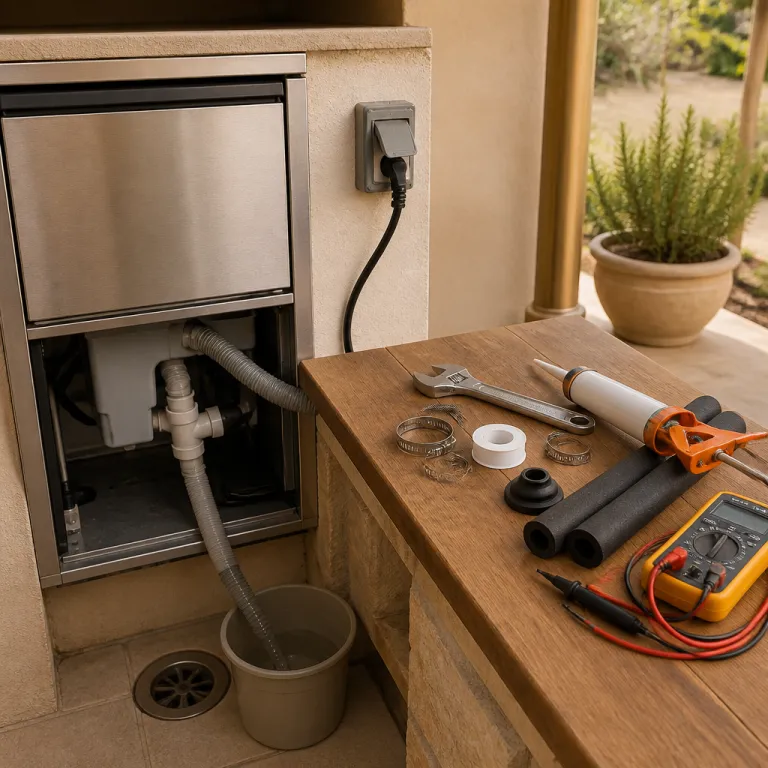
Drainage is where many outdoor ice projects fail, because people focus on ice production and forget where the meltwater goes. Every ice maker constantly melts some ice in the bin, and that water must leave the cabinet through a gravity drain or a pump, especially when the unit is built into outdoor kitchens without a nearby floor drain. If you skip this step, you risk standing water, mould, and even structural damage to the outdoor kitchen island.
Start by checking whether your chosen models use a gravity drain, which needs a downhill run to a safe outlet, or a drain pump that can push water up and over obstacles. Gravity drains are quieter and simpler, but they demand careful planning of slopes and pipe routes, while pumps add flexibility at the cost of more moving parts and occasional maintenance. In both cases, use rigid lines where possible, secure flexible hoses, and keep all water paths accessible for cleaning because outdoor ice environments collect debris faster than indoor kitchens.
Water quality also shapes the ice you see in the glass, from cloudy cubes to restaurant style clear ice. Hard water and sediment clog valves, reduce ice production, and shorten the life of both indoor units and outdoor units, so a dedicated filter is not a luxury for serious entertainers. When you want premium nugget ice or perfectly formed crescent ice, filtration and regular descaling matter as much as the badge on the stainless steel door.
Portable and countertop ice makers change the drainage equation, because many simply reuse meltwater from the bin instead of sending it to a drain. That design works well for renters, RV owners, and tailgaters who cannot modify plumbing, as detailed in guides that explain who actually benefits from a countertop unit, but it still requires you to empty the reservoir and dry the interior after each event. Whether you choose a built ice machine or a portable maker, treat water management as a daily habit, not a one time installation task.
Power, heat, and the realities of outdoor performance
Power supply is the quiet backbone of any outdoor ice maker buying guide, because even the best units fail when starved of clean electricity. A dedicated outdoor circuit with a Ground Fault Circuit Interrupter outlet protects both you and the maker, while long extension cords create voltage drops that overheat compressors and reduce ice production. When you plan an outdoor kitchen, budget for a licensed electrician to install outlets exactly where your ice makers and other appliances will live.
Heat and sun exposure change how every ice maker behaves, even when the label promises high production capacity. In testing on a covered patio, I have seen outdoor ice machines that were rated for 25 kilograms per day drop to 15 kilograms when ambient temperatures stayed above 35 °C, especially when the rear vents faced a solid wall. To protect your investment, orient outdoor units so that hot exhaust air can escape, keep them out of direct sun, and avoid stacking other hot appliances like grills or pizza ovens directly beside the ice cabinet.
Shade and shelter do not mean sealing the maker in a tight box, because these units still need airflow. A well designed outdoor kitchen island leaves open toe kicks, vent panels, or louvered doors around built ice models, which lets cool air enter low and hot air exit high. If you must enclose an ice maker, choose units specifically built for that style of installation and follow the manufacturer’s ventilation diagrams exactly.
For smaller spaces, such as apartment balconies or compact patios, a portable or countertop ice maker paired with a protected outlet can be smarter than a full built in system. Resources that explain the apartment renter’s ice maker calculus show how footprint, drainage, noise, and move out requirements all favour flexible units that can move between indoor ice duty and outdoor ice service. Whatever path you choose, treat power, heat, and airflow as non negotiable design constraints rather than afterthoughts.
Choosing types of ice, capacities and scenarios that fit your life
Different entertaining styles call for different types ice, so start with the ice in your favourite drink. Nugget ice is soft and chewable for cocktails and sodas, crescent ice works well for everyday use, and clear ice cubes elevate whiskey or premium spirits in a way cloudy cubes never match. When you understand how you actually use ice, you can choose between nugget ice makers, clear ice machines, or versatile units that produce more than one style.
Capacity ratings on ice makers describe how much ice they can produce in 24 hours, not how much they store at once. A compact outdoor ice maker with a 20 kilogram production capacity might only hold 8 kilograms in the bin, which is fine for a small patio bar but not for a large pool deck party. For heavy entertainers, look for high production numbers, generous storage, and fast recovery times so the maker can refill the bin quickly after a rush.
Scenario planning keeps you honest about where and how you will use the unit. A built ice machine in a permanent outdoor kitchen suits homeowners who host often, while portable units and countertop ice models shine for RV trips, tailgates, and flexible indoor outdoor setups. If you split time between a main home and a vacation property, consider one outdoor rated built in maker for the primary outdoor kitchen and a smaller portable maker that can travel with you.
Practical ownership also includes simple habits like running an email check on your purchase confirmation to register warranties and saving service contacts in your phone instead of buried in an email folder. When you compare models, look beyond glossy photos and focus on features that matter daily, such as cleaning cycles, filter access, and bin insulation that slows melting. With a clear checklist that covers weather, drainage, power, capacity, and your preferred ice style, you can choose an outdoor ice maker that feels tailored to your space rather than forced into it.
FAQ
Do I really need an outdoor rated ice maker for a covered patio ?
A covered patio still exposes appliances to humidity, wind blown rain, and temperature swings, so an outdoor rated ice maker is strongly recommended. Indoor units are not sealed against moisture and often use materials that corrode quickly outside. Using an indoor machine outdoors can void the warranty and shorten its life dramatically.
How much clearance should I leave around a built in outdoor ice maker ?
Clearance requirements vary by brand, but most built in ice makers need several centimetres of space around vents for proper airflow. Always follow the manufacturer’s diagrams, paying special attention to front grille and rear exhaust locations. If in doubt, leave extra space and use vented panels or louvered doors in your outdoor kitchen island.
What is the best way to handle drainage when there is no floor drain ?
When you do not have a floor drain, choose an ice maker with a built in drain pump and route the line to a safe discharge point such as a utility sink or dedicated outdoor drain. Gravity drains are simpler but require a consistent downward slope, which is not always possible on existing patios. Never route meltwater directly onto decking or near foundations, because long term moisture can cause damage.
Can I run an outdoor ice maker on an extension cord ?
Running an outdoor ice maker on an extension cord is risky because voltage drops and overheating can damage the compressor. If you must use one temporarily, choose a heavy gauge outdoor rated cord that is as short as possible and plugged into a GFCI outlet. For permanent setups, a dedicated circuit installed by an electrician is the safest and most reliable option.
How does hot weather affect ice production in outdoor units ?
Hot weather reduces ice production because compressors and condensers cannot reject heat efficiently when ambient temperatures are high. Many units lose a significant share of their rated capacity once temperatures climb above about 32 °C, especially in direct sun or tight enclosures. Providing shade, ventilation, and adequate clearance helps outdoor ice makers stay closer to their advertised performance.