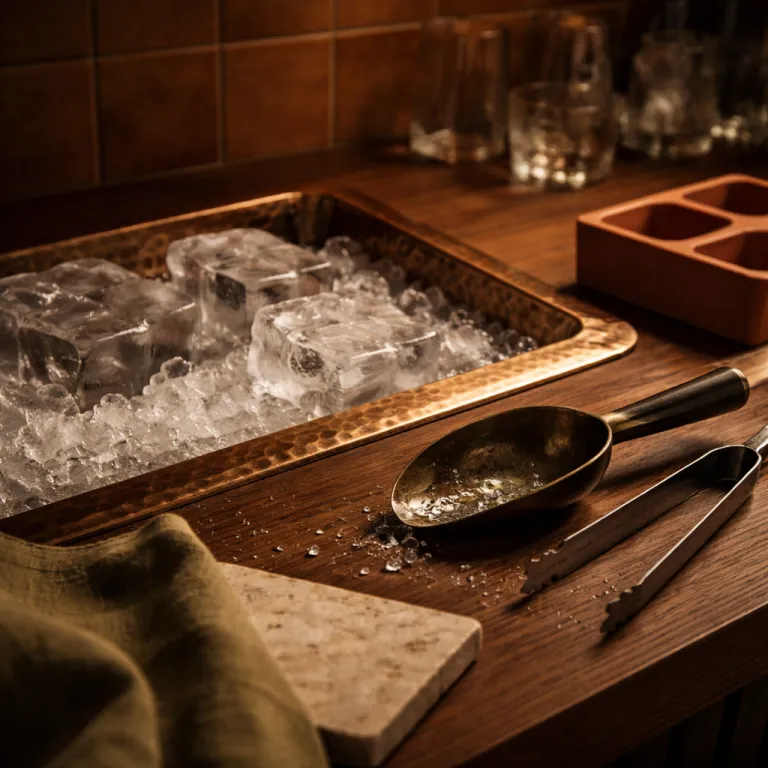

Building your home bar ice setup around the cold zone
Your home bar feels truly professional when the home bar ice setup is planned around the cold zone, not just the bottles. A well designed bar setup starts with the path from water to ice maker to ice bucket, then to glasses and finally to drinks, because every step will change temperature, clarity and melt rate. When you choose the best layout for your bar cart or wet bar, you keep ice close to the action and your guests notice the difference.
Think of the full ice stack as a chain that includes water supply, filter, ice machine, storage bin, scoop and tongs. If one link is weak, such as a thin plastic bucket that cannot keep ice insulated, even the best ice makers or the most expensive stainless steel tools will not save your cocktails from fast dilution. A serious home bar should place the ice maker or compact ice machine within one arm’s reach of the main work surface, with the ice bucket or several ice buckets directly beside the shaker and mixing glasses.
For a small apartment home, a rolling bar cart with a dedicated ice station works better than a cluttered counter. Place a mid range ice maker on the lowest shelf, an insulated steel ice bucket on the middle shelf and your cocktail tools and wine glasses on top, so you can serve cocktails and wine without crossing the kitchen. This kind of home bar layout turns ice into a service engine, because guests see a clear flow from nugget ice or clear ice production to their finished drinks.
Choosing the right ice maker and machine for home entertaining
Selecting the best ice maker for a home bar starts with capacity and ice style, not just the advertised price. If you regularly host six to eight guests for cocktails, you will want an ice machine that can produce at least 10 to 12 kilograms of ice per day, because real world yield drops when the room is warm and the ice bucket is opened often. For a quieter household that mainly serves wine and simple mixed drinks, a compact countertop maker that produces smaller batches of ice can still be the best option.
Ice style shapes your home bar ice setup more than many buyers expect, because nugget ice, clear ice and standard cubes behave very differently in cocktails. Nugget ice, sometimes called pellet ice, is fantastic for tall drinks and tiki cocktails, while clear ice blocks or large spheres suit spirit forward cocktails and wine based spritzes that must stay cold without fast dilution. If you want to choose best machines for elegant cocktails, a dedicated clear ice maker or craft ice tray system can complement a separate nugget ice machine that keeps guests happy with crushed style ice.
When you compare ice makers, check the rated production, storage bin size, noise level and easy clean features. A stainless steel exterior resists stains and looks at home beside a wine fridge or dual zone beverage cooler, while plastic housings can feel out of place in a refined wet bar. For deeper guidance on how to choose your first countertop unit without regret, you can read a detailed buying guide that explains how to choose your first countertop ice maker without regret, then adapt those criteria to your own bar setup and budget.
Water quality, filtration and the real impact on ice and drinks
Water quality quietly shapes every part of your home bar ice setup, from how the ice looks to how your cocktails taste. Hard water with high mineral content will leave scale inside an ice maker or ice machine, shorten its life and cloud what could have been clear ice, while very soft water can sometimes taste flat in spirit forward drinks. The best approach for most home bar owners is a simple under sink filter or a dedicated filtered pitcher that feeds the ice makers and keeps maintenance predictable.
Use filtered tap water for everyday cocktails, long drinks and wine spritzers, because it balances taste, cost and convenience. Bottled water only makes sense for very high end spirits served over large clear ice cubes, where you want the best ice to showcase a single malt whisky or an aged rum without any off flavors. For casual beer or wine service, the water that feeds your ice bucket matters less than the insulation of the bucket itself, since melt rate and how you keep ice separated from water will dominate the drinking experience.
Whatever water source you choose, schedule a regular check of filters and a monthly easy clean cycle on the ice maker to prevent biofilm and odors. Many stainless steel units include a self cleaning program, but you still need to wipe gaskets and the steel ice bin with a food safe cleaner. If you are curious about how different nugget ice machines handle filtration and cleaning, a recent comparison such as the 2026 nugget ice maker showdown from Consumer Reports can help you read test results and match them to your own bar cart or wet bar needs.
Storage, insulation and accessories that keep ice service smooth
Most home bar owners invest heavily in the ice maker and forget that storage is often the weakest link. A thin, uninsulated ice bucket sitting under warm bar lights will let ice fuse into a solid block, so your guests wait while you chip away at steel ice clumps instead of enjoying fresh cocktails. A well chosen insulated ice bucket with a tight lid, paired with tongs and a scoop, will keep ice loose and ready for service throughout a long evening.
For groups of eight or more guests, plan on at least two ice buckets in your home bar, one near the main cocktail station and another near the wine fridge or dual zone beverage center. This split layout reduces traffic jams at the bar and lets people refresh their own wine or long drinks without interrupting cocktail shaking, which keeps service smooth and relaxed. Choose stainless steel or thick walled acrylic ice buckets that match your bar setup, and always keep a towel nearby to wipe condensation before it drips onto a wooden bar cart or home counter.
Accessories that genuinely speed service include a measured scoop, a caddy for clean glasses and a small tray for used stirrers and picks. When you read product descriptions, check whether the bucket interior is seamless and easy clean, because seams trap meltwater and can harbor odors between parties. Over time, you will find that a modest upgrade in storage and tools often delivers a greater improvement in drink quality than a big jump in ice machine price, especially when you already own a reliable maker.
Smart upgrade paths from starter bar to refined ice centered station
Building a refined home bar ice setup does not require buying the most expensive equipment on day one. A realistic path starts with a 200 USD budget for a compact countertop ice maker, a basic insulated ice bucket and a pair of sturdy tongs, which already lets you serve simple cocktails and wine for a small group at home. At this level, focus on an ice machine with dependable output, easy clean features and a footprint that fits your bar cart or wet bar shelf.
When you are ready to move toward a 600 USD tier, your upgrades should target both performance and presentation rather than raw volume alone. Consider a quieter stainless steel ice maker with better insulation, a larger storage bin and the ability to produce nugget ice as well as standard cubes, because this flexibility supports everything from tiki cocktails to spirit forward drinks. Pair it with a higher quality steel ice bucket, a second bucket dedicated to clear ice and perhaps a compact dual zone wine fridge that keeps white wine and red wine at ideal serving temperatures beside the bar.
As your bar setup matures, reorganize the space so the ice station becomes the heart of the bar, with glasses, shakers and spirits radiating outward. This layout shortens every movement you make while building cocktails, which means your guests wait less and your drinks stay colder in the glass. For buyers who want an ultimate guide to craft focused machines and accessories, a resource on how to choose craft ice makers for elegant home cocktails can help you choose best upgrades that match your style, budget and entertaining habits.
Key statistics for planning a home bar ice setup
- Clear ice melts more slowly than cloudy ice, which reduces dilution in spirit forward cocktails and improves flavor stability over a typical 20 to 30 minute drinking window.
- Dedicated beverage and bar zones are expanding beyond kitchens into secondary spaces such as pantries and bar carts, reflecting a strong trend toward specialized home entertaining areas.
- Ice machines that include self cleaning cycles and basic filtration typically require less manual descaling, which can extend functional life compared with similar units that lack these features.
- Large format clear ice cubes or spheres can reduce surface area contact with drinks by more than 30 percent compared with standard cubes, which directly slows melt rate.
Frequently asked questions about home bar ice setups
How much ice capacity do I need for a typical home bar party ?
For a gathering of six to eight guests over several hours, plan on an ice maker that can produce at least 10 to 12 kilograms of ice per day and pair it with one or two insulated ice buckets. This combination usually covers shaken cocktails, long drinks and wine spritzers without running out. If you host larger groups regularly, step up to a higher capacity ice machine or add a second compact unit.
Is nugget ice or clear ice better for home cocktails ?
Nugget ice is excellent for tall, refreshing cocktails and soft drinks because it chills quickly and is easy to chew. Clear ice, especially in large cubes or spheres, works better for spirit forward cocktails and premium pours where you want slow melt and minimal dilution. Many home bar owners eventually use both styles, keeping nugget ice for casual drinks and reserving clear ice for their best spirits.
Do I really need a dedicated ice bucket if I own an ice maker ?
A dedicated insulated ice bucket is still essential, even when you have a powerful ice maker. The bucket lets you keep ice close to the bar action, reduces how often you open the machine and protects cubes from kitchen odors. A good bucket with a lid and tongs also improves hygiene and presentation when serving guests.
What is the advantage of a dual zone wine fridge in a home bar ?
A dual zone wine fridge lets you store red and white wine at different temperatures in the same cabinet, which improves flavor and serving consistency. When placed near your ice station, it also streamlines service for spritzes and wine based cocktails that rely on both chilled wine and fresh ice. This integration makes your overall home bar ice setup more efficient and enjoyable to use.
How often should I clean my home ice maker and buckets ?
Most home ice makers benefit from a basic cleaning every one to two weeks during heavy use, plus a deeper descaling every few months in hard water areas. Ice buckets and scoops should be washed and dried after each entertaining session to prevent odors and residue. Regular maintenance keeps ice tasting neutral and helps your equipment last longer.