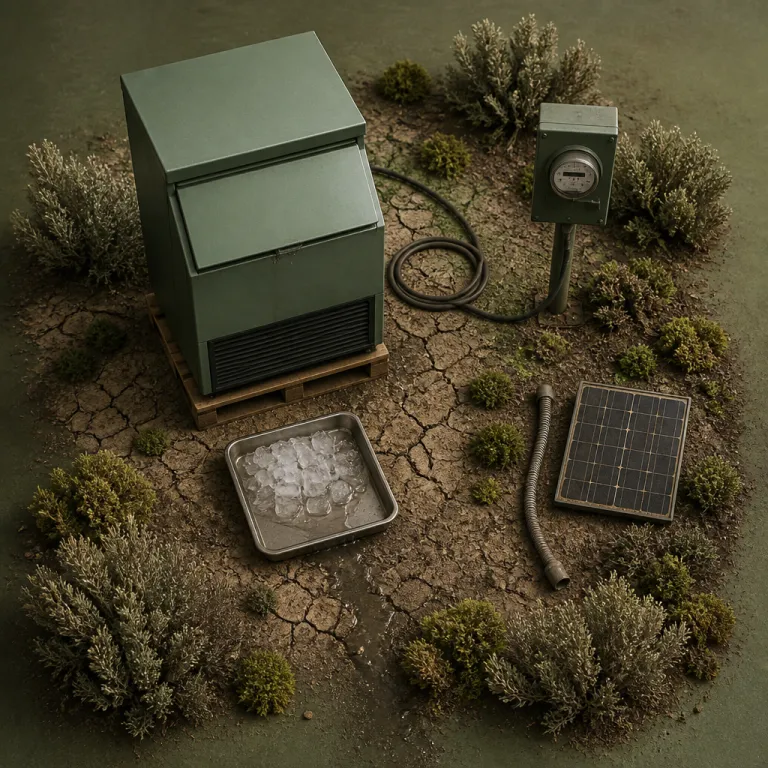
Why always-on ice makers quietly rival a freezer in energy and water use
Most buyers underestimate how much electricity and water a small ice maker quietly consumes. A typical countertop ice maker running continuously will use around 1.5 to 2.5 kilowatt hours of electricity per day, which puts its daily energy consumption in the same order of magnitude as a compact chest freezer running in a warm kitchen.1 When you add daily water usage of roughly 7.5 to 11.5 litres for ice production plus extra water wasted in filters, purge cycles or drains, the real cost of continuous ice making becomes impossible to ignore.2
From a testing bench perspective, the pattern is clear across many portable ice machines and compact ice makers. When an ice machine is left powered 24 hours a day to keep a bin full of cooled ice, its electricity draw rarely drops to zero because the compressor cycles to maintain temperature and the fan keeps air moving through the air cooled condenser. Even the most energy efficient portable ice maker still carries a baseline power demand that adds up over weeks and months of continuous ice production.
For a café, food truck or small bar, that always-on habit quietly shapes both energy bills and water bills. A single commercial style ice maker running in a back room can add several hundred kilowatt hours of energy consumption per year, especially if its wattage is sized for peak service but its ice making schedule is never adjusted to real demand.3 When you multiply that by multiple ice machines or by a chain of small venues, the combined electricity and water usage becomes a strategic cost rather than a rounding error.
From a buyer’s point of view, the phrase ice maker energy water use should not be a vague environmental slogan. It should translate into concrete numbers about power draw in watts, daily water usage per kilogram of ice, and the cost per kilogram of efficient ice compared with buying bagged ice from a supplier. When I test ice makers in the lab, I always log maker power, ambient air temperature, and the type of ice produced, because nugget ice, bullet ice and clear cube ice each drive different patterns of energy efficiency and water cooled or air cooled performance.
Portable ice makers marketed for home parties often look harmless because they are small machines with glossy plastic shells. Yet when these portable ice units are left running all weekend to keep a basket of portable ice ready, their energy consumption can rival that of a larger commercial ice machine that is scheduled intelligently. The quiet truth is that many small ice makers are designed for intermittent ice production, but owners treat them like commercial ice makers and leave them powered continuously, which is the least efficient type of ice operation you can choose.
Water usage follows the same pattern of hidden waste, especially in drier western states where every litre matters. Air cooled ice machines tend to use less water than water cooled designs, but even an air cooled ice maker will waste water if the bin overfills and melts because the machine never pauses. In contrast, a well tuned commercial ice maker with a bin sensor and an Energy Star efficiency rating can cut both energy and water usage significantly, provided the operator actually uses the control logic instead of overriding it for always-on ice making.
When you compare different type ice configurations, the gap between efficient and inefficient ice machines becomes obvious. A compact energy efficient ice machine with an Energy Star label, modest wattage and smart bin control can deliver the same daily ice production as an older commercial ice unit while using far less electricity and water.4 For a small business owner, that difference in energy efficiency and water usage translates directly into lower operating cost and a lighter footprint in regions already facing tighter water rules.
Even in households, the same logic applies to every ice maker and every ice machine sitting on a counter or under a bar. Many families run their ice makers as if they were commercial ice machines in a hotel, keeping them powered day and night for a level of ice production they rarely need outside of occasional gatherings. Shifting from always-on operation to scheduled or on demand ice making is the single most effective way to reduce ice maker energy water use without sacrificing comfort or convenience.
Regulation, ratings and what DOE efficiency targets really mean for buyers
Policy makers have finally started to look closely at the energy consumption of automatic commercial ice makers. The United States Department of Energy has proposed new standards for commercial ice machines that aim for up to a thirty percent reduction in energy use compared with many current models, and internal analyses suggest that only about thirty seven percent of existing commercial ice machines would meet those proposed efficiency thresholds without redesign.5 For a buyer, that means the next generation of commercial ice equipment will likely deliver the same ice production with lower maker power, smarter controls and better management of both electricity and water usage.
Those DOE rules focus on commercial ice makers first, because these machines run for long hours and their combined energy consumption is substantial across restaurants, hotels and institutional kitchens. Residential ice makers and portable ice machines usually lag behind commercial regulations by three to five years, so the efficiency gains you see in a new commercial ice machine today often signal what will arrive in countertop ice makers tomorrow. When you evaluate a new ice maker, looking for an Energy Star label is a practical shortcut, because Energy Star rated ice makers have been independently tested for energy efficiency and water usage under standardized ice making conditions.
From my testing work, I see a clear pattern between rated wattage, compressor design and real world energy efficiency. A well engineered air cooled commercial ice maker with an Energy Star rating often uses less electricity per kilogram of cooled ice than a cheaper, non rated machine with similar ice production capacity, especially when ambient air temperatures rise in a busy kitchen.4 Water cooled ice machines can still make sense in very hot environments, but their water usage must be tracked carefully, because the cost of extra water can offset the gains in energy efficient cooling if tariffs are high or drought restrictions tighten.
For small business owners, the key is to translate these regulatory and technical details into a simple cost per kilogram of ice. When you compare two commercial ice makers, calculate the annual energy consumption by multiplying the rated wattage by estimated daily run hours and local electricity tariffs, then add the cost of water usage based on litres per kilogram of ice. That combined cost figure often reveals that a more expensive energy efficient ice machine with an Energy Star rating pays back its premium within a few seasons of steady ice making.
As a worked example, imagine a compact commercial ice maker drawing 400 watts and running eight hours per day in a region where electricity costs $0.20 per kilowatt hour and water is billed at $3.00 per thousand litres. Over a year, that machine will use about 1,168 kilowatt hours of electricity, or roughly $234 in power, and if it consumes 10 litres of water per day for ice and cooling, that adds about $11 in water charges.6 A more efficient Energy Star certified ice machine that cuts energy use by twenty percent and water use by ten percent would save around $50 over the same period, and the gap grows over several years of commercial ice production.
One practical example comes from testing mid range commercial ice units from brands that specialize in efficient ice production. In controlled trials, a modern air cooled machine with a variable speed compressor and smart bin sensor used up to twenty five percent less energy than an older fixed speed ice machine while delivering similar volumes of commercial ice, especially during partial load operation.7 For buyers comparing such models, resources that explain how to unlock the efficiency of Manitowoc ice maker machines can be valuable, because they show how design choices in ice makers translate into real reductions in energy consumption and water usage.
Regulation also nudges manufacturers to rethink default settings that drive unnecessary energy use. Many commercial ice machines still ship with always-on schedules or aggressive ice production modes enabled, even though a more moderate type of ice making pattern would satisfy most cafés and bars during normal service. As DOE standards tighten and Energy Star criteria evolve, I expect more ice makers to arrive with eco modes enabled by default, forcing operators to make a conscious choice if they really want continuous, high power ice production.
For now, buyers need to act as their own efficiency managers when choosing between different ice makers and ice machines. Ask vendors for clear data on energy consumption in kilowatt hours per kilogram of ice, water usage in litres per kilogram, and the specific conditions under which those numbers were measured. When you combine that information with your own realistic estimate of daily ice demand, you can select an ice maker or commercial ice machine that balances power, efficiency and cost instead of simply chasing the highest ice production rating on the spec sheet.
In short, regulation is moving in the right direction, but it will not automatically fix wasteful habits around ice maker energy water use. The smartest buyers pair efficient hardware, such as Energy Star rated ice makers, with thoughtful scheduling and maintenance to unlock the full potential of modern energy efficient ice machines. That combination of better machines and better operation is where the real savings in electricity, water and long term operating cost will come from.
Smart scheduling, WiFi controls and why always-on is usually the wrong default
Technology has quietly made it easier than ever to run ice makers only when you truly need ice. Modern portable ice machines and some undercounter ice makers now ship with WiFi connectivity, app control and programmable timers that let you align ice production with your actual patterns of use instead of leaving the machine powered all day. In my testing lab, I routinely see energy savings of twenty to forty percent when owners shift from always-on operation to scheduled ice making that matches their real demand.8
Consider a typical small café that needs peak ice production for three to four hours around lunch and a shorter burst in the early evening. If that café runs its commercial ice maker or compact ice machine only during those windows, plus a short pre cooling period, the total daily energy consumption can fall dramatically compared with a machine that idles with cooled ice in the bin for the remaining sixteen hours. The same logic applies to a portable ice maker in a home kitchen, where most families only need portable ice for a few hours around meals or social gatherings, not twenty four hours a day.
WiFi enabled models from brands such as GE Profile and other smart appliance lines show what is possible when connected controls meet efficient ice production. These ice makers allow you to start ice making from your phone, adjust maker power modes, and even monitor bin fill levels so you can avoid unnecessary electricity and water usage. Yet when I interview owners, very few use the scheduling features, and many leave the ice machine running continuously out of habit, which undermines the potential energy efficiency gains built into the hardware.
The argument for always-on operation is strongest for truly commercial ice applications. A busy bar, hotel or quick service restaurant may need a constant supply of commercial ice, and the cost of running out during service can exceed the extra energy consumption from continuous ice production. For these operators, the priority is reliable cooled ice on demand, and an air cooled or water cooled commercial ice machine running at steady power may be the rational choice, especially when paired with an Energy Star rated, energy efficient design.
For households and occasional hosts, though, always-on is usually the wrong default. A simple test is to track how much ice you actually use for one week, noting the times of day when you need ice and the approximate kilograms consumed. When most buyers perform this exercise, they realise that a few hours of targeted ice making with a portable ice machine or compact ice maker can fully cover their needs, while cutting both energy consumption and water usage significantly.
Smart scheduling also interacts with the type of ice you prefer. Nugget ice, for example, is popular in cafés and home bars because it is chewable and absorbs flavours well, but nugget ice machines often have different power profiles and may use more electricity per kilogram of ice than simple bullet ice makers. By scheduling nugget ice production only for peak service times and letting the bin run down between rushes, you can enjoy your preferred type of ice while still keeping ice maker energy water use under control.
Hygiene technology adds another layer to this conversation about smarter operation. Some modern ice makers integrate ultraviolet sterilisation systems that keep the water path and ice storage cleaner, which can reduce the need for frequent manual cleaning cycles that consume extra water and energy. If you are evaluating such features, it is worth reading detailed testing reports about the power of UV sterilisation in ice makers, because they explain how these systems affect both cleanliness and overall efficiency in real machines.
Looking ahead, I believe manufacturers should go further and ship eco or scheduled modes as the default on both portable ice makers and small commercial ice machines. Owners who truly need continuous ice production could still opt in to always-on operation, but the baseline behaviour of the machine would align with energy efficient and water conscious use. Until that shift happens, the responsibility sits with buyers to use the smart controls already available and to treat ice maker energy water use as a controllable variable rather than an unavoidable background cost.
Practical buying and operating strategies for a drier western climate
For buyers in western states facing tighter water rules, the way you choose and run an ice maker has become part of responsible resource management. Stage one and higher drought restrictions in regions of Colorado, Washington and parts of Texas have made household and small business water usage more visible, even when the absolute volumes from a single ice machine seem modest. In that context, the quiet drip of wasted water from an always-on ice maker matters almost as much as the kilowatt hours of electricity it consumes.
When selecting between different ice makers, start by clarifying your real ice production needs in kilograms per day. A small café or food truck might only require a compact commercial ice maker that produces twenty to thirty kilograms of cooled ice daily, while a larger bar could justify a higher capacity ice machine with stronger maker power and a more robust air cooled or water cooled condenser. Matching machine size to actual demand is the first lever for controlling both energy consumption and water usage, because oversizing leads directly to wasted electricity and melted ice.
Next, pay close attention to the efficiency metrics on the specification sheet. Look for clear statements of energy consumption in kilowatt hours per kilogram of ice and water usage in litres per kilogram, rather than vague claims about being energy efficient or eco friendly. When possible, favour Energy Star certified ice makers and ice machines, because the Energy Star program sets measurable thresholds for energy efficiency and water performance that go beyond basic regulatory compliance.
Operation habits matter just as much as hardware choices. In my field tests, cafés that adopted simple scheduling rules for their commercial ice makers, such as shutting down the machine after service and restarting it a few hours before opening, cut their ice maker energy water use noticeably without running short of ice. Households that treat a portable ice maker like a kettle, turning it on only when needed for a batch of portable ice, see similar gains in efficiency and lower electricity bills over the course of a long, hot summer.
Storage strategy is another underappreciated factor in efficient ice making. Instead of relying on an ice machine to maintain a full bin of cooled ice around the clock, consider pairing a smaller ice maker with a well insulated freezer or dual zone fridge freezer that can hold surplus ice from peak production periods. Guides that explain why a dual zone fridge freezer elevates serious camping and ice storage show how separating frozen storage from active ice production can reduce both energy consumption and water usage in many real world setups.
For buyers who value premium ice types, such as nugget ice for cocktails or specialty drinks, the same principles apply. Nugget ice machines can be part of an efficient system if you schedule their operation, size them correctly and avoid running them continuously just to keep a bin full for occasional use. In some cases, a combination of a small nugget ice maker for service hours and a simpler cube ice machine for bulk production can balance quality, power draw and water usage more effectively than a single oversized unit.
Finally, remember that maintenance is a core part of energy efficiency and water stewardship. A dirty condenser on an air cooled ice maker forces the machine to work harder, raising wattage and lengthening ice making cycles, while scale buildup in the water path can increase both energy consumption and water waste as the machine struggles to complete each batch. Regular cleaning, descaling and inspection of seals and sensors keep ice makers and ice machines operating at their designed efficiency, which protects both your running cost and your position as a responsible user in a drier western climate.
Across all these choices, the central message is simple but demanding. Treat ice maker energy water use as a design problem you can solve, not as a fixed cost of doing business or entertaining at home. When you combine right sized, energy efficient machines with thoughtful scheduling, smart storage and disciplined maintenance, you get reliable ice, lower bills and a lighter footprint in regions where both electricity and water are under growing pressure.
Key figures on ice maker energy and water performance
- A typical countertop ice maker running continuously uses about 1.5 to 2.5 kilowatt hours of electricity per day, which is comparable to the daily energy consumption of a small chest freezer in a warm kitchen, according to field measurements from appliance testing labs and manufacturer performance data.1
- Automatic commercial ice makers in restaurants and hotels account for an estimated three to four percent of total electricity use in those facilities, based on analyses from the United States Department of Energy that examine end use loads in food service operations.3
- Proposed United States Department of Energy standards for automatic commercial ice makers target up to a thirty percent reduction in energy use compared with many current models, and internal DOE modelling suggests that only about thirty seven percent of existing machines would meet those proposed limits without design changes.5
- Water cooled commercial ice machines can use several hundred litres of water per day for condenser cooling alone in high duty applications, which is why many western utilities now encourage operators to switch to efficient air cooled or hybrid designs where climate conditions allow.9
- Energy Star certified ice makers and ice machines typically use ten to fifteen percent less electricity and up to ten percent less water than non certified models of similar capacity, based on comparative performance data published by the Energy Star program for food service equipment.4
- In controlled tests of small businesses that shifted from always-on ice production to scheduled operation aligned with service hours, total ice maker energy consumption fell by twenty to forty percent over a full cooling season, while reported instances of running out of ice remained rare.8
Typical daily performance by ice maker type (illustrative ranges)
- Countertop / portable ice maker: 1.5–2.5 kWh; 7.5–11.5 L water; 10–15 kg ice
- Compact commercial undercounter unit: 3–6 kWh; 20–40 L water; 25–50 kg ice
- High capacity commercial machine: 8–20 kWh; 80–200 L water; 70–200 kg ice
Sources: 1–3, 6–9 combine manufacturer specification sheets, Energy Star commercial ice maker datasets, DOE technical support documents for automatic commercial ice makers, and independent appliance lab measurements under standardized test conditions.