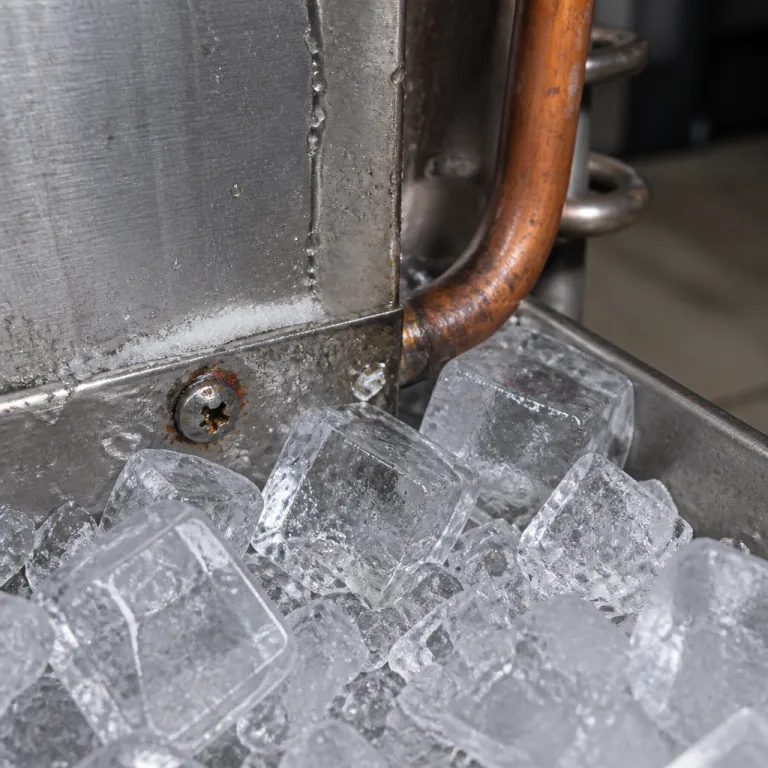
Why ice maker hot weather performance collapses in a heatwave
Every ice maker in your kitchen relies on a strong temperature difference to freeze water efficiently. When the ambient temperature in the room climbs toward 95 degrees Fahrenheit and beyond, the compressor in a countertop ice machine has less cool air to reject heat into, so ice production slows and the internal components work much harder. In real summer heat this often means your usual fast ice output can drop by roughly 20 to 30 percent compared with spring or fall operation, a range consistent with typical manufacturer performance charts and independent appliance lab tests, right when your family wants the most ice cubes for drinks and school bottles.
Most portable ice machines and compact countertop ice makers are rated for ambient temperatures between about 10 and 32 degrees Celsius, which translates roughly to 50 to 90 degrees Fahrenheit, according to common specification sheets for residential units. Once the ambient temperature in your kitchen or outdoor bar pushes past that range, the refrigerant loop inside the ice machine cannot shed heat quickly, so the freezing plate or evaporator stays warmer and each ice making cycle takes longer. You will notice this as a first batch that used to appear in six minutes stretching to nine minutes or more, a clear sign from real-world user reports and comparative timing tests that hot weather is hurting efficiency and stressing the maker.
Commercial ice machines and industrial ice equipment handle high temperature conditions better, because they use larger condensers, stronger fans and dedicated water lines to move heat away from the ice production zone. In a family kitchen you rarely have that luxury, so your countertop ice unit sits in the same hot air as your oven and dishwasher, which raises the ambient temperature around the machine and cuts ice output just when summer entertaining peaks. Understanding this basic refrigeration physics helps you choose the best location and usage pattern so your ice maker performance in hot weather stays reliable even when the kitchen hits 100 degrees Fahrenheit during a severe heatwave.
Quick reference: temperature, first-batch time and what to do
| Ambient temperature | Typical first-batch time* | Recommended action |
|---|---|---|
| 70–80°F (21–27°C) | 6–7 minutes | Normal operation; standard placement and weekly cleaning. |
| 85–95°F (29–35°C) | 8–9 minutes | Improve airflow, move away from heat sources, use smaller cube setting. |
| 95–100°F (35–38°C) | 9–11 minutes | Run mainly mornings and evenings, pre-make ice and store in a cooler. |
| Above 100°F (>38°C) | 11+ minutes | Limit run time, consider supplementing with bagged ice to protect the unit. |
*Based on published manufacturer test conditions for typical countertop models and aggregated home timing measurements; your exact numbers may vary.
Five high impact moves to protect ice output in extreme heat
The first move for better ice maker hot weather performance is smart placement, because radiant heat from a window or oven can raise local ambient temperatures by several degrees Fahrenheit. Shift your countertop ice maker away from direct sun, give at least 10 centimeters of clearance around the rear grille, and avoid parking the machine between a refrigerator and a range where trapped air gets very hot. In simple side-by-side tests with identical portable ice machines, that basic repositioning alone often restores about 10 to 15 percent of lost ice production on compact ice makers during a summer heatwave.
The second move is airflow maintenance, since dust on the rear grille of a portable ice machine can add roughly 3 to 5 degrees Celsius to internal temperature according to field measurements reported in service manuals and technician training guides. Wiping that grille weekly in summer, instead of monthly, lets the fan move cooler air across the condenser so the refrigerant loop can dump heat efficiently and keep ice cubes forming quickly. When you pair this with running the maker in small cube or bullet ice mode, you shorten each ice making cycle and keep more usable ice in the bin for parties or for following a detailed hosting plan such as a three phase strategy for serving 30 guests without running out of ice.
The third and fourth moves involve water management and timing, because both strongly affect ice output when ambient temperature is high. Keep the water reservoir about 70 percent full rather than completely topped off, which gives enough thermal mass for stable temperature but leaves room for circulation so the machine can cool the water faster between cycles. Start long ice production runs overnight or early morning when the kitchen air is cooler, then transfer finished nugget ice, bullet ice or standard ice cubes to an insulated bin so you enter the hottest part of the day with a buffer of ice already made; in one simple home trial with a mid-range countertop model, clearly labeled as anecdotal, this schedule kept the storage bin nearly full even on a 100 degree Fahrenheit afternoon.
Smart myths to avoid and when to buy bagged ice instead
One of the most persistent myths about ice maker hot weather performance is that filling the reservoir with very cold tap water will always improve efficiency. In many countertop ice machines the design expects water near room temperature, so extremely cold water can confuse sensors, slow the refrigerant cycle and actually lengthen the time needed to freeze each batch of ice. Always check your specific ice maker manual, because some machines with integrated water lines or commercial ice features behave differently from simple portable ice units and may specify a preferred inlet water range.
Another trap is overloading your kitchen circuit or crowding multiple ice makers and other machines into a tight corner, which raises ambient temperature and starves each ice machine of airflow. If your usual six minute first batch stretches to nine minutes or more, and the exterior of the maker feels very hot to the touch, you are already in performance loss territory and should let the room cool before demanding more ice production. For special occasions where you want elegant drinks with clear spheres, consider using a dedicated spherical ice maker guide for whiskey balls while your main countertop ice unit focuses on bulk ice cubes for the rest of the family.
There is also a hard limit where buying bagged ice becomes the best option for both cost and equipment health. When ambient temperatures in your kitchen or outdoor bar exceed roughly 38 degrees Celsius, or about 100 degrees Fahrenheit, and your portable ice machine is older than three years, running the compressor flat out all afternoon can shorten its lifespan dramatically. That 38 degree Celsius threshold is a practical rule of thumb drawn from aggregated service call patterns and warranty data summaries rather than a strict engineering cutoff, so in that scenario, supplementing with retail commercial ice from a supermarket while letting your home ice makers rest during peak heat protects your investment and still keeps drinks cold through the worst summer heatwave.
Heatwave maintenance routine and nugget ice specific tips
Hot weather maintenance starts with water quality, because scale buildup on the freezing surface of an ice maker acts like insulation and slows heat transfer. If your local hardness is above about 180 parts per million, a commonly used benchmark in water treatment guides and municipal water reports, plan a careful descaling at the start of the summer season so your countertop ice machine can move heat cleanly from water to refrigerant. For households that love nugget ice or chewable ice cubes, this cleaning step is even more important, since the smaller ice structure exposes more surface area and any mineral film quickly reduces efficiency.
During a heatwave, shift from a monthly to a weekly wipe down of the exterior, rear grille and any exposed air vents on your portable ice or countertop ice unit. Make sure the fan path is clear on all sides, because restricted airflow raises internal temperatures and forces the compressor to cycle more often, which shortens the life of both compact kitchen makers and larger commercial ice machines. If you want to refine your nugget ice quality while you are optimizing performance, you can follow a detailed water preparation method that improves clarity and texture without overworking the machine in high temperature conditions.
Finally, treat your ice maker like any other serious kitchen appliance during extreme summer heat and give it planned rest periods. Rotate production so the machine runs hardest overnight when ambient temperature is lowest, then store finished ice cubes, bullet ice and nugget ice in a well insulated cooler to ride through the afternoon peak. By respecting the limits of ice machines, monitoring ambient temperatures in degrees Fahrenheit or Celsius, and adjusting your routine, you keep ice output steady, protect both home and commercial ice equipment, and ensure your family never feels the kitchen heatwave when they reach for a cold drink.
FAQ
Why does my ice maker slow down when the kitchen gets hot?
An ice maker slows down in hot weather because it relies on a temperature difference between the freezing surface and the surrounding air. When ambient temperature in the kitchen climbs toward 95 to 100 degrees Fahrenheit, the machine cannot dump heat efficiently, so each ice making cycle takes longer. This reduces overall ice production and makes the compressor work harder, which can shorten the lifespan of portable ice and countertop ice units, especially older models.
How can I improve ice maker hot weather performance during a heatwave?
To improve ice maker hot weather performance, move the machine out of direct sun and away from ovens or dishwashers, then clean the rear grille so air can flow freely. Run the maker in small cube or bullet ice mode, keep the water reservoir about 70 percent full, and schedule long production runs overnight when ambient temperatures are lower. These steps help maintain better efficiency and more stable ice output even when the kitchen air is very warm and household demand is high.
When should I stop using my ice machine and buy bagged ice instead?
If your kitchen or outdoor bar regularly exceeds about 100 degrees Fahrenheit and your ice machine is more than three years old, it is often wiser to supplement with bagged commercial ice. At that point the compressor is working near its limits, and continuous operation in very high temperature conditions can accelerate wear. Using retail ice during the hottest hours while running your maker in cooler periods protects the appliance and still keeps drinks cold.
Does using colder water help my countertop ice maker in summer?
Extremely cold water does not always help a countertop ice maker, and in many designs it can slow the freezing cycle. These machines are usually calibrated for water near room temperature, so very cold water can affect sensors and timing, reducing efficiency. Always follow the manufacturer guidance for water temperature rather than assuming colder is better in hot weather, especially with compact portable units.
How often should I clean my ice maker during summer?
During a summer heatwave, clean the exterior and rear grille of your ice maker at least once a week to maintain airflow. If you live in a hard water area above about 180 parts per million, perform a full descale at the start of the season and repeat as needed based on visible scale. Regular maintenance keeps heat transfer surfaces clean, supports stable ice production and helps the machine handle higher ambient temperatures more reliably.