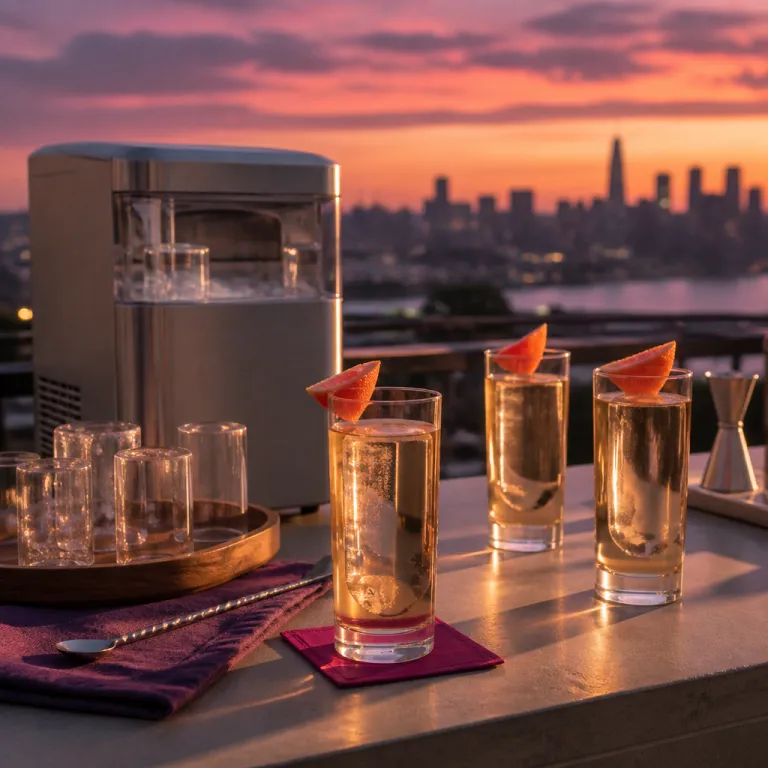

Why a refined highball glass for cocktails matters to ice maker buyers
A carefully chosen highball glass for cocktails transforms how your ice maker’s output feels in the hand. When the glass and the ice work together, customers notice the quality of every drink and silently judge your bar or home business on that harmony. A tall highball filled with clear ice cubes instantly signals that the product, the glassware, and the service are designed for a superior drinking experience.
For ice maker buyers, the right glass is not just a glass; it is a tool that showcases the clarity, size, and hardness of the ice you are making. Thick-walled highball glasses protect the ice from melting too fast, which keeps cocktails colder, better balanced, and visually perfect for longer service windows. A typical highball for mixed drinks holds around 300–400 millilitres and stands 140–160 millimetres tall, which gives enough depth for 25–30 millimetre cubes without crowding the garnish or mixer. These dimensions broadly match recommendations from bar training manuals and hospitality suppliers that design glassware around standard cube formats.
Think of your drinking glasses as extensions of the ice maker itself, because they complete the cold chain from machine to mouth. A highball glass with the correct glass color, height, and capacity frames the drink, while a separate rocks glass or collins glass can be reserved for spirits-forward mixed drinks that need less dilution. By curating a set of cocktail glasses and matching them to your ice, you give customers a consistent, premium drinking experience that feels intentional rather than improvised, whether you are running a neighborhood bar or a serious home cocktail setup.
Matching ice shapes to highball glasses and other cocktail glassware
Different ice shapes from your machine demand different glasses designed to show them at their best. Long clear cubes or spears, typically 25–30 millimetres wide and 80–120 millimetres tall, sit beautifully in a highball glass for cocktails, while wider cubes or spheres around 45–55 millimetres across often belong in a rocks glass where they can roll and chill without crowding the drink. These measurements are common across commercial cube molds and directional-freezing trays used in many bars. When you respect this pairing, you make serving cocktails more efficient and keep the visual impact of each drink strong from the first sip to the last.
For tall mixed drinks like a gin and tonic or a mojito, a slim collins glass or classic highball glass keeps carbonation lively and slows dilution, especially when the ice is dense and crystal clear. Shorter mixed drinks, such as an old fashioned, benefit from a low drinks glass that lets the ice cube sit broad and stable, which makes stirring and making perfect balance much easier for staff. Even a martini glass, though usually served without ice, still depends on the ice quality used during stirring or shaking, because poor ice from the machine will cloud the cocktail and dull its flavors.
Home ice maker buyers who want a refined bar should read their glassware needs the same way professionals do and build a set that covers all core types cocktail service. Start with a versatile set of highball glasses and complementary cocktail glass shapes, then add specialty drinking glasses as your cocktail list grows and your business or hosting style evolves. A small neighborhood bar, for example, might begin with only highball and rocks glass options, then introduce a dedicated collins glass once spritzes and long seasonal drinks become bestsellers and staff see demand for taller, more effervescent serves.
Ice scoops, hygiene, and protecting your highball glass investment
Once you own a quality ice maker and a carefully chosen highball glass for cocktails, the humble ice scoop becomes a critical accessory. Using proper ice scoops instead of glasses drinking directly from the bin prevents chipping, cracking, and invisible micro damage to your drinking glasses. It also protects the ice from hand contact, which keeps the drink cleaner and preserves the crisp flavors that customers expect from premium cocktails. Food safety guidance from public health agencies consistently warns that scooping ice with glassware increases both contamination and breakage risk.
Metal ice scoops with rounded edges are designed to slide under cubes without scratching the interior of the bin or striking the rim of a highball glass, a rocks glass, or a collins glass during service. Plastic scoops can be lighter and quieter, but they must still be food grade and matched to the bin size so that making easy, fast movements does not send ice flying into nearby cocktail glasses. When you treat the scoop as part of the glassware set, you reduce breakage costs and keep the product quality consistent across hundreds of drinks, especially during busy shifts when staff are working at speed.
For whiskey or spirit forward service, where a single large cube in a rocks glass is common, a dedicated scoop or small tongs help you place the ice gently and avoid thermal shock to the glass. This careful handling is just as important when you pour a tall mixed drink into a chilled highball glass, because sudden temperature swings can stress lower quality glasses designed without proper tempering. A small home bar that switched from using glasses as scoops to stainless tongs and a 150–200 millilitre scoop, for instance, reported fewer cracked rims over several months and more consistent ice clarity as chips and shards stopped circulating through the bin.
Choosing glass types, colors, and sets that flatter clear ice
Ice maker buyers often underestimate how strongly glass color and type glass influence the perceived clarity of their ice. A clear, colorless highball glass for cocktails lets customers read the purity of the cubes instantly, while lightly tinted glasses can hide small flaws but also mute the sparkle of the drink. When you invest in a matched set of glasses designed for your main cocktails, you create a visual language that customers associate with your brand and your bar, similar to how stemware families are curated in wine-focused venues.
For most mixed drinks, transparent drinking glasses with straight walls and a heavy base are ideal, because they keep the ice stable and make perfect layering of ingredients easier. Frosted or colored cocktail glass options can be used sparingly for signature drinks, but they should not dominate your core glassware set if your business prides itself on crystal clear ice. In practice, many venues rely on clear highball and rocks glass designs for everyday service, then reserve a single colored drinks glass style for a house cocktail that needs extra visual drama.
Home buyers who entertain frequently may prefer a modular set that includes highball glasses, a few martini glass pieces, and several rocks glass options in the same design family. This approach keeps storage simple while still supporting a wide range of cocktails and mixed drinks without visual clutter on the bar. When you align glass color, shape, and capacity with your ice style, you make serving cocktails smoother for hosts and staff and more memorable for customers and guests, because every drink looks like it belongs on the same carefully planned bar.
Optimizing ice maker performance for serving cocktails in highball glasses
The best highball glass for cocktails will not compensate for poor ice quality, so your machine settings and filtration matter just as much as your glassware. Ice that is too soft or full of air melts quickly in a highball glass, which waters down mixed drinks and makes the product feel inconsistent from one round to the next. Dense, slow melting cubes keep cocktails colder for longer, which lets customers enjoy the drink at a relaxed pace without rushing before the ice collapses.
To support this, calibrate your ice maker for the cube size that best fits your main drinking glasses and cocktail glasses, then maintain that setting rather than constantly changing it. Regular cleaning and the use of a proper water filter protect both the machine and the taste of the drink, because mineral buildup and off flavors will show immediately in clear glassware. Industry testing by equipment manufacturers and bar programs consistently finds that filtered water and clean evaporator plates produce clearer cubes, which in turn look sharper in a highball glass for cocktails and other transparent glassware.
When your ice is consistent, staff can standardize recipes for every mixed drink, whether it is served in a collins glass, a martini glass, or a tall highball glass. This consistency makes serving cocktails faster and reduces training time, because bartenders learn exactly how much ice and liquid each drinks glass should hold. Over time, that reliability builds trust with customers, who come to expect the same drinking experience every time they order their favorite cocktails and compare your service with other venues.
Building a glassware strategy around customer expectations and business goals
Choosing a highball glass for cocktails is ultimately a strategic decision that connects your ice maker, your menu, and your customers’ expectations. Casual venues may prioritize durable glasses designed to survive heavy use, while premium bars invest in finer glassware that highlights every detail of the drink and the ice. Both approaches can succeed, as long as the product choices are deliberate and aligned with the business model and the style of cocktails served.
Start by mapping your core types cocktail offerings, then assign a primary drinks glass to each family of mixed drinks and spirits. Highball glasses can handle long, refreshing cocktails, rocks glass options can support spirit forward recipes, and a martini glass or two can cover classic stirred drinks that arrive without visible ice. When every recipe has a defined glass and ice pairing, making perfect service becomes a repeatable process rather than a guess each time a ticket prints, which is especially valuable for new staff.
Ice maker buyers who plan for growth should invest in a scalable set of drinking glasses that can expand as the bar menu evolves. By standardizing on a few key shapes such as the highball glass, collins glass, and rocks glass, you simplify ordering, storage, and replacement while keeping the drinking experience consistent for customers. A growing home bar, for example, might begin with a dozen highball glasses and eight rocks glass pieces, then add matching martini glass stems once classic stirred cocktails become part of regular hosting and guests start requesting more complex serves.
Key figures on ice, glassware, and cocktail service performance
- Field tests in many bars show that using dense, slow melting ice can noticeably reduce cocktail dilution over a 15 minute drinking window compared with standard hollow cubes, which directly improves flavor stability in highball glasses and rocks glass service. Internal bar program trials and manufacturer demonstrations often report visibly clearer drinks and stronger flavor after this time frame.
- Industry reports estimate that the global commercial ice maker market generates several billion US dollars in annual revenue, reflecting strong demand from bars and restaurants that rely on consistent ice quality for cocktails and mixed drinks. Market research firms tracking foodservice equipment sales regularly highlight ice machines as a core growth category.
- Food safety guidance from public health agencies warns that poor ice handling practices, such as using drinking glasses as scoops, significantly increase contamination risk, which reinforces the importance of dedicated ice scoops for any business serving cocktails with visible ice.
- Consumer research across the spirits industry indicates that many guests perceive drinks served in clear, well matched glassware as higher quality, even when the underlying spirits are identical, highlighting the impact of the highball glass and other cocktail glasses on perceived value. Tasting room experiments and brand activations frequently use side-by-side comparisons to demonstrate this effect.
FAQ: highball glasses, ice makers, and cocktail service
What size highball glass works best with a home ice maker ?
For most home ice makers, a highball glass between 300 and 400 millilitres balances ice volume and mixer space effectively. This capacity lets you add enough dense ice to control dilution while still leaving room for spirits and carbonation. It also aligns well with common cube sizes around 25–30 millimetres, which makes making easy, repeatable mixed drinks simpler for hosts and mirrors the dimensions used in many bar-focused glassware ranges.
Should I choose thick or thin glass for serving cocktails with lots of ice ?
Thicker drinking glasses insulate better and resist thermal shock when filled with very cold ice from a powerful machine. They are ideal for highball glasses and rocks glass service in busy bars where breakage risk is high and drinks stay on tables longer. Thinner cocktail glass styles can feel more elegant but require gentler handling and may not protect the drink temperature as effectively.
Do I really need a separate ice scoop if I already have plenty of glasses ?
Yes, using a dedicated ice scoop instead of glasses drinking directly from the bin is essential for hygiene and safety. Scoops prevent chips and cracks in your glassware and reduce the chance of glass fragments entering the ice supply. They also support faster, more controlled serving cocktails during peak service, which protects both the product and the customers and aligns with standard food safety recommendations.
How many glass types should a small bar start with ?
A compact but effective setup usually includes a highball glass, a rocks glass, and at least one martini glass or similar stemmed cocktail glass. This trio covers most mixed drinks, spirit forward cocktails, and shaken or stirred classics without overwhelming storage. As the business grows, you can add specialty collins glass shapes or colored drinks glass options to support signature recipes.
Can glass color affect how customers perceive ice quality ?
Clear glass color makes it easier for customers to read the clarity and structure of the ice, which is ideal when you invest in a high quality ice maker. Tinted or frosted glasses can hide minor imperfections but also reduce the visual sparkle of the drink. For bars that market premium ice and refined cocktails, transparent glassware is usually the most effective choice.