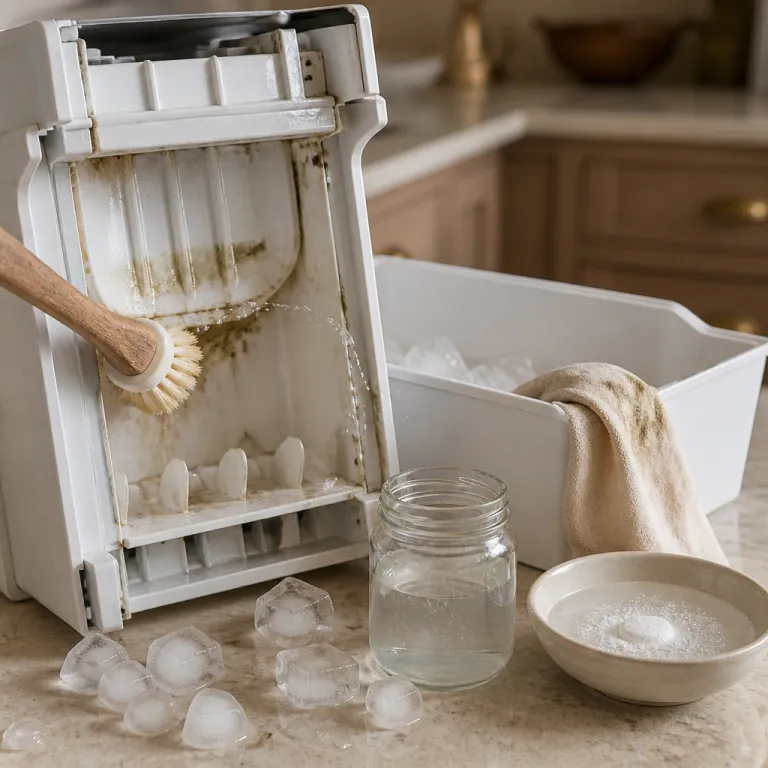
Why your ice maker smells even when it looks clean
Most buyers assume that regular wiping and a quick rinse keep an ice maker safe. In reality, the hidden problem is biofilm, a slimy layer where bacteria and yeast embed themselves and shield mold colonies from almost any casual cleaner. Your ice machine can keep producing clear ice cubes while a stubborn biofilm quietly coats the maker mold, the water path and the underside of the lid.
Biofilm thrives wherever cold water, oxygen and a constant thin film of moisture meet. That describes the inside of many ice makers, especially compact countertop ice and countertop nugget models that never fully dry between batches and often sit in warm family kitchens. When you want clean ice that is tasting fresh, you must treat the ice maker as a wet appliance, not as a freezer, because Consumer Reports has repeatedly warned that the typical ice machine is not a true freezer and can support mold and bacterial growth in normal kitchen use.
During hands on testing of nugget ice machines and standard cube makers, I repeatedly find the same pattern. The first sign is usually a faint musty smell from the ice maker, followed by tasting ice that seems slightly earthy or plastic even when the water source is filtered. If you ignore these early clues, biofilm thickens on the maker mold and in the reservoir, and the machine cleaner cycle alone will not restore safe, clean ice for your family.
Biofilm, mold and hard water: what is really growing in there
Biofilm is a structured community of microorganisms that secrete a protective slime, and that slime makes ice maker mold cleaning far more complex than a quick rinse. Inside an ice machine, this biofilm traps nutrients from hard water minerals, drink splashes and airborne kitchen grease, then shelters mold spores and bacteria from any weak cleaning solution you pour in. The result is a resilient layer that clings to the maker mold, the water inlet, the drip tray gasket and every rough surface inside the machine.
In testing across multiple brands, including compact models from Gevi and other popular ice makers sold in the United States, I consistently see three contaminants working together. First comes mineral scale from hard water, then a thin biofilm on top of that scale, and finally visible mold patches that appear as black specks or pink orange rings around the front load style reservoir lip and the underside of the lid. If you want a deeper technical explanation of how different mineral stains signal different water problems, a detailed guide on the three mineral stains you find inside an ice maker shows why scale and biofilm often appear together.
From a health perspective, this mix matters more than the cosmetic stains. A pink orange ring often indicates Serratia bacteria, while black flecks usually signal mold colonies anchored in the biofilm matrix, and both can shed into your nugget ice or standard ice cubes. When you evaluate any ice maker product or machine cleaner at any price, you should ask one question first, namely whether it can break up biofilm and reach the hidden wet zones that keep ice tasting fresh between deep cleans.
Why a simple vinegar rinse fails against biofilm
Household advice often suggests pouring vinegar into the reservoir and calling the cleaning job done. Vinegar is an effective acid for dissolving mineral scale, but it is a poor biofilm cleaner on its own because it does not contain surfactants that lift slime or oxidising agents that penetrate the microbial shield. After testing repeated vinegar cycles on heavily used countertop ice machines, I consistently find that the smell returns within days and the tasting ice remains slightly off.
Think of vinegar as step one in a two step protocol, not as a complete ice maker mold cleaning strategy. The acid helps loosen scale so that a dedicated machine cleaner or sanitiser can reach the mold, the water lines and the drip tray gasket, but it cannot fully strip the biofilm by itself. For buyers who already use vinegar to maintain a coffee appliance, the same logic applies, and a detailed tutorial on how to clean a coffee maker with white vinegar shows why you still need a separate sanitising step afterward.
In my own kitchen tests, a Gevi countertop nugget ice maker that had only ever seen vinegar rinses looked bright but still produced musty smelling ice. Once I followed a full protocol with an appropriate cleaning solution and mechanical scrubbing of the maker mold and lid, the clean ice finally tasted neutral again. That experience is typical of many ice makers, where a quick vinegar rinse feels safe and cheap but leaves your family exposed to lingering biofilm and mold.
The two step protocol that actually removes biofilm and mold
Effective ice maker mold cleaning always combines descaling and sanitising, never one without the other. Step one is a full descale using either food safe vinegar diluted with water or a citric acid based machine cleaner, run through a complete cycle to dissolve mineral deposits that shield the biofilm. Step two is a sanitiser cycle using a food safe hydrogen peroxide solution at the concentration specified on the label or a quaternary ammonium based cleaner specifically labelled for ice machine use, followed by thorough rinsing until the water runs clear and odour free.
Here is how that looks in practice for a typical family countertop ice or countertop nugget machine. First, unplug the ice maker, empty all ice cubes and drain the reservoir, then fill it with your chosen descaling solution and run a full batch cycle while gently scrubbing accessible surfaces of the maker mold, the underside of the lid and the front load style reservoir lip with a soft brush. After draining and flushing with clean water, repeat the process with the sanitising cleaning solution, paying special attention to the water inlet area, the drip tray gasket and any seams where slime tends to hide.
Once the sanitiser cycle is complete, drain again, refill with plain water and run at least two full ice cycles, discarding all early batches to keep ice safe for drinking. During this process, a dedicated maker cleaner or machine cleaner designed for ice makers will usually outperform a generic household cleaner, even if the price is slightly higher per product. The goal is simple, namely to keep ice tasting fresh for your family while protecting health, and that requires a protocol that respects how stubborn biofilm can be inside an ice maker.
Hot spots, prevention rhythm and when to call support
Some areas inside an ice maker almost always harbour residual biofilm after casual cleaning. The most common hot spots are the water inlet channel, the underside of the lid, the hinge area, the drip tray gasket and any silicone seals around the maker mold where a thin film of water lingers between cycles. During hands on testing, I often find that these zones still feel slightly slippery even after a basic cleaner rinse, which signals that the biofilm has not been fully removed.
To keep ice clean between deep services, adopt a simple prevention rhythm that fits family life. Once a week, empty the ice bin at night, drain any standing water, wipe the mold and reservoir dry and leave the lid open so the machine can air out, then every three months perform the full two step ice maker mold cleaning protocol with both a descaling solution and a sanitising cleaner. Never store the ice machine wet in a cupboard or on a cart after a party, because dark, closed spaces in a warm store room are perfect for mold growth even when the product looks spotless.
Watch for red flags that mean you should pause use and possibly contact the manufacturer. A persistent pink orange ring, black specks in the ice cubes or a musty smell that returns within three days after a thorough cleaning solution cycle all suggest entrenched contamination that simple maker cleaning cannot fix. If you see these signs on a Gevi unit or any other brand sold in the United States, stop using the ice maker for drinks, check the warranty, and if the smell persists after one more careful protocol, call support rather than continue shopping for more cleaners that will not solve a deeper problem.
Buying and using cleaners wisely for family health
When you shop for any ice maker cleaner, focus less on marketing claims and more on clear labelling. A good maker cleaner or machine cleaner should specify that it is food safe, compatible with ice makers and effective as both a descaling and sanitising solution, rather than just a perfumed rinse that masks tasting ice problems. In my testing, products that list hydrogen peroxide or quaternary ammonium compounds as active ingredients consistently outperform vague multi purpose cleaners at restoring truly clean ice.
Price still matters for a busy household, but the cheapest product in the store cart is not always the best value. A slightly higher priced cleaning solution that you can safely use on both an ice machine and a coffee appliance often reduces total cost, because one bottle serves multiple machines and helps keep ice and drinks tasting fresh for months. When you find a reliable product that works well with your specific ice maker, whether it is a compact countertop nugget model or a larger front load style unit, buying two at once can prevent gaps in your maintenance rhythm.
For online buyers in the United States, pay attention to how the retailer describes the cleaner and how other owners of similar ice makers rate its performance. Look for reviews that mention mold removal, biofilm, tasting ice improvements and ease of rinsing, rather than only quick shipping or a low price, then add the right cleaner to your cart and resist the urge to continue shopping for gimmicks you do not need. The goal is not to collect more products, but to pair your ice maker with one or two proven cleaners and a disciplined routine that protects your family’s health every time you press the button for fresh ice.
FAQ
How often should I deep clean my ice maker to control mold and biofilm ?
For a typical family kitchen, plan a full two step ice maker mold cleaning every three months. If you live with hard water or run the machine daily for nugget ice and drinks, shorten that interval to every one or two months. A quick weekly empty and dry routine in between deep cleans helps keep biofilm from rebuilding.
Is vinegar safe and effective for cleaning the inside of an ice machine ?
Food grade white vinegar diluted with water is generally safe for descaling most residential ice makers, but it only addresses mineral deposits. Vinegar alone does not reliably remove biofilm or mold, so you must follow it with a food safe sanitising cleaner designed for ice machines. Always rinse thoroughly with clean water and discard the first batches of ice cubes after any vinegar cycle.
What are the first signs that my ice maker has a biofilm problem ?
Early signs include a faint musty or earthy smell from the bin, tasting ice that seems slightly stale and a slippery feel on the maker mold or reservoir walls. You may also notice a thin pink orange ring around the water line or tiny black specks in the ice cubes. Address these clues quickly with a full cleaning protocol before the contamination becomes harder to remove.
Can I use the same cleaner on my coffee maker and my ice maker ?
Many citric acid based descalers are safe for both coffee appliances and ice machines, which can simplify your maintenance routine. However, not every sanitising cleaner that works in a coffee maker is approved for contact with ice, so always check the label for explicit ice maker compatibility. When in doubt, choose a product that clearly states it is food safe for both brewing and ice making equipment.
When should I stop using my ice maker and call the manufacturer ?
If you see persistent black mold spots, a strong musty odour that returns within a few days of deep cleaning or any visible slime you cannot reach, stop using the machine for drinks. Perform one careful two step cleaning with both a descaler and a sanitiser, then reassess the smell and the clarity of the ice. If problems remain, contact the manufacturer’s support line and ask about inspection or replacement options rather than relying on more aggressive household chemicals.