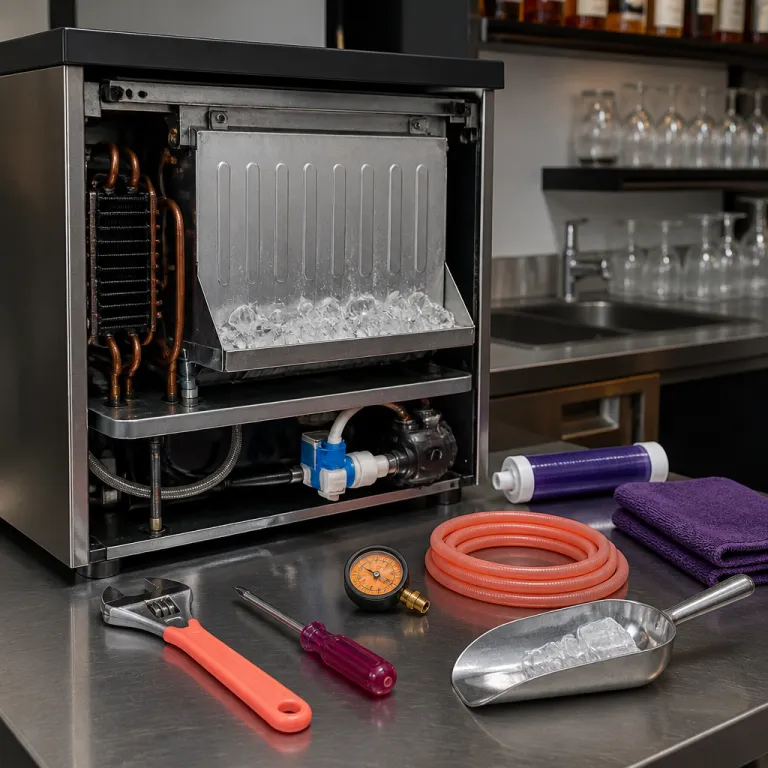
Understanding how ice makers work from water to solid cubes
To understand how ice makers work, start with the simple path from water to ice. Inside every icemaker or ice maker, a controlled freezing process turns flowing water into solid ice cubes using refrigeration, air movement, and precise timing. When you know how this equipment operates, you can judge which appliance will match your kitchen, bar, or office needs.
Most home ice makers in a refrigerator or standalone portable machine follow the same basic cycle. Fresh water enters through a dedicated valve that regulates pressure, then fills a mold or tray where the ice making begins under carefully managed refrigeration conditions. As the refrigerant circulates through the evaporator, heat leaves the water–ice mixture until it freezes into cubes that drop into an ice bin or storage bin ready for use.
In a typical freezer-based icemaker, the evaporator coil sits close to the mold so it can pull heat away efficiently. The machine runs a timed cycle that chills the mold, then briefly warms it so the cubes release cleanly into the collection bin or ice storage area. This automatic ice production process repeats until the ice compartment is full, at which point a sensor will pause the appliance to keep ice from overflowing.
Key components that make an ice maker work reliably
Every serious buyer should know the main components that explain how ice makers work in real conditions. Whether you choose a portable ice maker for a small apartment or a built-in icemaker for a large refrigerator, the same core parts handle water, air, and refrigeration. Understanding each part of the machine helps you predict how the unit will perform over years of daily ice making.
The water inlet valve is the starting point, because this assembly controls how much water reaches the mold. A clogged valve or kinked line will starve the icemaker of water, while a leaking valve can overfill the ice tray and reduce the quality of the ice cubes. Good design also manages airflow around the evaporator and condenser so the refrigeration system can remove heat efficiently and keep ice production steady.
Inside the appliance, the evaporator plate or coil is where the refrigerant absorbs heat from the water–ice mixture. Once the cycle finishes freezing, a short burst of hot gas or warm water around the mold loosens the cubes so they fall into the ice bin or collection bin. If you are comparing quiet ice makers for open kitchens, pay attention to fan design and compressor mounting, because these details will decide how much noise the machine makes during each cycle; you can learn how to read those decibel claims in depth by reviewing this guide on quiet ice makers for open kitchens.
How different ice maker types handle the freezing cycle
Not all ice makers work the same way, even though they all freeze water into ice. A basic freezer icemaker in a top-mount refrigerator uses a cold mold that fills, freezes, then ejects cubes into a simple ice storage bin. More advanced ice makers and commercial ice machines use flowing water over a vertical evaporator to create clear ice with fewer trapped air bubbles.
Portable ice makers usually skip a permanent freezer compartment and instead rely on a compact refrigeration loop that chills metal prongs or a small evaporator tray. Water flows over these cold surfaces, forming ice cubes that drop into a temporary storage area, where they will slowly melt if you do not move them to a separate freezer. Because the bin in a portable appliance is rarely insulated like a full freezer, you should plan to keep ice in a dedicated ice storage container when hosting larger events.
Commercial ice machines in restaurants across the United States often use a continuous flow freezing process to produce large volumes of commercial ice. Water cascades over a chilled evaporator plate, forming a sheet of ice that later breaks into uniform cubes and falls into a large collection bin. For a deeper technical look at this style of machine, including brands such as Hoshizaki, you can review an analysis of the efficiency of Hoshizaki ice machines before choosing a model for your bar or café.
From cloudy to clear ice how design shapes cube quality
Many buyers ask how ice makers work when they want clear ice instead of cloudy cubes. The difference comes from how the appliance freezes water and how it manages air and impurities during the freezing process. Standard freezer icemakers freeze from the outside in, trapping air in the center of the ice cubes, while clear ice systems freeze water in thin layers and push air out.
In a typical home refrigerator, the mold sits still while water freezes, so dissolved gases stay inside the ice and create that familiar white core. Clear ice makers, especially higher-end portable or commercial ice machines, keep water moving across the evaporator surface so only pure water freezes and the air escapes. This style of ice production produces harder cubes that melt more slowly, helping you keep ice solid longer in cocktails or premium spirits.
Some advanced ice makers also use filtered water and carefully controlled flow at the start of the cycle to reduce mineral deposits on the mold surfaces. Because colder water actually holds more dissolved gas than warmer water, clear-ice designs rely on slow, directional freezing and continuous circulation to drive those gases out before the sheet solidifies, a principle described in basic physical chemistry texts and in manufacturer service manuals for clear-ice machines. If you care about presentation and flavor, you will want an appliance that balances refrigeration power, water filtration, and bin insulation so the collection bin preserves clarity until serving time.
Smart features and innovation in the latest ice maker models
Recent innovation has changed how ice makers work in connected kitchens and busy households. New icemakers integrate sensors, smart valves, and Wi‑Fi modules that share status data with your phone, so you will know when the ice bin or storage bin is running low. Some premium refrigerator and commercial ice models even adjust the cycle length automatically based on air temperature and door openings.
Modern portable ice makers often include multiple cube size options, self-cleaning cycles, and improved insulation to keep ice solid for longer periods. These machines manage water flow with more precise valve control, then use optimized evaporator designs to shorten the freezing process without overloading the refrigeration system. When you evaluate how each model operates, look for features that reduce manual work, such as automatic bin level detection and alerts when it is time to empty the collection bin.
Smart home enthusiasts in the United States increasingly choose ice makers that integrate with broader kitchen ecosystems and energy monitoring tools. Some connected appliance platforms allow you to schedule ice production before guests arrive, then pause production overnight to save power and keep ice from clumping in the storage area. For a broader view of this trend, including why your next ice maker will likely be part of a connected kitchen, you can read about the smart kitchen shift for ice makers and compare those capabilities with your own needs.
Practical buying guidance based on how ice makers work
When you understand how ice makers work internally, you can match the right machine to your lifestyle. Start by estimating how much water you will turn into ice cubes each day, then decide whether a refrigerator icemaker, a portable appliance, or a dedicated commercial ice machine fits that demand. Heavy users should prioritize a robust evaporator, reliable valve design, and a well-insulated ice storage bin that can keep ice solid between cycles.
For small households, a compact portable ice maker can handle occasional parties and daily drinks without a complex installation. These machines usually plug into a standard outlet, draw water from a refillable reservoir, and drop cubes into a modest collection bin that you will empty into a freezer when full. If you live in a warm climate with high air humidity, choose a model with strong refrigeration capacity and good ventilation clearance so the freezing process remains efficient.
Buyers who entertain frequently or run a home bar should consider how quickly each unit moves through a full cycle and how the appliance manages ice quality over several hours. Look for clear specifications on production per day, storage bin volume, and the type of mold or cube shape produced. Pay attention to maintenance needs as well, because regular cleaning of the water path, valve, and mold will keep ice tasting fresh and extend the life of the machine.
Maintenance, hygiene, and long term performance of ice makers
Cleanliness directly affects how ice makers work and how safe your drinks remain. Any icemaker that handles water, air, and refrigeration will accumulate mineral scale and biofilm if you ignore regular cleaning. Over time, this buildup can clog the valve, coat the evaporator, and contaminate the mold, which reduces efficiency and spoils the taste of the ice cubes.
Plan a routine that includes flushing the water system with approved cleaner, wiping the ice bin or storage bin, and sanitizing the collection bin surfaces. Some modern ice makers offer self-cleaning cycles that circulate hot water or cleaning solution through the machine, which simplifies the maintenance process but does not replace occasional manual scrubbing. Always empty ice that has been sitting for days, because even in a cold freezer or insulated appliance, stale cubes can absorb odors and no longer keep drinks tasting neutral.
Good airflow around the condenser and evaporator also protects long-term performance, since restricted air movement forces the refrigeration system to work harder. Leave enough space around a portable ice maker or under-counter commercial ice unit so warm air can escape, and vacuum dust from the grills several times per year. By respecting these basic care steps, you will extend the life of your ice makers, maintain consistent cube quality, and ensure that every unit works as efficiently as the day you installed it.
Key figures about ice makers and ice consumption
- Commercial ice machines in the United States can produce from 20 kilograms to more than 900 kilograms of ice per day, with higher-capacity models designed for hotels and large restaurants according to manufacturer specifications and typical sizing guides from major brands such as Hoshizaki and Manitowoc.
- Energy Star certified ice makers typically use about 10 percent less energy and 20 percent less water than standard models, based on program summaries from the United States Environmental Protection Agency and U.S. Department of Energy for commercial ice machine criteria.
- Average daily ice consumption in full-service restaurants often ranges between 0.7 and 1.4 kilograms of ice per seat, a planning range cited in many commercial kitchen design manuals and distributor sizing charts used by foodservice consultants.
- Many residential refrigerator icemakers are rated for 1.5 to 3 kilograms of ice cubes per day, which is usually enough for a family of four with moderate drink consumption according to typical manufacturer spec sheets for mid-range models.

| Ice maker type | Typical cycle style | Approximate daily output | Best suited for |
|---|---|---|---|
| Refrigerator icemaker | Fill mold, freeze, eject cubes into bin | 1.5–3 kg per day | Families and everyday home use |
| Portable countertop unit | Water over chilled prongs or small tray | 10–15 kg per day | Small households, offices, parties |
| Commercial ice machine | Continuous flow over vertical evaporator | 20–900+ kg per day | Bars, cafés, restaurants, hotels |
FAQ how do ice makers work in real homes and businesses
How does a refrigerator ice maker actually freeze and release cubes ?
A refrigerator icemaker uses a small mold connected to the freezer evaporator, where refrigerant removes heat from the water until it becomes solid ice. Once frozen, a heater briefly warms the mold surface so the cubes release and a motor-driven arm sweeps them into the ice bin. A level sensor or mechanical arm then stops the cycle when the storage bin is full.
Why do some ice makers produce cloudy ice while others make clear ice ?
Cloudy ice forms when water freezes slowly from the outside in, trapping air and minerals in the center of the cubes. Clear ice makers keep water moving over a cold evaporator surface, so only pure water freezes and dissolved gases escape before solidifying. Filtration, water temperature, and the overall freezing process design all influence whether your appliance produces cloudy or clear ice.
How much maintenance does an ice maker need to stay hygienic ?
Most manufacturers recommend cleaning the water system, mold, and ice storage bin at least every three to six months in residential settings. Commercial ice machines in the United States often require monthly or even biweekly cleaning, depending on usage and local water quality. Regular descaling, sanitizing, and inspection of the valve and evaporator keep ice tasting fresh and protect the refrigeration components.
Can a portable ice maker replace a built in commercial ice machine ?
A portable ice maker is ideal for small households, offices, or occasional events, but it rarely matches the capacity or durability of a commercial ice appliance. Portable machines usually produce between 10 and 15 kilograms of ice per day and have limited ice storage, while commercial ice units can exceed 100 kilograms daily with larger collection bins. For bars, cafés, or busy restaurants, a dedicated commercial ice machine remains the more reliable choice.
What should I check first if my ice maker stops making ice ?
If your ice maker stops making ice, start by confirming water supply, valve operation, and freezer temperature. A closed supply valve, frozen water line, or warm freezer compartment can all interrupt the cycle before cubes form in the mold. If those basics look correct, inspect the ice bin sensor and listen for the machine attempting to run, then contact a qualified technician if the appliance remains inactive.