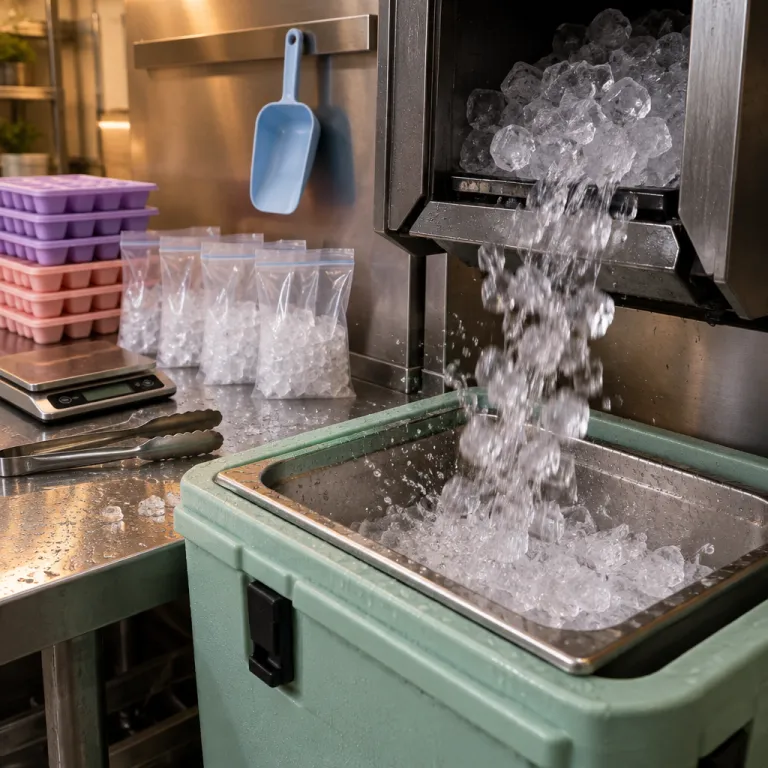
Thinking like a caterer: turning ice into a production plan
Most ice maker buyers focus on the shiny machine and ignore the ice itself. Yet for any event where drinks matter, the real constraint is ice production planning for events, not stainless steel finishes or touchscreen controls. When you plan event ice like a caterer, your small venue or home bar suddenly runs with the calm efficiency of a professional service team.
Caterers treat ice as a production line that must match the flow of guests, drinks and service, not as a last minute bagged backup from the corner store. A widely used rule of thumb for beverage heavy events is to plan between 0.45 and 0.7 kilograms of ice per guest per hour (roughly 1 to 1.5 pounds), then adjust for your specific environment and cocktail style. That single planning habit instantly separates casual hosts from professionals who rarely run out of event ice during weddings, corporate events or private celebrations.
To apply this to your own venue or party, start by mapping the full ice journey instead of only thinking about cocktail ice for mixed drinks. You need production ice for water glasses, wine buckets, chilled food displays and backup coolers, because every service point quietly consumes more ice than you expect. When you see ice as a flow across the whole site, you stop asking whether one model is powerful enough and start asking how your total production and storage chain will support the event from first arrival to last guests.
Most small business owners underestimate how many separate ice streams a single event creates. A wedding or corporate event usually needs one stream for bar cocktails, one for non alcoholic drinks, one for food service and one for emergency top ups at outdoor stations. Each stream competes for the same production capacity, so planning means assigning priorities before the party instead of arguing behind the bar while guests wait.
Think in time blocks, not just total kilograms, when you plan ice production for events. A compact countertop model that makes 12 kilograms per day may sound generous, but if it only produces 0.5 kilograms every hour, your bar team will be starved during the first intense service wave. Professional event planning treats the machine like a slow but steady factory and uses storage to buffer the peaks when guests all order drinks at once.
Context matters as much as capacity, because the same ice maker behaves differently in a hot outdoor environment than in a cool indoor venue. Higher ambient temperatures reduce production and melt stored ice faster, which means your planning margin must be more generous for outdoor events or a summer party. When you test a new model, always run it in the real service environment and measure both production and melt over several hours, not just the brochure numbers.
Once you adopt this production mindset, you can compare models with the same clarity caterers use when they evaluate ovens or coffee machines. Ask how quickly the machine recovers after a full bin dump, how it behaves when the water reservoir is refilled mid service and how easy it is for your team to move ice safely across the site. Those questions matter more for reliable event ice than marginal differences in cube shape or glossy marketing about creative solutions for cocktails.
Finally, treat your ice maker as one part of a broader service system that includes coolers, scoops, drainage and cleaning routines. A well planned environment around the machine protects ice quality, reduces waste and keeps your guests safer over long events. If you want your venue to feel quietly professional, start by planning ice production like a caterer and let the machine simply be the engine inside a well designed service chain.
From specs to glasses: translating machine capacity into real drinks
Every ice maker model promises a daily production figure, but that number alone misleads most buyers. What matters for ice production planning at events is how that capacity translates into actual cocktail ice in glasses during the busiest ninety minutes of your party or service window. To plan like a caterer, you must convert kilograms per day into drinks per hour at your specific bar layout.
Start with your menu and glassware, because different drinks consume wildly different amounts of ice. A tall highball filled with clear ice can use twice as much event ice as a short rocks pour, especially when you follow proper ratios for spirit forward cocktails. For a precise sense of how much ice each drink style needs, use a resource that explains how many ounces a refined highball glass really holds for ice rich drinks, then weigh the ice that fills your own glasses.
Once you know the grams of ice per drink, you can reverse engineer your production needs for events. Multiply ice per drink by the number of guests and the expected number of drinks per guest per hour, then compare that to your machine’s hourly output. If the numbers do not align, you either need a second model, more storage or a change in your menu to reduce peak demand on the bar team.
For a beverage heavy wedding with 60 guests, assume at least two drinks per person in the first hour. If each cocktail uses 120 grams of ice, you already need more than 14 kilograms of production ice in that first intense block, not counting water glasses or wine buckets. One simple calculation looks like this: 60 guests × 2 drinks × 120 g of ice = 14,400 g, or 14.4 kilograms of ice required in that first hour alone.
Pre production is where home entertainers and small venues can borrow the smartest habits from corporate events. Run your ice maker continuously in the days before the party, emptying the bin into food safe bags or containers in your freezer or into a hard cooler placed in a cool environment. This approach turns a modest countertop model into a surprisingly capable production engine for a single big event or private celebration.
Storage strategy matters as much as raw production, because poorly stored ice melts into slush and forces the bar team to over scoop. Use a simple cooler hierarchy: a hard cooler near the bar for active service, a soft cooler for backup stock and freezer bags for overflow that you rotate forward as the party progresses. That structure keeps cocktail ice crisp, reduces waste and ensures that guests at the far end of the venue receive the same quality drinks as those at the main bar.
Do not forget hygiene when translating machine capacity into real drinks, especially for longer events. Ice is legally considered a food in many jurisdictions, and poor handling can turn your creative solutions for cocktails into a food safety problem. Build cleaning and discard intervals into your planning, and use guidance on when to throw away your ice and the hygiene gaps most owners miss to set safe time limits for stored batches.
Finally, test your full chain before a major wedding or corporate event by simulating a busy hour with friends or staff. Time how long it takes the team to move ice from storage to the bar, how quickly the bin empties and how often you need to rotate coolers. Those observations give you more reliable data than any brochure and let you tune both production and service for the next round of events.
Two machines, coolers and cost: scaling ice for growing events
As your events grow from casual parties to paid service, one ice maker often stops being enough. The smartest caterers and small venue owners use a two machine strategy that balances production, redundancy and cost instead of jumping straight to a large commercial unit. Thinking this way turns ice production planning for events into a flexible system that can scale with your bookings.
The first step is to map your event calendar and typical guest counts over several months. For small gatherings under 20 guests, a single efficient model plus good pre production and storage usually covers both cocktails and basic drinks. When you start hosting 30 to 50 guests regularly, especially for outdoor events or a summer corporate event, the risk of running out of event ice rises sharply.
At that point, renting or borrowing a second machine for specific events often makes more financial sense than buying a heavy duty commercial unit. Use the caterer rule of 0.45 to 0.7 kilograms of ice per guest per hour and compare the total cost of homemade production ice to the price of bagged ice from the store. For a backyard cookout or similar gathering, you can use a detailed guide on how much ice you need for 20, 50 or 100 guests to benchmark your own numbers.
Bagged ice remains a valuable safety net, but it should not be your primary strategy for every party. Once you cross roughly 40 guests for a beverage focused event, the cost of repeated store runs, fuel and staff time often exceeds the rental fee for a second machine. A planned mix of in house production and purchased backup gives your team more control and keeps service smoother for guests.
Storage logistics become more complex as events scale, which is why caterers obsess over cooler placement and hierarchy. Place your main hard cooler at the bar or service station, a secondary cooler near the kitchen or prep area and a tertiary stash in a shaded outdoor environment or inside the venue for emergencies. Label each cooler by purpose: bar cocktails, general drinks, food service and reserve, so the team does not raid the wrong stock during a rush.
For outdoor events, protect coolers from direct sun and hot surfaces, because radiant heat can melt ice faster than air temperature alone. Elevate coolers on crates, keep lids closed between scoops and assign one staff member to manage ice rotation during peak service. That small operational detail often separates professional looking weddings and corporate receptions from chaotic parties where guests queue for lukewarm drinks.
When you evaluate whether to buy a second model, consider redundancy as well as capacity. Two smaller machines in different parts of the site protect you from a single point of failure and let your team serve multiple bars or zones during complex corporate events. If one unit fails mid party, the other still provides enough production ice to limp through service while you adjust the menu or lean on bagged backup.
Finally, track your real ice usage across several events, noting guest counts, weather, drink mix and any shortages. Those data points turn vague impressions into a clear business case for upgrading equipment, adjusting event planning or changing your pricing for ice intensive service. When you treat ice as a measurable production line, you can justify investments with confidence instead of guessing under pressure.
Designing an ice system for weddings, corporate events and private parties
Once you understand ice as a production problem, you can design a system that fits weddings, corporate events and intimate private parties alike. The goal is not just higher capacity, but a smoother guest experience where every drink feels intentional and every service point stays supplied. That mindset turns your venue or home bar into a miniature catering operation with professional discipline.
Start by zoning your site according to how guests move during the event. Identify where welcome drinks are served, where the main bar sits, where food stations live and where outdoor mingling happens, then map ice needs for each zone. This simple planning exercise often reveals that your team has been dragging ice across long distances instead of placing production and storage closer to demand.
For weddings, plan a dedicated stream of event ice for the welcome cocktail, because that first impression sets the tone. A separate cooler or bin for the initial service prevents the bar from being drained before dinner even begins. After the first wave, you can merge that stock back into the main bar supply and adjust production based on how quickly guests are ordering drinks.
Corporate events bring different patterns, with peaks around breaks, speeches and networking sessions. Here, creative solutions like satellite self service water stations with their own small ice coolers can reduce pressure on the main bar and keep the environment more relaxed. For a large corporate event with multiple rooms, consider placing a compact model near the kitchen to top up coolers between breaks without interrupting the bar team.
Private parties at home or in small venues benefit from the same structured thinking, just on a smaller scale. Use one cooler for bar cocktails, one for general drinks like sodas and water and a third for food service such as seafood displays or chilled desserts. Label them clearly so helpful friends or staff do not accidentally empty the cocktail ice onto a buffet where it melts unused.
Communication is as important as hardware when you design an ice system. Brief your team before the event about which model feeds which cooler, how often to rotate stock and who is responsible for monitoring levels at each station. If you work with outside planners or caterers, agree on a single point of contact for ice decisions so that last minute changes do not create confusion.
For buyers choosing their first or next ice maker, evaluate models through this systems lens rather than isolated specs. Ask how easily the machine can be moved between indoor and outdoor events, how it drains in different environments and how quickly it recovers after the bin is emptied during a rush. A slightly smaller but more mobile unit can outperform a heavier machine if it lets you position production closer to where guests actually order drinks.
Finally, remember that your reputation as a host or operator often hinges on small details like consistently cold drinks and clean, clear ice. When guests never see staff scrambling for bags or hear the bar complain about shortages, they simply experience a seamless event where service feels effortless. That invisible reliability is what professional caterers sell, and you can achieve the same effect by planning your ice production with the same calm, methodical discipline.
Key figures for planning ice like a caterer
- For beverage focused events, professional caterers typically plan between 0.45 and 0.7 kilograms of ice per guest per hour (roughly 1 to 1.5 pounds), and this range covers cocktails, water and basic food chilling for most temperate indoor venues.1
- A compact countertop ice maker rated at 12 kilograms per day usually produces about 0.5 kilograms per hour in real conditions, meaning it can support roughly 4 to 6 guests per hour at cocktail heavy service levels without pre production storage.2
- In hot outdoor environments above 30 °C, melt losses in poorly insulated coolers can reach 30% of stored ice volume over three to four hours, which means planners should increase production targets or storage capacity accordingly for outdoor events.3
- Retail bagged ice in the United States often costs between 0.25 and 0.45 dollars per pound, so a 20 pound bag can cost as much as running a small home ice maker for several days, making in house production more economical for recurring events with 20 to 50 guests.4
- For a wedding or corporate event with 60 guests lasting four hours and featuring mixed drinks, water and some chilled food, total ice needs commonly reach 110 to 160 kilograms, which usually requires a combination of pre production, on site machine output and at least two well managed coolers.5
Notes: (1) Based on common catering guidelines for beverage heavy receptions assuming mixed drinks, moderate ambient temperatures and standard coolers. (2) Real world output is often lower than brochure ratings due to ambient temperature, duty cycles and door openings. (3) Melt loss estimates assume standard coolers opened frequently in direct or indirect sun with average insulation quality. (4) Cost ranges compiled from typical U.S. grocery and gas station pricing for bagged ice and average residential electricity rates. (5) Total event ice estimates combine per guest rules of thumb with additional allowances for food service, melt and higher demand during peak service blocks.